
Best Earrings for Daily Wear: How to Choose Comfortable Everyday Earrings
The best everyday earrings are usually the pairs that disappear into your routine.
You put them on in the morning, wear them through work, errands, headphones, hair, collars, and dinner, and never feel tempted to take them off early.
That is why I would choose daily earrings by comfort, closure, snag risk, and routine before style.
Studs, huggies, small hoops, pearls, gemstone studs, and short drops can all work. The real question is whether the pair stays comfortable and secure for the kind of day you actually have. If the category names themselves are unclear, I would first compare the main types of earrings and then come back to comfort and routine.
My simplest test is this:
If I am still comfortable after several hours and the earrings work with most of my clothes, they have earned a place in my everyday rotation.
Best Earrings for Daily Wear at a Glance
Here is the short version I would use before comparing individual pairs.
| Earring style | Best for | Watch for |
|---|---|---|
| Flat-back studs | Long wear, headphones, multiple piercings | Front setting height and post length |
| Classic studs | Easy all-round wear | Butterfly backs that poke or loosen |
| Huggies | Compact everyday hoops | Inner diameter that fits too tightly |
| Small hoops | More visible shape | Hair, collars, and excess movement |
| Pearl studs | Polished everyday styling | Pearl size and backing comfort |
| Gemstone studs | Color or sparkle | High or exposed settings |
| Sculptural studs | More personality | Sharp edges or too much weight |
| Short drops | Work-to-dinner days | Snagging and excess movement |
| Ear climbers / cuffs | Layered ear styling | Pressure points and fit |
I would not read this as a ranking.
A flat-back stud may be technically easier than a short drop, but if you dislike tiny earrings, you probably will not reach for it very often. Daily wear is partly a design problem and partly a habit problem.
What Actually Makes an Earring Good for Everyday Wear
Before I compare studs with hoops, I look at the parts of the earring that affect comfort over several hours.
Weight Matters More Than It Looks
Small does not automatically mean light.
A compact solid-metal stud can feel heavier than a larger hollow hoop.
So when I shop for daily earrings, I ask:
- Does the lobe pull as soon as I put the earring on?
- Is the weight concentrated in one spot?
- Does the pair start to feel more noticeable after an hour?
- Is the earring large because of surface area, or heavy because of solid material?
For daily wear, I want a pair that becomes less noticeable as the day goes on.
If I am thinking about the earrings more at 4 p.m. than I was at 9 a.m., that is usually a bad sign.
The Closure Changes the Whole Experience
The front of the earring gets most of the attention in product photos.
I spend almost as much time looking at the back.
A closure affects:
- Security
- How much metal sticks out behind the ear
- Whether the earring catches hair
- Comfort with headphones
- How easy the pair is to remove
- Whether I would tolerate leaving it in for a long day
For people who change earrings every morning, a conventional butterfly back can be perfectly practical.
For longer wear, flat backs or compact click closures can feel easier.
Smoothness Matters in Real Life
Think about everything that moves around your ears during a normal week:
- Hair
- Scarves
- Sweater collars
- Towels
- Hats
- Sunglasses
- Headphones
- Helmet straps
A beautifully detailed earring can become irritating if it catches constantly.
I prefer daily earrings with fewer projecting pieces, rough joints, exposed hooks, or sharp edges.
This is one reason a smooth hoop can be easier than a smaller but more complicated stud.
Your Routine Is Part of the Fit
I would never choose an “everyday” earring without thinking about what everyday actually means.
Someone who spends the day at a desk has different needs from someone who wears a helmet, uses over-ear headphones, works with young children, or changes clothes several times a day.
The right daily earring should fit the routine you already have.
It should not require you to reorganize your routine around the jewelry.
Everyday Earring Routine Matcher
The best daily pair depends on what your normal day actually involves.
| Your routine | Good starting point | Watch for |
|---|---|---|
| Desk / office day | Studs, huggies, small hoops | Long-wear pressure or headphone contact |
| Active day | Flat backs or secure huggies | Open hooks and long movement |
| Frequent headphones | Flat-back studs | Posts or backs pressing into the ear |
| Young children | Studs or close-fitting huggies | Grab-friendly drops or large hoops |
| Day to dinner | Gemstone studs, crystal huggies, short drops | Anything that feels too formal by day |
The Low-Profile Styles I Would Start With
If I wanted maximum comfort with minimum effort, I would start with the styles in this section.
1. Flat-Back Studs

Flat-back studs are one of my first choices when comfort is the priority.
Instead of a conventional post and backing protruding behind the ear, the back sits much flatter.
That can help if you:
- Wear headphones often
- Have multiple piercings
- Dislike posts poking behind the ear
- Keep earrings on for long stretches
- Prefer jewelry with very little movement
For everyday wear, I would keep the front fairly simple.
Good options include:
- Small metal shapes
- Tiny stones
- Bezel-set stones
- Smooth domes
- Compact geometric fronts
- Small pearl-style designs
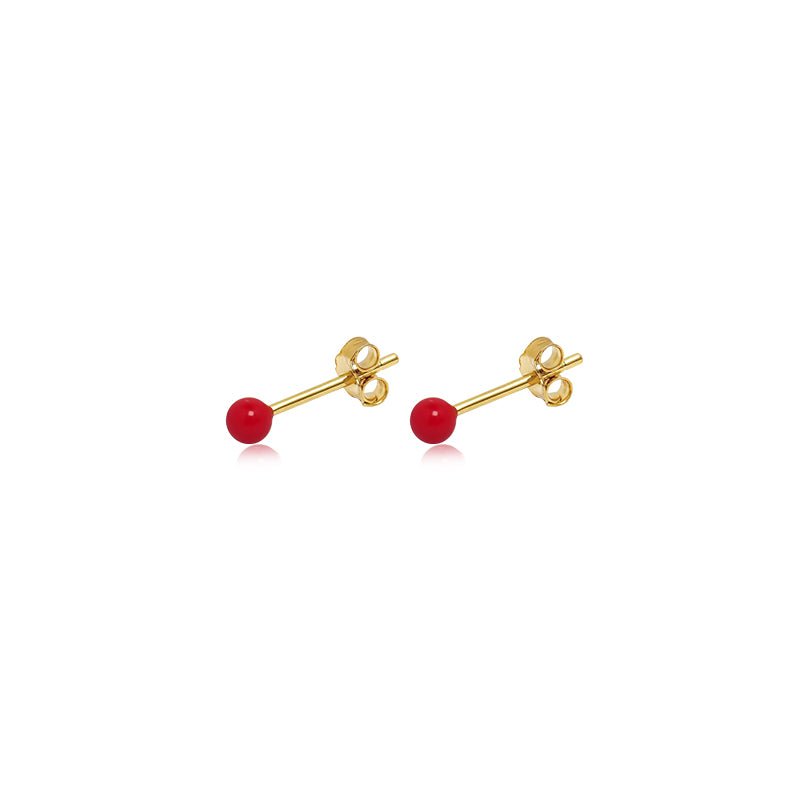
Grace Studio Example: Minimalist Round Cabochon Stud Earrings
The Minimalist Round Cabochon Stud Earrings are a useful example of the smooth, compact front I would look for in an everyday stud.
I would keep one caveat from the original product note: I would not assume this specific pair has a flat back unless that closure is confirmed on the product page. The design works as an example of the low-profile look, but the backing still needs to be checked separately.
2. Classic Stud Earrings

Classic studs are probably the easiest all-round everyday category.
They stay close to the ear, work with almost every neckline, and usually require very little styling thought.
A good everyday stud can move from:
T-shirt → knitwear → blazer → dinner
without looking out of place.
I would choose the design based on how visible I want it to be.
For a very quiet look, especially if you prefer minimalist jewelry:
- Plain metal
- Clear stone
- Small pearl
- Tiny geometric shape
For a little more personality:
- Trefoil
- Heart
- Star
- Abstract shape
- Compact floral
- Small colored stone
Grace Studio Example: Elegant Matte Trefoil Zirconia Stud Earrings
The Elegant Matte Trefoil Zirconia Stud Earrings make sense if a plain round stud feels too generic.
The trefoil shape adds detail, but the overall footprint stays compact. That is the kind of change I like in everyday jewelry: more personality without creating more movement or bulk.
3. Huggie Earrings

If I wanted one hoop specifically for daily wear, I would probably start with a huggie. The difference between hoops and huggies is useful here because movement and fit matter more than the category name alone.
Huggies sit close to the lobe and move very little.
That makes them useful when you want the shape of a hoop without constantly feeling it swing or catch.
I would pay attention to the inner diameter.
A tiny huggie that squeezes the lobe is not more practical than a slightly larger one that actually fits. Comparing a few hoop earring sizes on the ear is more useful than judging from diameter alone.
I want a little breathing room.
Plain vs. Stone-Set Huggies
Plain metal huggies are easier to combine with almost anything.
Stone-set huggies make sense if you want the same compact shape with a little more brightness.
For day-to-dinner wear, I often prefer the second option.
Grace Studio Example: Crystal Channel Set Huggie Hoops
The Crystal Channel Set Huggie Hoops fit the daily-wear role well because the basic shape stays compact while the crystal detail adds enough interest for evening.
This is the kind of pair I would choose when I do not want to change earrings between work and dinner.
4. Small Hoops

A small hoop gives you more visible shape than a huggie while staying relatively easy to wear.
This is usually where I go when studs feel too quiet.
I think about:
- Diameter
- Weight
- Closure
- How much the hoop moves
- Whether it meets my hair or collar
Huggie vs. Small Hoop
If I want maximum practicality, I choose the huggie.
If I want the earring to show a little more, I choose the small hoop.
That is the difference I find most useful.
Grace Studio Example: Elegant Pearl-Accented Mini Hoop Earrings
The Elegant Pearl-Accented Mini Hoop Earrings sit between a plain hoop and a more decorative pearl earring.
That makes them useful if you want one small hoop that feels slightly more polished than a plain metal pair without turning into occasion jewelry.
Everyday Earrings With More Personality
Not every daily pair needs to disappear completely.
Sometimes I want an earring that is still easy to wear but does a little more visually.
5. Pearl Studs

Pearl studs are often treated as formal, but small pearls work surprisingly well with casual clothes. Different pearl shapes can also make the look feel more classic, organic, or modern.
I like them with:
- White T-shirts
- Sweaters
- Denim shirts
- Blazers
- Simple dresses
- Knitwear
A moderate pearl size usually integrates more easily into everyday outfits than a very large pearl. That kind of restraint also makes the pair easier to fold into a classic jewelry rotation.
The goal is not to make the pearl invisible. I simply want it to feel like part of the outfit rather than the entire point of the outfit.
Grace Studio Example: Petite Pearl Cluster Stud Earrings
The Petite Pearl Cluster Stud Earrings are a good option for someone who likes pearls but finds a single round pearl a little too traditional.
You still get the compact footprint of a stud. The cluster shape adds more character.
6. Gemstone Studs

A small gemstone is one of the easiest ways to add color without giving up the practicality of a stud.
You could choose:
- Sapphire
- Ruby
- Lapis
- Moissanite
- Birthstones
- Other colored stones
For daily wear, I would pay attention to the setting as much as the stone.
A smooth metal edge generally gives hair and clothing fewer places to catch than a very high, exposed setting.
Bezel-Style Settings
A bezel surrounds the stone with metal and can create a smoother outer edge.
That does not mean every daily gemstone stud needs a bezel.
It simply gives you a useful comparison point when you are looking at how exposed the setting is.
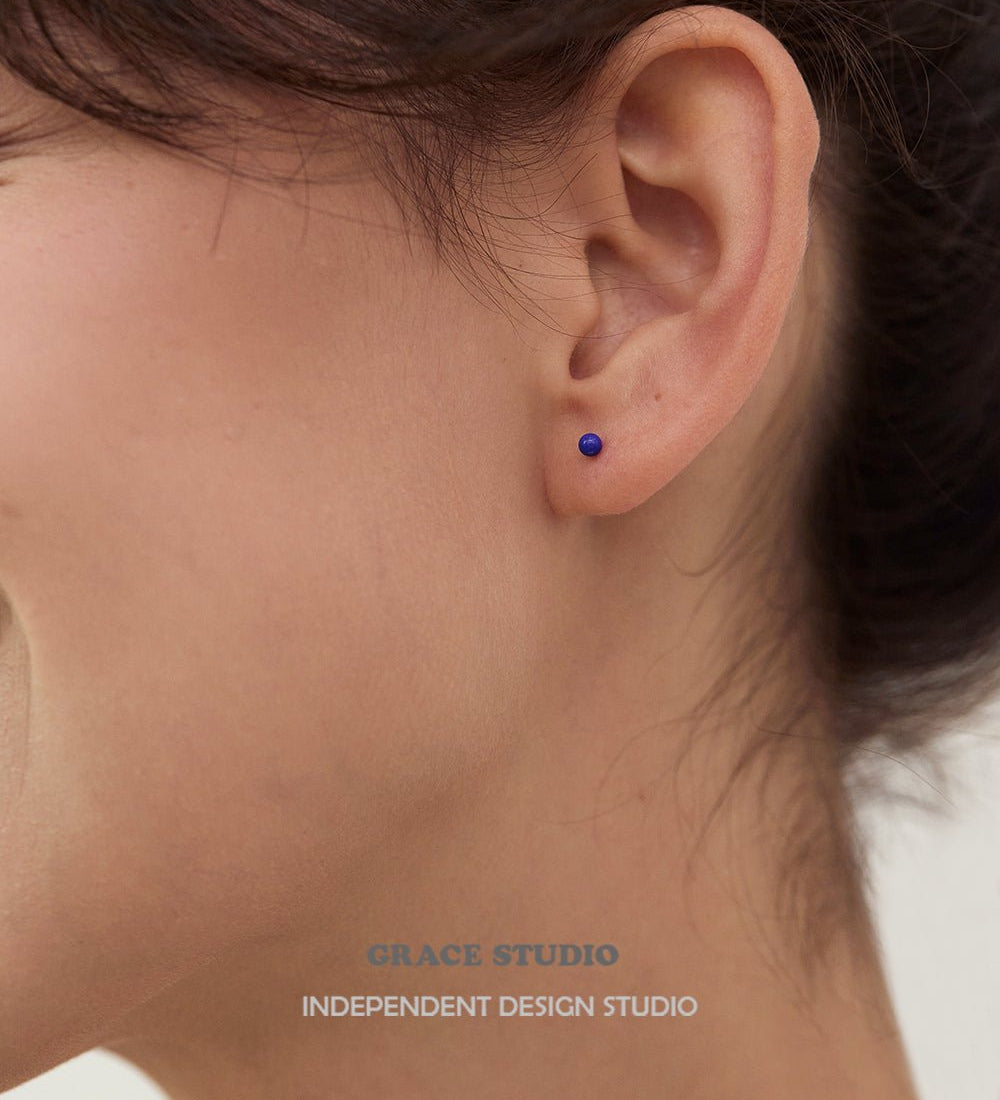
Grace Studio Example: Organic Frame Lapis Stud Earrings
The Organic Frame Lapis Stud Earrings work well here as an example of the compact-colored-stone idea.
I would keep the same caution as the source: I would not call the exact product bezel-set unless the setting construction is confirmed.
The useful part is the format. You get a visible dose of color while keeping the earring close to the ear.
7. Small Sculptural Studs

This may be my favorite way to make a basic stud more interesting. A compact shape with more character is also an easy way to bring a little sculptural jewelry into an everyday rotation.
Keep the practical format. Change the silhouette.
I would look at:
- Domes
- Knots
- Arches
- Stars
- Hearts
- Abstract shapes
- Compact florals
For daily wear, I prefer rounded edges and compact proportions.
Very sharp corners or long projecting details create more chances to catch hair and clothing.
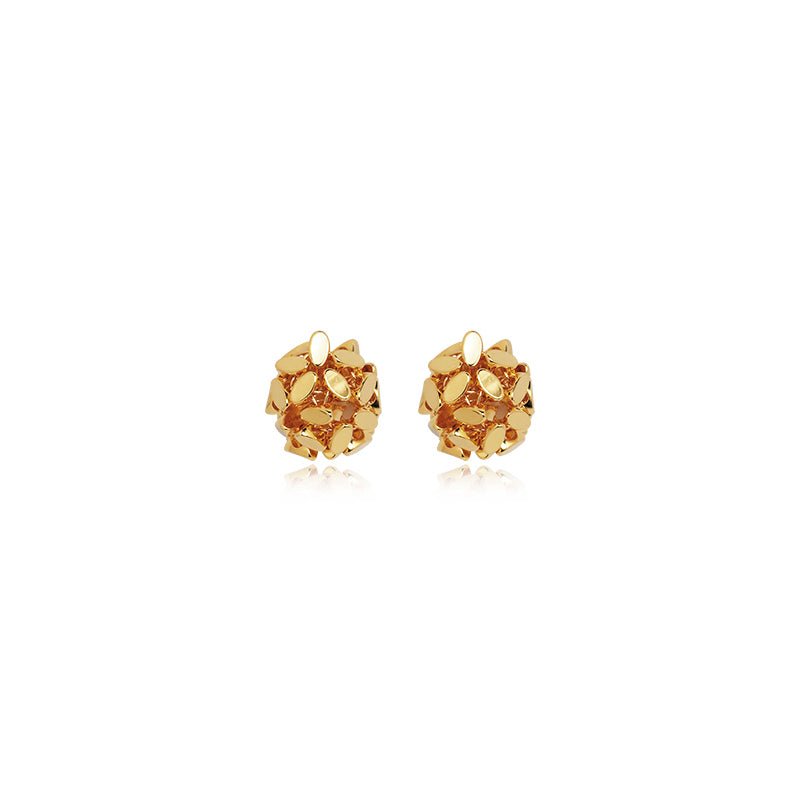
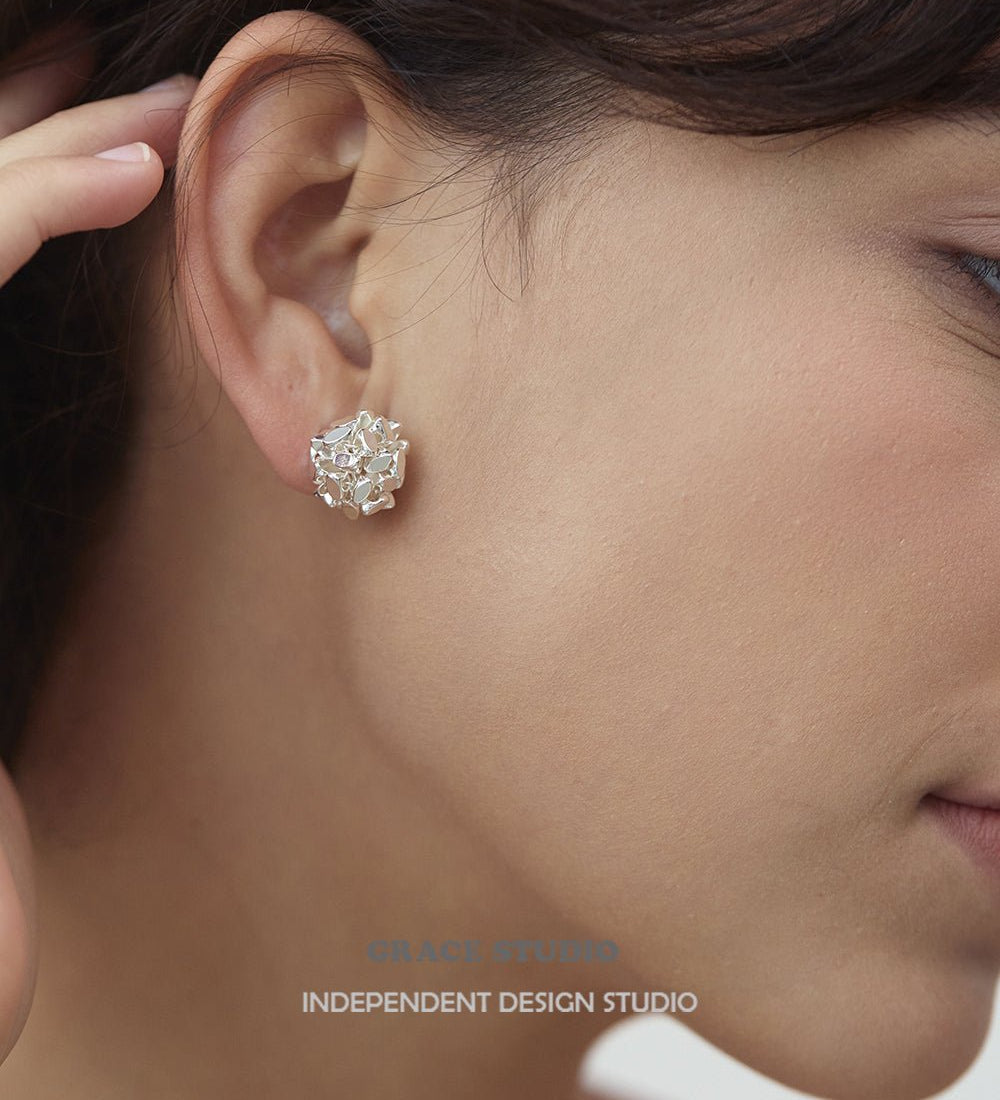
Grace Studio Example: Minimalist Arch Sphere Stud Earrings
The Minimalist Arch Sphere Stud Earrings fit this role nicely.
The arch-and-sphere shape gives the stud more character while keeping the design close to the ear.
This is the kind of pair I would reach for when a plain stud feels too basic but I still want something I can forget about after putting it on.
8. Short Drop Earrings

A short drop can still be a very practical everyday earring.
It gives you movement without the commitment of a long dangle. The distinction between drop and dangle earrings is useful here because extra movement usually changes both comfort and snag risk.
I would look for:
- Short length
- Lightweight construction
- One main hanging element
- Smooth shapes
- Limited chainwork
A single pearl, sphere, or metal form is usually easier to manage than several separate dangling pieces.
When I Would Skip the Drop
I would probably choose something else if the day involves:
- Exercise
- A helmet
- Very tangle-prone hair
- Constant headphone use
- A young child who grabs jewelry
That does not make drops bad daily earrings.
It makes “daily” specific to the day.
Grace Studio Example: Minimalist Cinnabar Sphere Drop Earrings
The Minimalist Cinnabar Sphere Drop Earrings are a useful example because the design uses one clear hanging form rather than lots of tiny moving parts.
This is the kind of short drop I would use when I want more movement but do not want the earring to feel formal.
9. Ear Climbers

Ear climbers give you more visual detail without hanging downward.
That makes them useful if you like a layered ear look but do not necessarily want several piercings.
I would check:
- Weight
- How securely the climber sits
- Whether the shape follows your ear comfortably
- Whether any points press into the skin
Grace Studio Example: Dazzling Cascading Moissanite Stud Earrings
The Dazzling Cascading Moissanite Stud Earrings work as an example of the upward-following look.
The graduated design creates more presence than a basic stud while staying relatively close to the ear.
I would choose this type of earring when I want my everyday jewelry to feel a little more deliberate.
10. Ear Cuffs

I think of ear cuffs as an everyday styling addition rather than a default 24/7 piece.
They are useful when you want more layering without another piercing.
Fit matters more here than almost anything else.
A cuff should feel secure without constant pressure.
If you are aware of the pinch after a few minutes, I would move it or try another size.
Grace Studio Example: Cubic Zirconia Layered Star Stud and Cuff Earrings
The Cubic Zirconia Layered Star Stud and Cuff Earrings combine a stud and cuff idea in one design.
They make sense if you want an ear stack to look more layered without switching to a large conventional statement earring.
Everyday Earring Closure Guide
The back of the earring can matter as much as the front when you wear it for hours.
| Closure | Good starting point | Watch for |
|---|---|---|
| Flat back | Long wear and headphones | Front setting that still sits too high |
| Butterfly back | Easy daily changes | Long post or loose backing |
| Hinged / click | Huggies and small hoops | Weak click or rough joint |
| Screw back | Extra security | Slower removal |
| Fishhook | Short drops for lighter days | Open hook catching hair or clothing |
Fit, Materials, Closures, and Size Matter More Than the Style Name
Once I know which general shape I like, I would make the final decision from these details.
Studs vs. Hoops
This is probably the most useful everyday comparison.
Choose studs if you want:
- Very little movement
- Lower snag risk
- Better compatibility with headphones
- A quieter look
- Easy workwear
Choose huggies or small hoops if you want:
- More visible shape
- A little more movement
- Easier casual styling
- A pair that can carry a simple outfit
If I were building a very small collection, I would own both.
They solve different daily-wear problems.
Flat Backs vs. Butterfly Backs
Flat backs usually make more sense when long-wear comfort matters.
Butterfly backs make more sense when you change earrings often and want something familiar and quick.
Neither is automatically better in every situation.
I would choose based on how often I remove the pair.
Hinged and Click Closures
For huggies and small hoops, I like closures that click firmly into place.
The important part is that the mechanism feels secure and does not leave a rough joint.
Screw Backs
Screw backs can be useful when security matters, especially with valuable studs.
The tradeoff is speed.
They take longer to put on and remove.
Material
The more often you wear an earring, the more attention I would pay to the actual material.
Common choices include:
Solid gold: durable and useful for frequent wear, but remember it is usually an alloy.
Titanium: lightweight and often chosen by people with sensitive ears. I would look for precise material information rather than vague “skin friendly” wording.
Platinum: durable and premium, but usually much more expensive.
Sterling silver: accessible and easy to wear, though it may need more tarnish care.
Gold-filled and gold-plated: useful at different price points, but repeated friction, sweat, water, skincare, and hair products can affect surface finishes over time. If you are comparing these finishes, the difference between gold-plated and solid gold is worth understanding before buying an everyday pair.
I would not choose material by prestige alone.
I would choose it by sensitivity, maintenance, budget, and how hard I am on the jewelry.
Size
There is no universal everyday measurement.
I think in terms of proportion.
For studs, small to medium usually gives me the easiest range.
For huggies, the inner diameter matters more than the outer look.
For small hoops, I want enough room to move without the hoop constantly meeting my hair or collar.
For drops, shorter designs usually fit more routines.
And across all of them, I care more about weight than size alone.
Daily-Wear Material and Care Guide
Frequent wear makes material, finish, and maintenance more important.
| Material / finish | Good for | Watch for |
|---|---|---|
| Solid gold | Frequent wear and longevity | Alloy composition if ears are sensitive |
| Titanium | Lightweight sensitive-ear option | Exact grade or material description |
| Sterling silver | Accessible everyday wear | Tarnish and regular cleaning |
| Gold-filled | More durable surface than plating | Wear from friction and products |
| Gold-plated | Lower-cost variety | Finish wear from water, sweat, and skincare |
Match the Earring to the Day You Actually Have
I think this is where everyday-earring advice becomes genuinely useful.
Office and Work
I would use the same comfort-first thinking I apply when choosing jewelry for office wear.
I would start with:
- Studs
- Pearl studs
- Huggies
- Small hoops
- Short drops
You get enough polish without needing to think about the earrings throughout the day.
Active Days
I would move toward:
- Flat-back studs
- Huggies
- Small secure hoops
Long dangles and open hooks make less sense when you know you will be moving constantly.
Headphones or Helmets
Flat-back studs are one of the first things I would try.
Compact huggies can also work depending on how the headphones or straps sit.
This is one of those situations where product dimensions matter more than fashion advice.
Parents of Young Children
Studs, flat backs, and huggies usually make more sense because there is less hanging jewelry to grab.
Practical? Very.
Permanent? No. It is simply the easier choice for that stage of life.
Day to Dinner
I would choose:
- Gemstone studs
- Pearl studs
- Crystal huggies
- Small hoops
- Short sculptural drops
You want enough detail for the evening without spending the whole day in something that feels overly formal.
Daily Wear Is Different From 24/7 Wear
This distinction matters.
A short drop can be a great daily earring from breakfast through dinner and still be a terrible choice for sleeping.
Wearing the same pair most days does not mean you should never remove it.
If you want something suitable for very long stretches, I would start with compact designs such as:
- Flat-back studs
- Small huggies
- Smooth compact hoops
The less the earring protrudes or swings, the easier it usually is around pillows, headphones, hair, and clothing.
Build a Small Everyday Earring Collection Instead of Buying Every Style
You do not need ten “essential” everyday earrings.
Three pairs can cover a lot.
Pair 1: The Pair You Barely Think About
This is your basic stud.
It could be:
- Plain metal
- Clear stone
- Pearl
- Small geometric shape
The Elegant Matte Trefoil Zirconia Stud Earrings fit this role if you want the basic pair to have a little more shape.
Pair 2: The Everyday Hoop
Choose a huggie or small hoop.
The Crystal Channel Set Huggie Hoops are a useful example if you want the hoop to carry a little sparkle without increasing the size much.
Pair 3: The Slightly Dressier Pair
This is the pair I use when I want more movement or presence.
It could be:
- A short drop
- A sculptural stud
- A gemstone earring
The Minimalist Cinnabar Sphere Drop Earrings fit this slot because they add movement without turning into a long, complicated dangle.
Optional Pair 4: The Personal One
Once the basics are covered, add the pair that is more specific to your taste.
That might be:
- A colored stone
- Ear climber
- Cuff
- Symbolic shape
- Unusual sculptural stud
The Dazzling Cascading Moissanite Stud Earrings are one example of a more decorative direction that still stays relatively close to the ear.
This approach makes more sense to me than buying ten categories because a list says you should own them.
A Small Everyday Earring Rotation
Three or four pairs can cover most daily situations without buying every style.
| Role | Good starting point | What it covers |
|---|---|---|
| Pair 1: effortless | Simple stud | Work, errands, casual days |
| Pair 2: everyday hoop | Huggie or small hoop | T-shirts, knits, weekends |
| Pair 3: slightly dressier | Short drop or gemstone stud | Dinner and polished outfits |
| Pair 4: personal | Sculptural stud, cuff, or colored stone | More individual styling |
How I Test and Care for Earrings I Want to Wear Often
I do not call a pair “everyday” after wearing it for ten minutes.
I test it.
Wear the Pair for Several Hours
The first ten minutes tell you almost nothing about long-wear comfort.
After several hours, I ask:
- Do I feel the weight?
- Has the backing started to bother me?
- Has my hair caught on it?
- Did I keep checking the closure?
- Did the earring interfere with headphones or clothing?
- Do I still want to wear it tomorrow?
That is the real test.
Picture a Normal Tuesday
This is probably my favorite shopping filter.
Forget the holiday party.
Forget the perfectly styled outfit.
Picture a normal Tuesday.
What are you wearing?
Are you commuting?
Do you use headphones?
Will you change into gym clothes?
Are you putting on a scarf?
Would the earrings still make sense?
If yes, they are probably useful.
Check Whether They Work With Most of Your Wardrobe
I would think about the five tops or outfits I wear most often.
If the earrings work with three or four of them, that is usually enough.
An everyday pair does not need to be neutral.
It needs to be easy.
Clean Frequently Worn Earrings Regularly
Daily earrings collect:
- Skin oil
- Makeup
- Sunscreen
- Skincare
- Sweat
- Hair products
Pay particular attention to posts, backs, hinges, and stone settings.
The cleaning method should match the actual metal and stones. For frequently worn pieces, regular care also helps with keeping jewelry from tarnishing and building up residue.
Check Closures and Settings
Every so often, I would make sure:
- Hinges still click properly
- Butterfly backs remain secure
- Screw backs tighten normally
- Posts are straight
- Stones do not feel loose
A tiny closure issue is much easier to deal with before an earring disappears.
“Everyday” Does Not Mean “Never Remove”
Even a very durable pair benefits from being taken off, cleaned, checked, and stored properly.
I would especially think twice before sleeping, showering, exercising, or swimming in a pair unless the material, closure, and setting are suited to it.
Frequently Asked Questions About Everyday Earrings
Can I Wear the Same Earrings Every Day?
Yes.
There is nothing wrong with reaching for the same pair repeatedly as long as the earrings stay comfortable, secure, clean, and non-irritating.
I would still remove them periodically for cleaning and inspection.
What Earrings Are Easiest With Over-Ear Headphones?
Flat-back studs are one of the first options I would try because there is less hardware protruding behind the ear.
Very small huggies may also work, but the exact headphone shape matters.
Can I Sleep in Everyday Earrings?
Removing earrings before bed is the simplest option.
If you prefer leaving them in, flat-back studs and very small smooth huggies are usually easier than large hoops, drops, open hooks, or heavy earrings.
Can I Shower in Everyday Earrings?
That depends on the metal, plating, stones, and setting.
Repeated water, shampoo, soap, skincare, and friction can affect some finishes and create buildup.
I would not use “daily wear” as shorthand for “safe to leave on during everything.”
What If My Ears Are Sensitive?
Start with the actual material rather than relying on a broad label such as “hypoallergenic.”
Also look at weight, backing pressure, post angle, and fit.
If a pair repeatedly causes redness, itching, swelling, or soreness, I would stop wearing it rather than trying to make it work.
Infographic






Leave a comment