
What Are the Different Pearl Shapes?
When most people picture a pearl, they picture a perfect little sphere. That was my default too.
Once you start looking more closely, though, pearl shapes get much more interesting. Some are nearly round. Some are slightly flattened, oval, tapered, ringed, or completely irregular. Two pearls can come from the same general pearl variety and still look very different once you compare their outlines side by side.
The shape names you will see most often are:
- Round
- Near-round or semi-round
- Button
- Oval
- Drop, teardrop, or pear
- Baroque
- Circled baroque
The confusing part is that sellers do not always use those labels in exactly the same way. One store may separate drop and pear. Another may group them together. A pearl that one seller calls oval may be listed somewhere else as semi-baroque.
So I do not rely on the name alone.
I look at the actual outline first. Is the pearl truly spherical? Slightly flattened? Longer than it is wide? Tapered at one end? Irregular all over? Once you answer that, the label becomes much easier to understand.
There is one other distinction worth getting clear early: pearl shape and pearl type are two separate things.
Round, oval, button, drop, and baroque describe form. Akoya, Freshwater, Tahitian, and South Sea describe pearl varieties or cultivation origin.
Small distinction. Big difference when you're reading pearl descriptions.
Pearl Shapes at a Glance
If I need to identify a pearl quickly, this is where I start.
| Pearl shape | What it usually looks like | Symmetry | Common jewelry uses |
|---|---|---|---|
| Round | Nearly spherical | Very high | Strands, studs, pendants |
| Near-round | Almost round with slight variation | High | Strands, studs, everyday jewelry |
| Button | Rounded front with a flatter back | High | Stud earrings, necklaces |
| Oval | Longer than wide, usually rounded at both ends | High | Pendants, earrings, strands |
| Drop / Pear | Rounded body that narrows toward one end | High | Drop earrings, pendants |
| Baroque | Irregular or free-form | Low to varied | Pendants, strands, statement jewelry |
| Circled baroque | Irregular with visible ring-like grooves | Varied | Pendants, strands, statement pieces |
I see these more as points along a loose spectrum than perfectly separate boxes.
A pearl may be mostly oval but have one uneven side. Another may look near-round until you rotate it. A drop pearl may taper only slightly. Real pearls do not always cooperate with neat retail categories.
Why Pearl Shape Names Overlap
This is the part that can make pearl shopping feel more complicated than it needs to be.
Near-round and semi-round usually refer to pearls that are close to spherical but not perfectly round.
Oval usually means the pearl is clearly longer than it is wide, with rounded ends.
Drop, teardrop, and pear-shaped all refer to a pearl that narrows toward one end, although the degree of taper can change.
Baroque is a broad label for irregular pearls. You may also see terms such as semi-baroque or free-form baroque when a seller wants to describe how irregular the pearl is.
I don't spend much time deciding whether a borderline pearl is technically a teardrop or a pear. I look at the outline. If the shape works for the jewelry and you like it, that matters more than making it fit one seller's vocabulary.
Quick Pearl Shape Identification
If the seller's label feels unclear, I would start with the outline.
| What you see | Likely shape | Quick clue |
|---|---|---|
| Almost perfectly spherical | Round | Looks similar from nearly every angle |
| Mostly round with a slight variation | Near-round | Small flat spot or uneven side |
| Round from the front, flatter from the side | Button | Dome-like profile |
| Longer than wide, rounded at both ends | Oval | No strong point or taper |
| Rounded body narrowing toward one end | Drop / pear | Clear top-to-bottom direction |
| Irregular outline | Baroque | No consistent symmetry |
| Irregular with ring-like grooves | Circled baroque | Visible bands around the pearl |
Pearl Shapes We Love
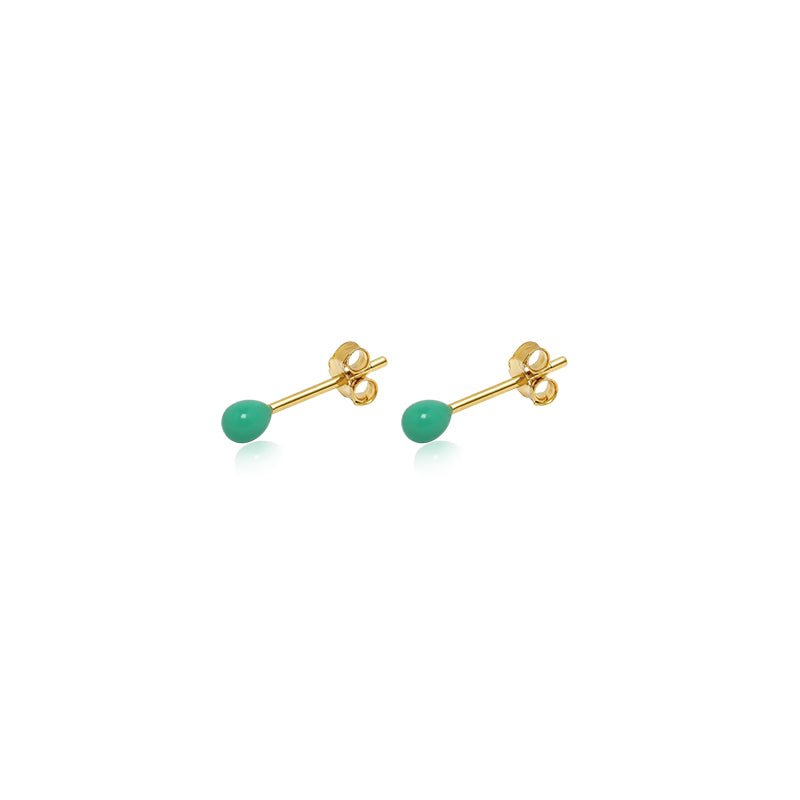
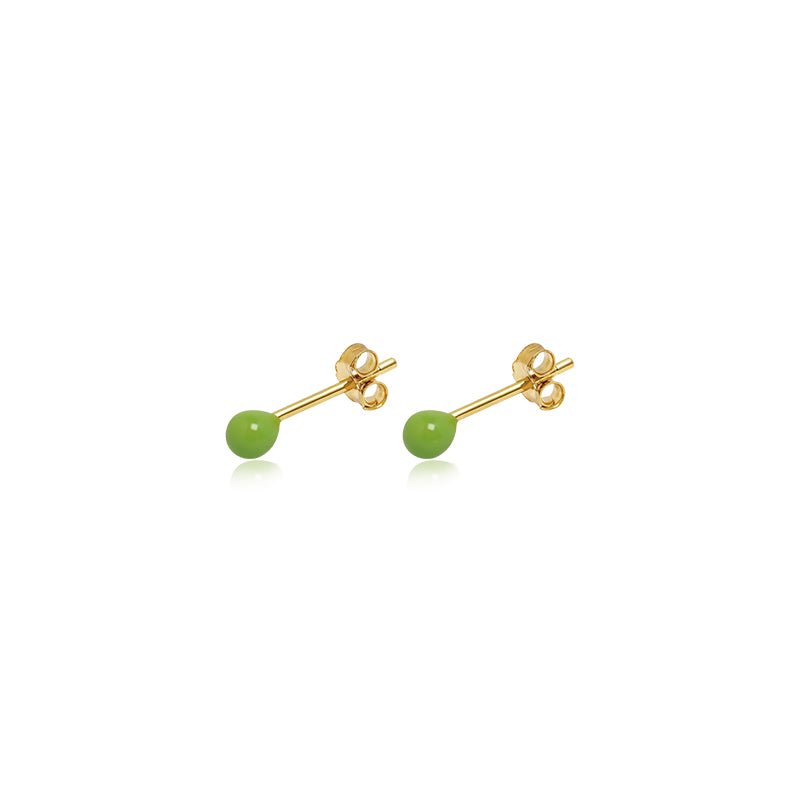
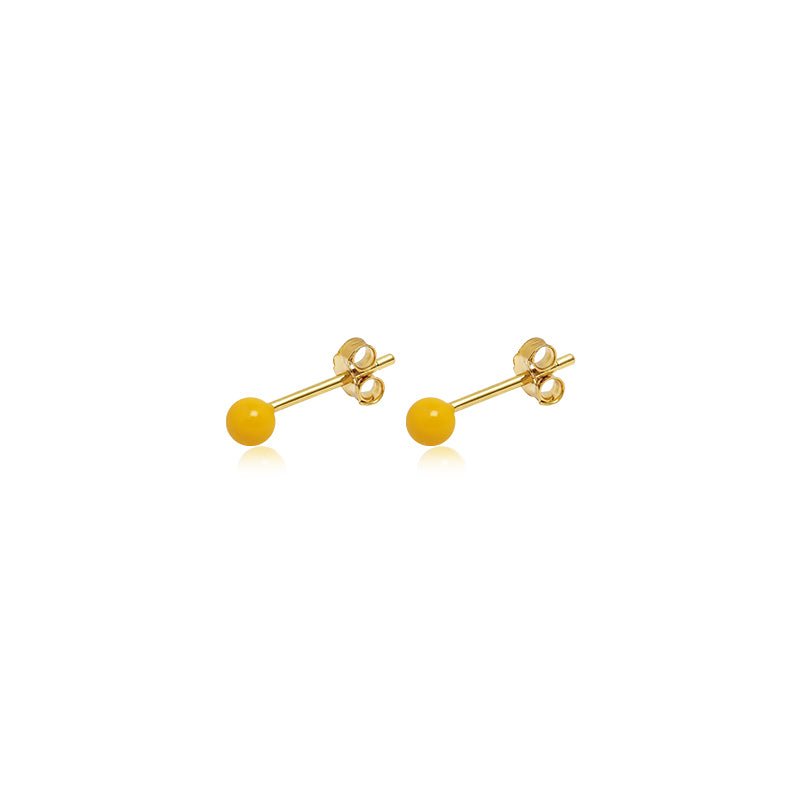
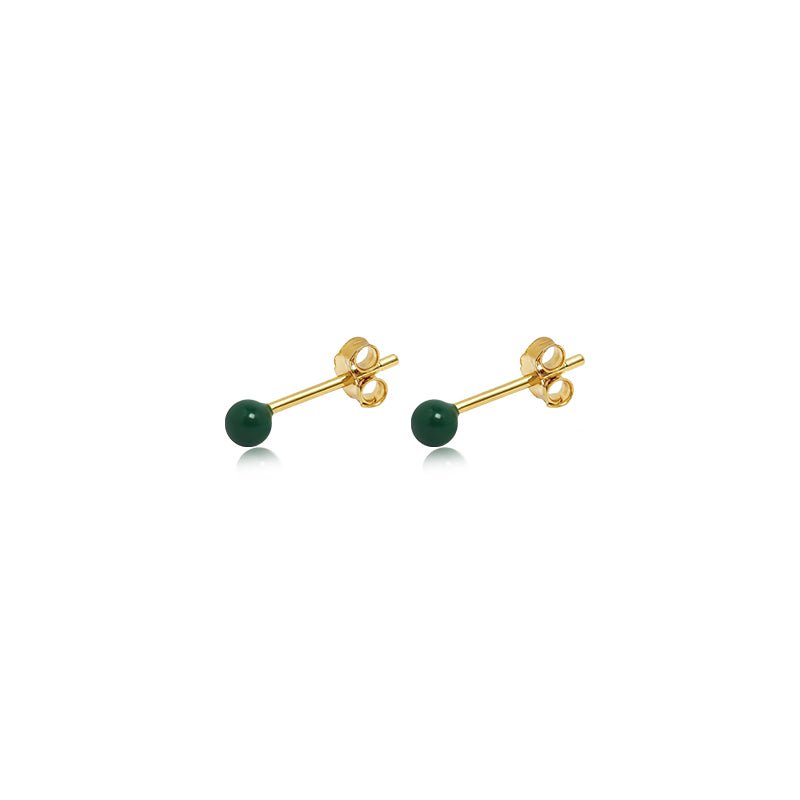
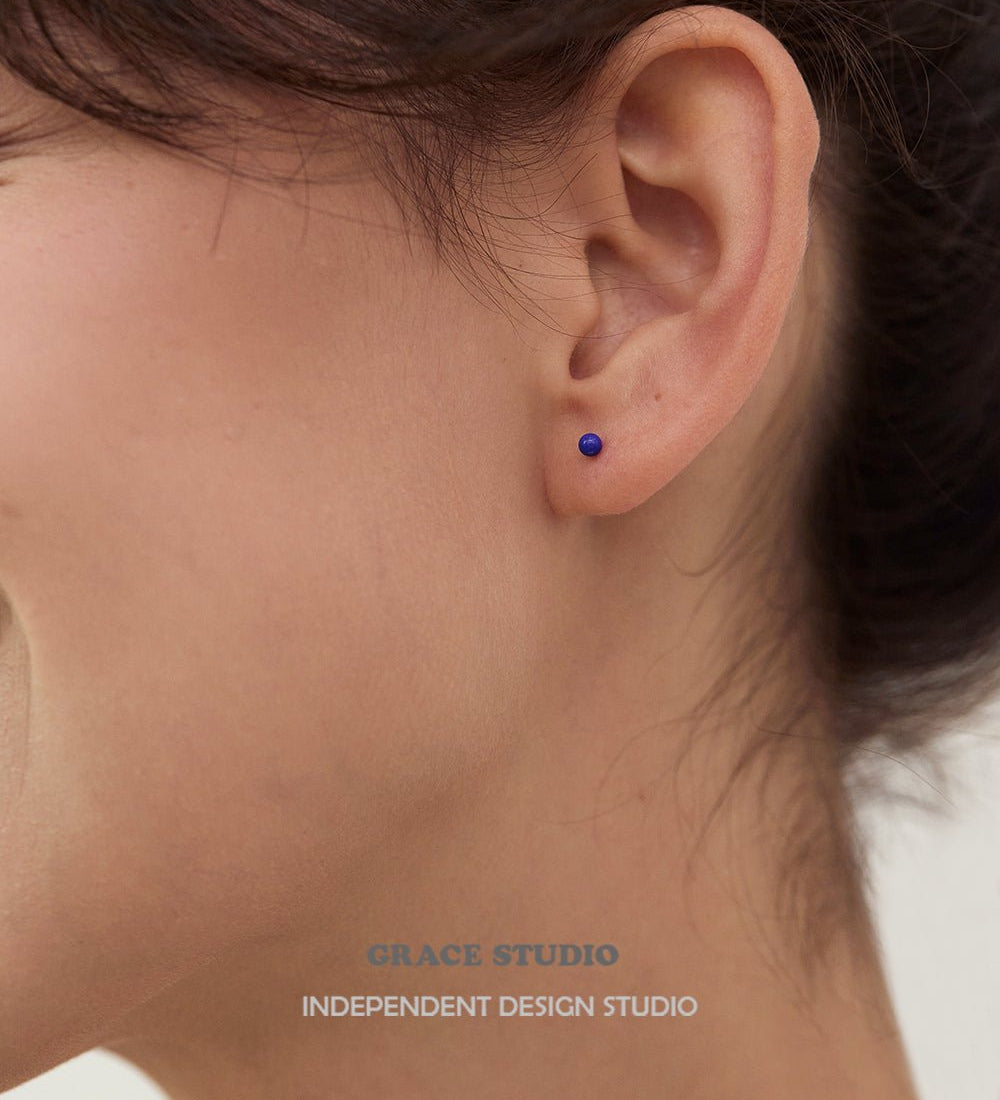
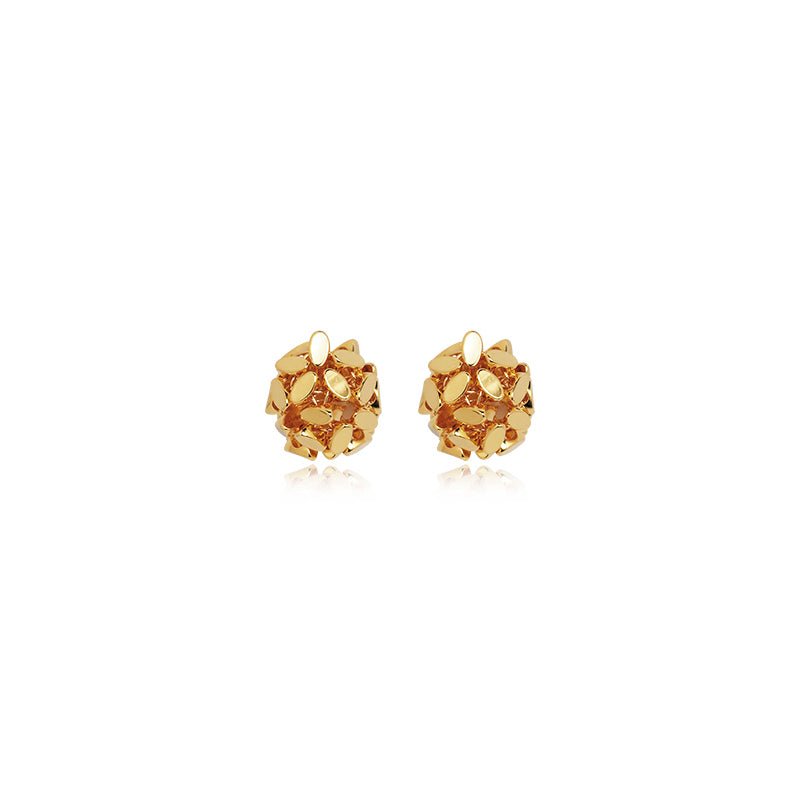
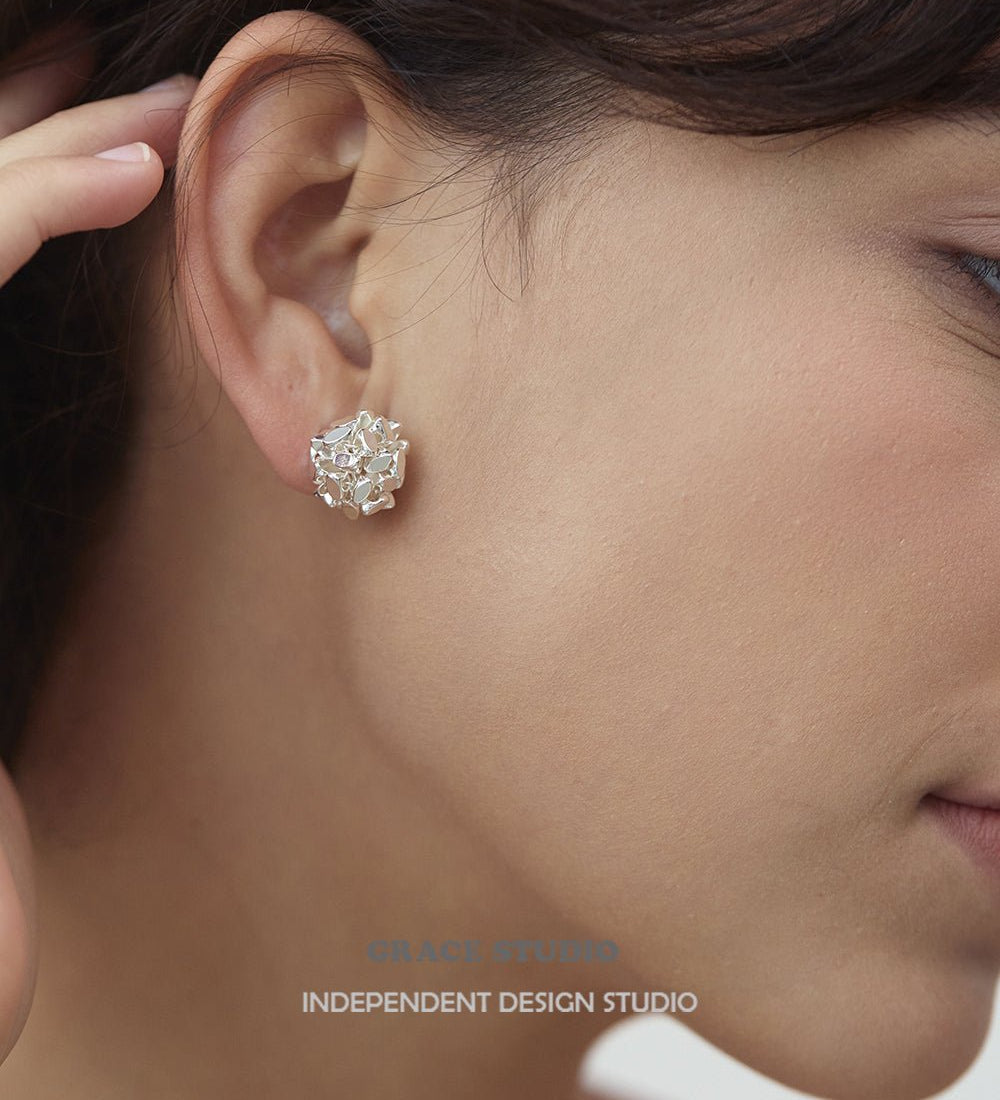
Four jewelry picks that show how different pearl shapes look when worn.

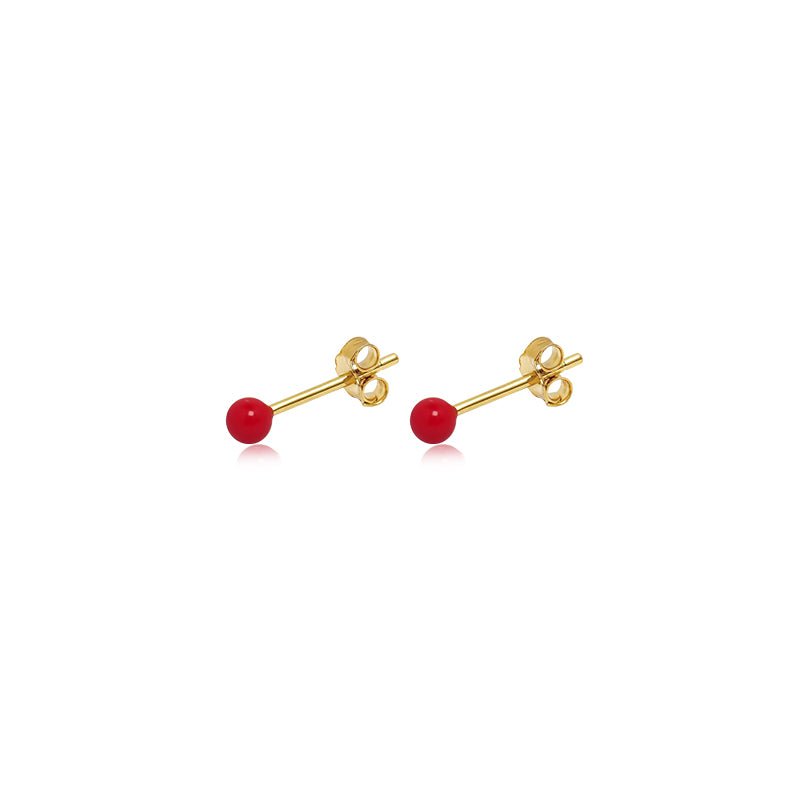
Smooth round pearls give these studs a clean and classic appearance.
SHOP →
Tapered freshwater pearls create a graceful vertical line beneath the ear.
SHOP →
Small oval freshwater pearls give this strand a softer, less formal look.
SHOP →
One irregular baroque pearl gives this adjustable cord necklace its character.
SHOP →Why Pearls Come in Different Shapes

Pearls do not get their shape at a cutting bench.
That alone makes them quite different from many gemstones.
A gemstone may be cut into a round, oval, emerald, or pear shape after it is mined. A pearl develops its overall form while it grows inside the mollusk.
So the outline you see is largely the result of growth, not a cutter deciding what shape to make later.
The Pearl Grows Into Its Shape
As the pearl develops, layers of nacre or other pearl material build around the growing center.
Ideally, those layers may build evenly enough to create a round result. But biology is not that controlled.
The pearl may grow slightly longer on one side. It may flatten. It may develop a curve, a taper, bumps, rings, or an irregular outline.
Small changes during growth can produce very different finished shapes.
That is why two pearls from the same general variety can still look unrelated in form.
A Round Nucleus Does Not Guarantee a Round Pearl
Many cultured saltwater pearls begin around a round bead nucleus.
That may sound as if the finished pearl should automatically be round. It does not work that neatly.
The pearl can still develop as:
- Near-round
- Oval
- Drop-shaped
- Circled
- Baroque
The nucleus matters, but it does not get the final say. Growth does.
Freshwater pearl cultivation may use different methods, which is one reason you see freshwater pearls in such a broad mix of shapes. Shape is also one factor that can affect freshwater pearl value, along with luster, size, surface quality, and matching.
Why Irregular Pearls Form
Irregularity can develop when the pearl material builds unevenly.
Movement inside the mollusk can also affect the final form.
You may end up with:
- Flattened areas
- Curves
- Bumps
- Tapers
- Ring-like grooves
- Asymmetry
I don't automatically read those features as defects.
On some pearls, the irregularity is the entire reason the piece feels interesting. A baroque pendant would lose much of its character if the pearl were replaced with a perfectly round one.
Natural and Cultured Pearls Can Both Be Irregular
"Natural" does not mean "perfectly round."
Natural pearls can be round, near-round, oval, drop-shaped, baroque, or irregular in other ways.
Cultured pearls can appear in those shapes too.
The difference between natural and cultured pearls concerns how pearl formation begins. It does not tell you what shape the finished pearl will have.
So if you see an irregular pearl, you cannot decide whether it is natural or cultured from the shape alone.
Round Pearls

Round pearls are the shape most people recognize immediately.
A truly round pearl looks spherical from almost every angle.
That level of symmetry is difficult to produce consistently, which is one reason round pearls often cost more when you compare pearls that are otherwise similar in size, luster, color, surface quality, nacre quality, and condition. Those same factors also influence pearl necklace prices.
You will often see round pearls used for:
- Traditional pearl strands
- Stud earrings
- Simple pendants
- Bracelets
- Formal pearl jewelry
For a strand or pair of earrings, matching becomes part of the appeal. The pearls are usually selected so their size and shape look consistent together.
How I Check Whether a Pearl Is Truly Round
One front-facing photo isn't enough for me to judge roundness.
Rotate the pearl if you can.
A pearl can look perfectly circular from one direction and reveal a slight flat area or elongation once it turns.
Look at the outline instead of the shine for a moment.
Does the silhouette stay almost the same as the pearl rotates? If yes, you may be looking at a truly round pearl. If the profile changes slightly, it may be near-round.
That difference can be surprisingly hard to notice once the pearl is being worn.
That leads to a practical point. If the tiny deviation disappears at normal viewing distance, you may not need to pay for perfect roundness.
Near-Round or Semi-Round Pearls

Near-round pearls sit very close to true round pearls.
The difference may be small enough that you do not notice it until you inspect the pearl up close.
You might see:
- A slightly longer side
- A subtle flat spot
- A minor change in the outline
- A small departure from a true sphere
At normal distance, many near-round pearls still read as round. Up close is where the difference starts to show.
That can make them a useful option when you like the look of round pearls but do not care about perfect symmetry.
Round vs. Near-Round
The difference is mostly degree, not a dramatic jump from one category to another.
Round pearls stay closer to a true sphere.
Near-round pearls show a small amount of visible variation.
If two pearls are otherwise comparable, the truly round pearl will often cost more.
Would I always pay the difference? No.
If the variation disappears once the pearl is on a necklace, I look at luster, surface, color, and matching before chasing perfect geometry.
A near-round pearl with strong luster may be more appealing to me than a duller round pearl.
Button Pearls

Button pearls are one of those shapes that make much more sense once you see the side profile.
From the front, they can look quite round.
Turn them sideways and you see the difference: one side is flatter, so the pearl has more of a dome-like profile than a full sphere.
You can find button pearls in necklaces, bracelets, rings, and pendants. Stud earrings are where I notice their shape advantage most, especially when styling stud earrings for everyday wear.
Why Button Pearls Make Sense for Studs
A fully round pearl naturally projects farther away from the earlobe because the back is curved.
A button pearl has a flatter side.
That flatter surface can let the pearl sit closer to the ear while still looking quite round from the front.
For studs, that flatter back is useful. Very. Pearl type, size, matching, and the metal setting also affect pearl earring prices, so shape is only part of the buying decision.
If you want the visual presence of a fairly substantial pearl without having the earring stick out as much, a button shape is worth considering.
Most people looking at the earrings will see them from the front or a slight angle anyway.
Oval Pearls

Oval pearls are clearly longer than they are wide.
Unlike a drop pearl, though, an oval usually stays rounded at both ends.
That gives it a softer, more even elongated shape.
Some ovals are only a little long. Others are unmistakably stretched. Same label, very different effect.
A good oval still has a fair amount of symmetry. If you divide it lengthwise, the two sides tend to feel balanced.
Oval vs. Near-Round
This one is usually easier to see than round versus near-round.
A near-round pearl still reads as basically spherical.
An oval pearl has an obvious lengthwise direction.
Put the two next to each other and the distinction becomes much clearer.
Where I Like Oval Pearls
Oval pearls work well in:
- Pendant necklaces
- Drop earrings
- Pearl strands
- Bracelets
- Statement jewelry
I particularly like the shape for pendants and drops because the extra length gives the jewelry a more vertical profile without the stronger taper of a teardrop. The effect also changes depending on necklace length.
In a strand, ovals can also make the necklace feel less uniform than a row of perfect rounds while still looking orderly.
Drop, Teardrop, and Pear-Shaped Pearls

Drop pearls narrow toward one end.
Some taper very gently. Others have a much more obvious point.
This is also where pearl terminology gets loose. Fast.
You may see drop, teardrop, and pear-shaped used for pearls that look very similar.
Drop vs. Teardrop vs. Pear
I treat drop as the broadest label.
A drop pearl may simply have a rounded lower body and a narrower top.
Teardrop often suggests a more obvious taper.
Pear-shaped usually suggests a fuller, rounded lower section that narrows toward the top.
But sellers may use these terms differently.
I'd rather compare the silhouettes than assume every store uses the same definition.
Why This Shape Works So Well When It Hangs
Drop shapes make visual sense in earrings and pendants because the pearl already has a clear top and bottom.
A pendant can hang with the fuller end below and the narrower end near the bail.
The same setup works naturally for earrings, which is one reason tapered pearls work so well when wearing drop earrings.
A well-matched pair of drop pearls can be especially difficult to put together because the two pearls need to work together in:
- Size
- Shape
- Color
- Luster
- Surface quality
With drop earrings, I inspect the pair first. It also helps to know the difference between drop and dangle earrings when comparing product descriptions. Two good pearls can still make an awkward pair.
Two beautiful pearls can still make a mismatched pair. Matching size, shape, and taper becomes especially obvious when making pearl drop earrings. One may be longer. One wider. One more tapered.
Baroque Pearls

Baroque pearls are irregular.
Simple label, huge range.
A baroque pearl may be:
- Curved
- Flattened
- Elongated
- Knobby
- Asymmetrical
- Twisted
- Free-form
Some still hint at an oval or drop. Others do not.
Others barely resemble any standard geometric form.
This is where pearl jewelry starts to feel more personal to me. The variation does not have to be hidden. It can carry the design.
Are Baroque Pearls Lower Quality?
No.
Baroque describes shape. It does not give you the full quality of the pearl.
A baroque pearl may still have:
- Strong luster
- Attractive color
- A clean surface
- Thick nacre
- Large size
- A visually appealing form
A dull round pearl does not automatically beat a luminous baroque pearl for me simply because one is spherical.
Shape is one factor.
Luster, surface, color, nacre, size, and the way the pearl works in the finished jewelry matter too.
For some designs, that irregular outline is exactly the point. Baroque pearls can also feel more relaxed when wearing pearls casually.
Semi-Baroque Pearls
Semi-baroque pearls sit between clearly symmetrical shapes and fully free-form baroque pearls.
You can usually still see a basic underlying form.
One may look generally oval but have an uneven side.
Another may resemble a drop but curve slightly.
I find this label useful when the pearl is too irregular to call symmetrical but still clearly resembles a familiar shape.
Free-Form Baroque Pearls
Free-form baroque pearls have very little obvious symmetry.
One may be wide and flat.
Another may be long and narrow.
Another may have several curves and raised areas.
They can work especially well as individual pendants because the shape itself becomes the main visual feature. Different pearl forms also create noticeably different effects when styling pearl necklaces.
With a pearl like that, I usually keep the surrounding jewelry fairly simple. The pearl is already doing enough.
Circled Baroque Pearls

Circled pearls have visible ring-like grooves around the surface.
The rings may go around part of the pearl or continue more completely around it.
These marks form during growth. They are not decorative lines added afterward.
Circled pearls are often irregular overall, which is why you will often see the term circled baroque.
Those rings change the surface immediately. You see more texture than you would on a smooth round or oval pearl.
Circled vs. Regular Baroque
A regular baroque pearl has an irregular overall shape.
A circled baroque pearl has that irregular shape plus visible ring-like growth patterns.
Not every baroque pearl is circled.
I also don't assume every line or mark means the pearl is circled. The term refers to those characteristic ring-like formations around the pearl.
Is Keshi a Pearl Shape?
Not exactly.
Keshi keeps showing up in shape discussions for one reason: these pearls are often irregular.
But Keshi refers to the way the pearl forms rather than one fixed outline.
Keshi pearls form without the conventional bead nucleus found inside many cultured pearls.
Because they are not growing around a round bead nucleus, their outlines can vary widely.
You may see Keshi pearls that are:
- Free-form
- Petal-like
- Flattened
- Elongated
- Curved
- Irregular
So when I see "Keshi" in a product description, I still look for another clue about the shape.
The word alone does not tell you whether the pearl is flat, long, curved, or something else.
Pearl Shape and Pearl Type Are Separate

If you're going to remember one terminology point before shopping for pearls, I'd make it this one.
Shape tells you the form.
Examples:
- Round
- Button
- Oval
- Drop
- Baroque
Type tells you the pearl variety or cultivation origin.
Common cultured pearl varieties include:
- Akoya
- Freshwater
- Tahitian
- South Sea
So "Tahitian" does not automatically mean black, round, or baroque.
A Tahitian pearl can appear in several shapes. Shape alone also cannot tell you whether a pearl is cultured, natural, or imitation, which matters when checking whether jewelry is real or fake.
The same goes for the other pearl varieties.
Different Pearl Types Can Share the Same Shape
Freshwater pearls can be round, near-round, button, oval, or baroque.
Tahitian pearls can be round, drop-shaped, baroque, or circled.
South Sea pearls also appear in both symmetrical and irregular forms.
Akoya pearls are well known for round forms, but they are not all perfectly round.
That is why I find descriptions like these much more useful:
Round Akoya pearl
Baroque freshwater pearl
First word: shape.
Second word: pearl type.
How Many Pearl Shapes Are There?
The source material groups GIA's basic shape categories into eight:
- Round
- Semi-round
- Button
- Drop
- Pear
- Oval
- Baroque
- Circled
Retail sellers may group some together or add more trade terms.
That is why you will sometimes see seven shapes on one chart and nine on another.
I don't get hung up on the count. You still have to look at the actual pearl.
How Pearl Shape Can Affect Value

Shape can affect price. I still would not shop by shape alone.
Why Round Pearls Often Cost More
Perfect rounds are hard to produce consistently. That scarcity is part of the price story.
Even when cultivation starts with a round bead nucleus, the final pearl may still develop slightly off-round or irregular.
So when two pearls are otherwise similar in:
- Size
- Color
- Luster
- Surface quality
- Nacre quality
the rounder pearl will generally command a higher price.
Traditional demand for round strands and studs pushes in the same direction. Their symmetry is also closely associated with classic jewelry.
But "round" is not a quality score by itself.
Symmetry Matters Beyond Round Pearls
A drop pearl can also be beautifully symmetrical.
So can an oval.
For drop earrings, balance between the two pearls matters a lot to me.
A slightly crooked pear shape may look less appealing than another pearl with a clean, even taper, even though both are technically in the same category.
The same idea applies to ovals.
Shape is not only a round-versus-not-round question. Proportion matters too.
Baroque Does Not Automatically Mean Inexpensive
A baroque pearl can still have large size, strong luster, attractive color, a clean surface, and a shape that works beautifully in jewelry.
Some baroque pearls are used specifically because the form cannot be easily duplicated.
A designer may build the entire piece around that one pearl.
So I am careful with the idea that baroque means "cheap" and round means "good." That shortcut falls apart quickly.
Too simple, in my view.
Luster Can Matter More to the Eye Than Perfect Shape
Give me a dull round pearl and a much more reflective near-round one, and I am not automatically taking the round pearl.
The source material makes the same broader point: shape is only one part of pearl quality.
Other factors include:
- Size
- Color
- Luster
- Surface quality
- Nacre quality
- Matching
A pearl can be geometrically impressive and still look flat if the luster is weak.
So when I shop, I look at the whole pearl first. Shape comes after that.
Pearl Shape and Value: What You Are Paying For
Shape can affect price, but it should be read alongside the rest of the pearl.
| Shape choice | What may raise price | What to compare |
|---|---|---|
| Round | High symmetry and scarcity | Luster, surface, size, matching |
| Near-round | Better symmetry within the category | Whether the difference from round is visible when worn |
| Drop / pear | Clean taper and matched pairs | Balance between the two pearls |
| Baroque | Large size, strong luster, distinctive form | Whether you like the individual outline |
| Circled | Attractive ring patterns and surface character | Texture, luster, and overall proportion |
Which Pearl Shapes Work Best in Different Jewelry?
There is no rule that says one shape belongs to one jewelry category.
Still, some shapes make more sense in certain designs. Bridal outfits are a good example, since choosing wedding jewelry often depends on the dress, neckline, and overall jewelry mix.
Pearl Shapes for Necklaces

Round and Near-Round
Round and near-round pearls are natural choices for traditional strands.
Matched round pearls create a very uniform appearance.
Near-round pearls can give a similar effect with a little more natural variation.
If I wanted the classic strand look without paying as much for perfect symmetry, near-round would be one of my first comparisons.
Baroque
Baroque pearls change the mood completely.
Instead of trying to make every pearl identical, the necklace can use the differences.
Some baroque strands stay fairly consistent, with only small changes in outline.
Others mix obviously different forms.
I choose based on how much variation I actually want to notice.
Oval and Drop
Oval and drop pearls bring more length into the strand.
That can make the necklace feel less traditional than a row of spheres without becoming fully irregular.
If round strands feel too formal for your wardrobe, these shapes are worth trying. Longer strands create another option, especially once you experiment with how to wear long pearls.
Pearl Shapes for Stud Earrings
Round
Round pearls are the classic stud choice.
They create a spherical appearance from the front and work especially well when the pair is closely matched.
Button
Button pearls are the practical option people seem to overlook more often.
The flatter back can let the pearl sit closer to the earlobe.
From the front, the pearl may still look almost round.
If you like a larger-looking stud but not the extra projection away from the ear, button pearls are worth comparing.
Pearl Shapes for Drop Earrings
Drop and Teardrop
This is where tapered pearls feel especially natural.
The pearl already has a direction to it.
Hung vertically, a symmetrical drop can create a clean line below the ear.
Matching matters more here than people sometimes expect. One pearl being noticeably longer or wider can show up fast when the pair sits beside your face.
Baroque
Baroque drops make the pair feel less uniform.
That can be intentional.
The pearls may be closely matched in overall size and color while still having slightly different outlines.
I tend to like this when the differences look related rather than random.
Pearl Shapes for Pendants
Drop
A drop pearl already wants to hang vertically.
That makes it an easy fit for a simple pendant design.
Oval
An oval gives you length without the stronger taper of a drop.
It can look softer and less pointed.
Baroque
For a simple pendant, baroque is often the shape I find most interesting.
One irregular pearl on a clean chain can carry the whole design.
You do not need much else.
Which Pearl Shape Fits Which Jewelry?
Some shapes are especially practical in certain designs.
| Jewelry | Shapes to compare | Why |
|---|---|---|
| Stud earrings | Round, button | Round looks classic; button can sit closer to the ear |
| Drop earrings | Drop, oval, baroque | Vertical shapes hang naturally |
| Pendant necklace | Drop, oval, baroque | The outline becomes a visible focal point |
| Classic strand | Round, near-round | Creates a more uniform row |
| Relaxed strand | Oval, baroque | Adds visible variation without needing perfect matching |
How I Would Choose a Pearl Shape

I don't start with, "Which shape is best?"
I start with the jewelry you actually wear.
Choose Round if You Want Uniformity
Round pearls make sense if you like:
- Traditional strands
- Classic studs
- Strong symmetry
- Formal pearl jewelry
- A consistent appearance
If that is the look you want, there is no reason to avoid it simply because baroque styles are more contemporary in some designs.
Choose Near-Round if Tiny Variations Do Not Bother You
Near-round pearls can give you much of the round-pearl look without requiring perfect symmetry.
In a necklace, the difference may be hard to notice unless you inspect the pearls closely.
Put them beside round pearls before dismissing the label. The difference may be much smaller than you expect.
Choose Button for Studs
For studs, button pearls deserve a look.
Their flatter backs can help them sit closer to the ear while still appearing round from the front.
That is a functional difference, not only an aesthetic one.
Choose Oval or Drop if You Want More Length
Oval and drop pearls create a more vertical shape.
They are especially useful for:
- Pendants
- Drop earrings
- Longer necklace designs
If a round pearl feels too compact, this is where I look next.
Choose Baroque if You Want the Pearl to Look Individual
With baroque pearls, I stop asking whether the pearl is perfectly symmetrical.
I ask a simpler question: do I like this specific pearl?
That sounds obvious, but it changes the way you shop.
Two baroque pearls may technically share the same category and still have completely different personalities in the finished jewelry.
Choose Circled Pearls if You Like Visible Surface Texture
Circled pearls have obvious ring-like growth patterns.
Those lines remain visible even when the pearl is not viewed up close.
I choose them when I want the pearl itself to bring the texture, without asking the setting to do much.
How Shape Changes the Look of Pearl Jewelry
Pearl shape changes more than the wording on a product page.
You feel the difference once the jewelry is actually on.
Round Pearls Look More Uniform
A strand of matched round pearls repeats the same basic form over and over.
That creates a controlled, consistent appearance.
Near-round pearls can look very similar, especially at normal distance.
Oval and Drop Pearls Create More Vertical Direction
Oval, drop, and pear shapes pull the eye lengthwise.
You notice this most clearly in earrings and pendants.
A long drop and a round pearl can share a similar width and still look nothing alike once they hang from the ear.
Baroque Pearls Make You Notice Each Pearl
With baroque pearls, the eye starts noticing individual outlines.
One curve is different from the next.
One pearl may be wider, flatter, or more irregular.
That makes the pearl itself more noticeable as an object rather than part of a perfectly repeating row.
Matching Works Differently With Different Shapes
For a traditional round strand, close matching is usually part of the look.
You generally want consistency in:
- Shape
- Size
- Color
- Luster
For drop earrings, matching is also easy to notice because the two pearls sit next to the face.
Baroque jewelry can work differently.
The pearls may relate to one another without being identical.
That gives the designer more freedom. I still want some connection, though, maybe in size, color, luster, or overall proportion.
What I Would Check Before Buying a Shaped Pearl
Shape names help. Product photos help more.
When I'm buying online, these are the details I check.
Look at More Than One Angle
One photo can hide a lot: a flat side, a slight taper, an asymmetry you only see from the back.
This matters most when a seller describes a pearl as round, near-round, oval, or drop.
If multiple angles are available, use them.
Compare the Pair for Earrings
For earrings, I care about the pair more than either pearl alone.
Do they have similar length?
Similar width?
Similar taper?
Similar color and luster?
A tiny difference may be fine. A pair that feels visually unbalanced is harder to ignore once it is next to your face.
Look at the Pearl in the Finished Setting
A setting can change how much of the shape you actually see.
A button pearl may look round from the front in a stud.
A slightly irregular drop may look more symmetrical once part of the top is covered by a cap or setting.
So I judge the finished jewelry too, not only the loose-pearl category.
Do Not Let Shape Distract You From Luster and Surface
It is easy to become fixated on whether a pearl is perfectly round.
I keep coming back to the whole pearl.
How reflective is it?
How does the surface look?
Does the color appeal to you?
If it is a pair or strand, how well do the pearls work together?
Perfect geometry cannot rescue everything else. Condition matters too, and gentle care helps protect luster and surface quality. This guide explains how to clean pearl jewelry safely without soaking, scrubbing, or using harsh cleaners.
Online Pearl Buying Checklist
A few photo checks can tell you more than the shape label alone.
| Check | What to look for | Why it matters |
|---|---|---|
| Multiple angles | Front, side, and back views | Reveals flat spots, taper, and asymmetry |
| Earring pair | Similar length, width, color, and luster | A mismatch is easy to notice beside the face |
| Finished setting | How much of the pearl is covered | Caps and settings can change the visible shape |
| Surface and luster | Reflection and visible marks | Perfect shape does not guarantee a better-looking pearl |
| Scale | Measurements or a worn photo | Shape can look very different at different sizes |
Frequently Asked Questions About Pearl Shapes
Are Real Pearls Always Round?
No.
Real pearls can be round, near-round, button, oval, drop-shaped, baroque, circled, or other irregular forms.
An irregular pearl is not less genuine because it is not spherical.
Are Baroque Pearls Real Pearls?
Yes.
Baroque describes an irregular shape. It does not tell you whether a pearl is natural, cultured, genuine, or imitation.
A cultured pearl can be baroque. A natural pearl can also be baroque.
What Is the Difference Between Round and Near-Round Pearls?
Round pearls are closer to true spheres.
Near-round pearls have small deviations in the outline.
The difference can be subtle once the pearl is worn.
What Is the Difference Between Oval and Drop Pearls?
An oval pearl is longer than it is wide but usually rounded at both ends.
A drop pearl narrows more noticeably toward one end.
The boundary is not perfectly standardized, so two sellers may occasionally classify a borderline pearl differently.
What Is the Difference Between Baroque and Circled Pearls?
Baroque refers to an irregular overall shape.
Circled pearls have visible ring-like grooves around the surface.
A pearl can be both baroque and circled.
Are Button Pearls Good for Earrings?
Yes.
The flatter back can let the pearl sit closer to the earlobe while still looking fairly round from the front.
That makes button pearls especially useful for studs.
Does Pearl Shape Affect Price?
Yes, but it is only one factor.
When other quality factors are comparable, round pearls generally cost more because perfect roundness is difficult to produce consistently.
Symmetrical drops and closely matched shaped pearls can also command strong prices.
Baroque pearl values vary widely depending on luster, size, color, surface quality, nacre, and overall appearance.
Is Keshi a Pearl Shape?
Not technically.
Keshi describes a pearl that forms without the usual bead nucleus rather than one exact geometric shape.
Keshi pearls are often irregular, flattened, elongated, curved, or free-form, which is why they appear so often in pearl-shape discussions.
Final Thoughts
I used to think pearl shape was basically a choice between round and "not round."
It is much more useful to look at the actual outline.
Round and near-round pearls give you the most traditional appearance. Button pearls make a lot of sense for studs. Oval and drop pearls add length. Baroque pearls put more attention on the individual pearl. Circled pearls add visible ring-like texture.
I don't rank those shapes from best to worst.
Round pearls often cost more when the rest of the quality is comparable, but roundness does not automatically make a pearl more attractive. Luster, surface quality, color, size, nacre, and matching still matter.
Sometimes I choose the irregular pearl on purpose.
Once you start looking at shape this way, pearl shopping becomes less about finding the "correct" category and more about deciding what you actually want the finished jewelry to look like.
Infographic






Leave a comment