
How to Wear Stud Earrings: 10 Ways I Style Them With Everyday Outfits
I wear stud earrings more than any other style because they are comfortable, easy, and work with most of my wardrobe.
I no longer treat every pair the same, though. Size, shape, finish, and even my hairstyle can change how they look. A wider silver stud works well with a plain white tee, while pearls feel more relaxed with loose knits and faded denim.
Here are 10 ways I style stud earrings with everyday outfits, including tees, shirts, sweaters, dresses, workwear, and multiple piercings. Start with the pairs you already own.
1. Wear Sculptural Studs With a White T-Shirt and Jeans

A white T-shirt and jeans give your earrings plenty of space to stand out.
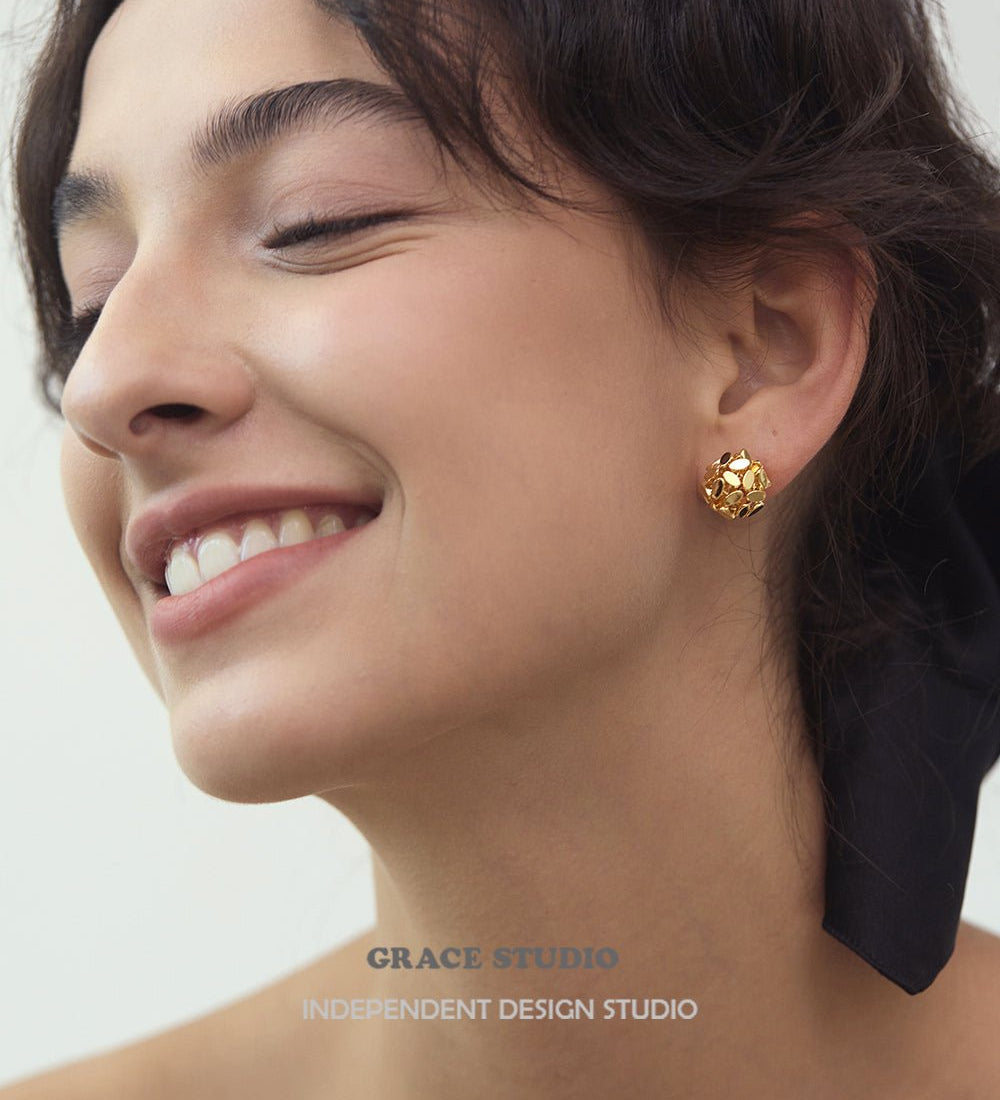
I usually choose a stud with some width or shape here. Rounded domes, knots, folded metal, curved pieces, and uneven organic forms all work well. They add enough detail to make the outfit feel intentional without changing its relaxed mood.
My usual version looks something like this:
- White crewneck T-shirt
- Straight or relaxed jeans
- Flats, loafers, or clean sneakers
- Medium silver or gold studs
Simple. Reliable. Still interesting.
If you wear your hair down, I would look for earrings around 8 to 12 mm. That size tends to stay visible without feeling oversized, although your hair thickness and earlobe size will affect how they look.
I have found that very small crystals often disappear against a plain cotton tee, especially when my hair is loose. Smooth silver or gold catches more light and gives the outfit a clearer finish.
Sometimes I tuck my hair behind one ear and leave the other side loose. It takes a few seconds, and the earrings become much easier to see.
2. Pair Polished Metal Studs With a Button-Down Shirt

Button-down shirts already have plenty of structure. You have the collar, the cuffs, the buttons, and sometimes a pocket or visible seams.
Because of that, I tend to keep the earrings close to the ear.
Small domes, metal balls, bars, knots, and geometric studs all work. I usually avoid anything too detailed if the shirt already has stripes, a strong collar, or oversized proportions.
For work, I might wear:
- A pale blue or white button-down
- Black trousers or straight-leg jeans
- Loafers
- Medium gold or silver studs
I often leave one or two buttons open and skip the necklace. The outfit feels cleaner that way, and the earrings have enough space to register.
I also stopped worrying about matching every metal detail. Gold studs can sit next to a silver watch. Silver earrings can work with a bag that has gold hardware.
Perfect coordination sometimes looks more deliberate than I want. A small mix feels normal, especially with a simple outfit.
3. Add Pearl Studs to a Fine-Knit Sweater

Pearl studs and knitwear are one of those combinations I return to every year.
The textures work well together. Pearls have a soft shine, while fine knits tend to absorb light. The result feels calm, but it does not need to look formal.
The rest of the outfit changes everything.
A small round pearl with a fitted cardigan and pencil skirt may feel traditional. Put the same earrings with a loose crewneck, wide-leg trousers, and sneakers, and they feel much more relaxed.
I tend to wear pearl studs with:
- Cream, grey, navy, or pale blue sweaters
- Faded denim or loose trousers
- Simple shoes
- Hair in a low bun, loose knot, or soft ponytail
If round pearls feel too polished for your style, try baroque or slightly uneven ones. I find them easier to wear with casual fabrics such as denim, cotton, and linen.
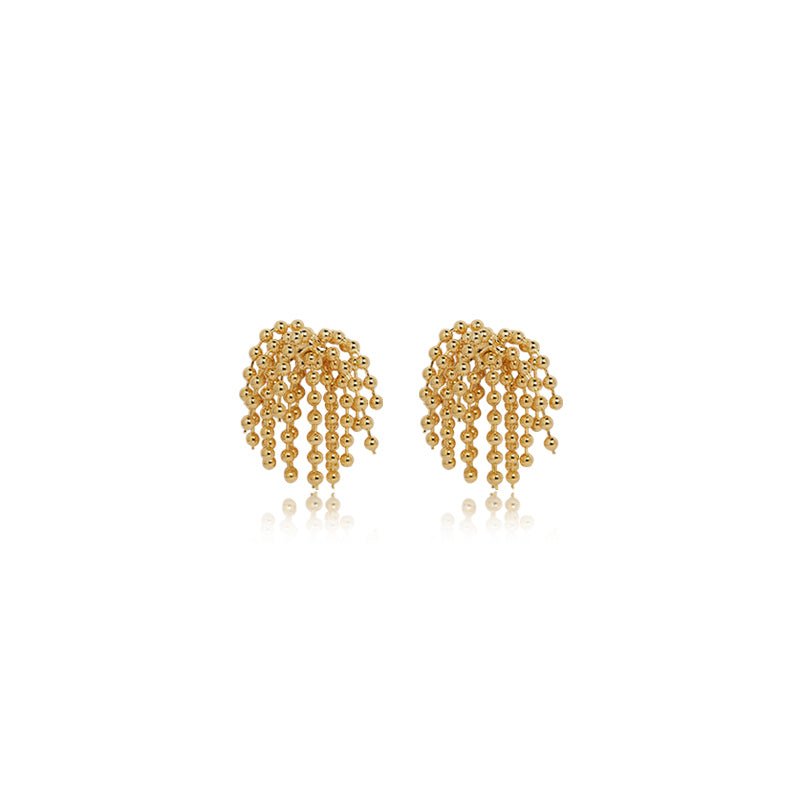
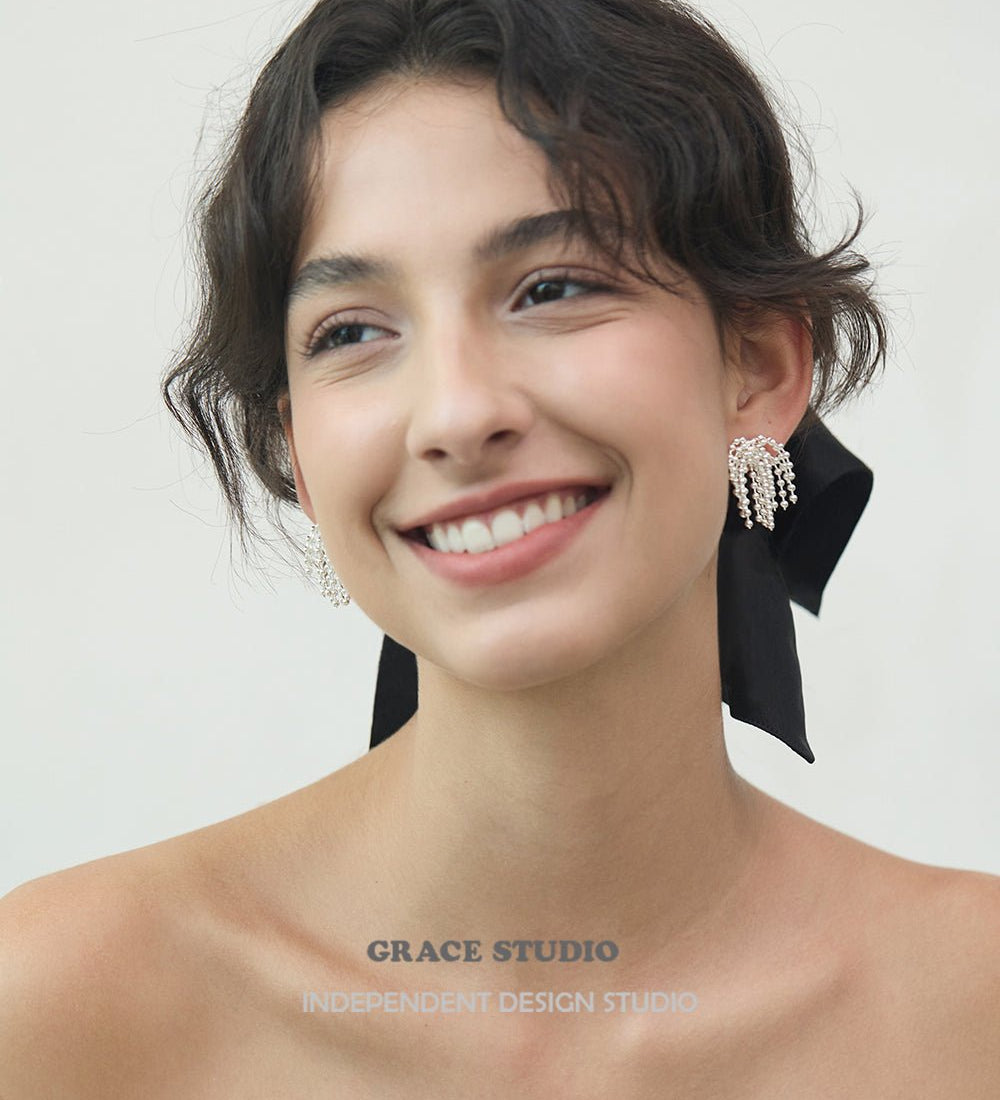
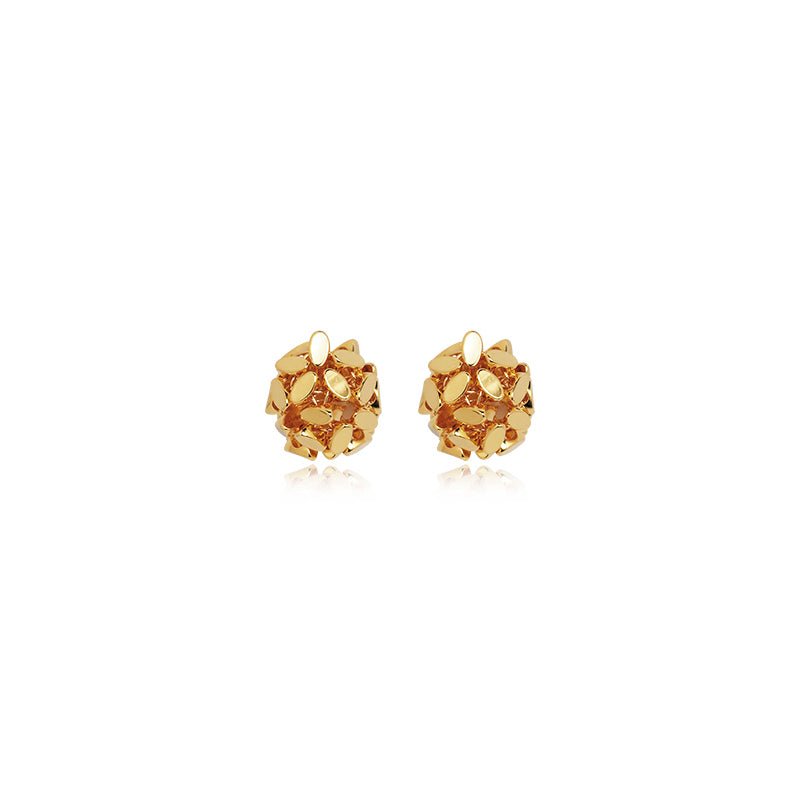
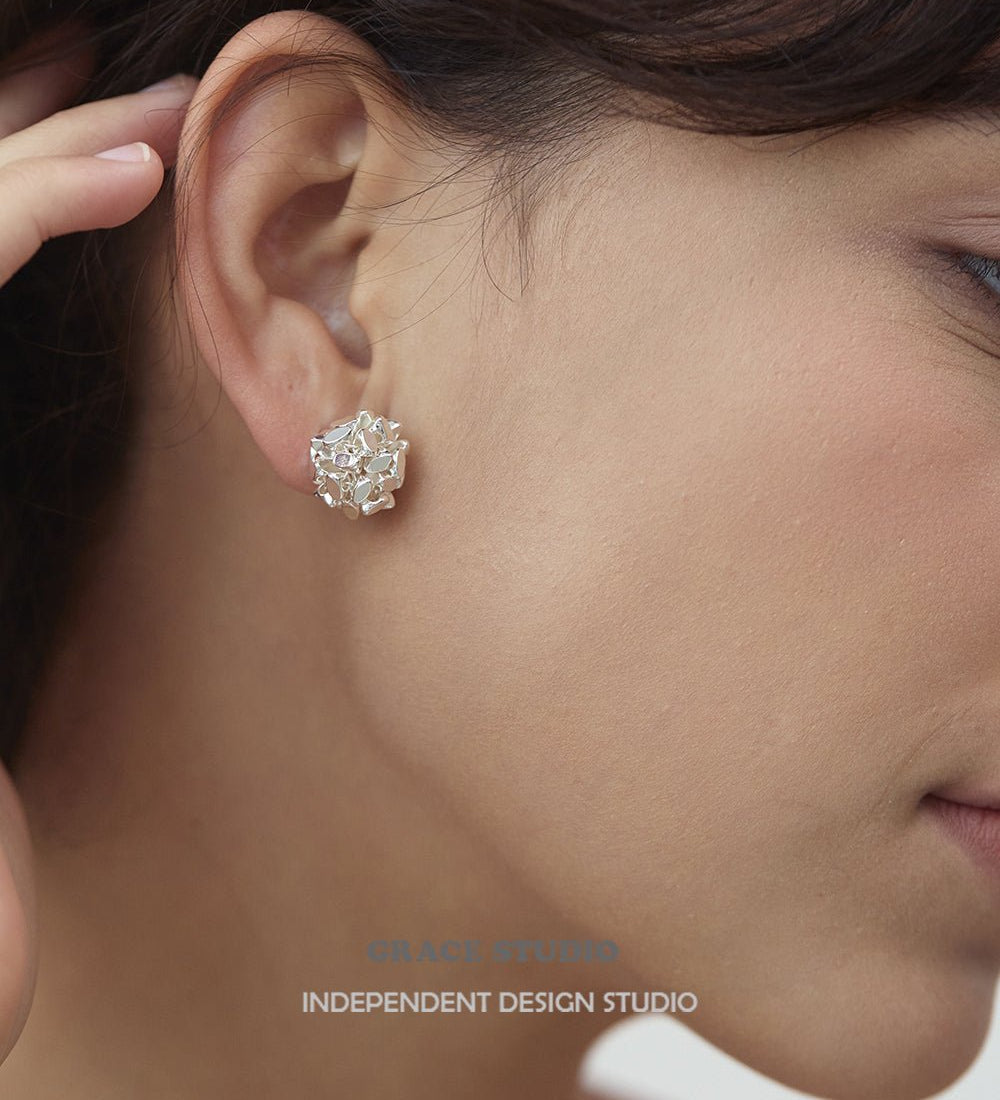
Pearl clusters are another option. They cover more of the lobe, so they are easier to see, but they still sit neatly against the ear.
I especially like them with an oversized sweater and no necklace. The look feels finished, but not overly styled.
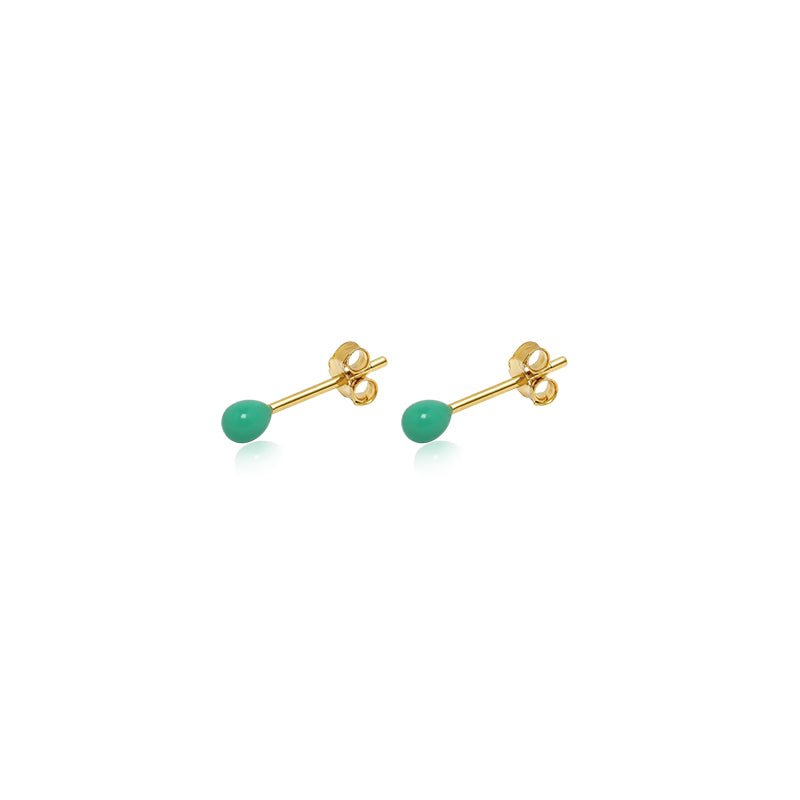
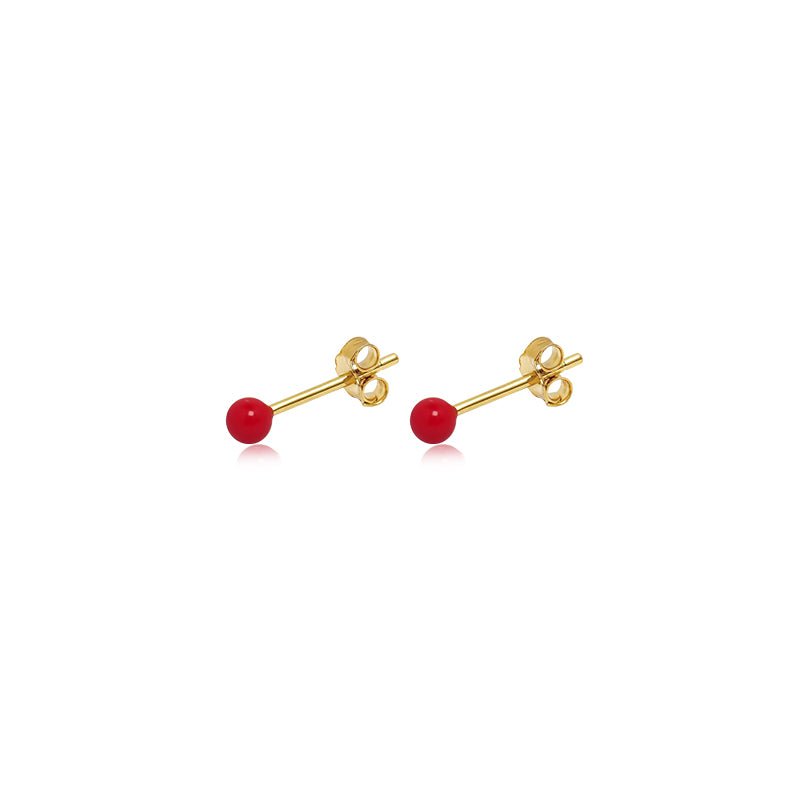
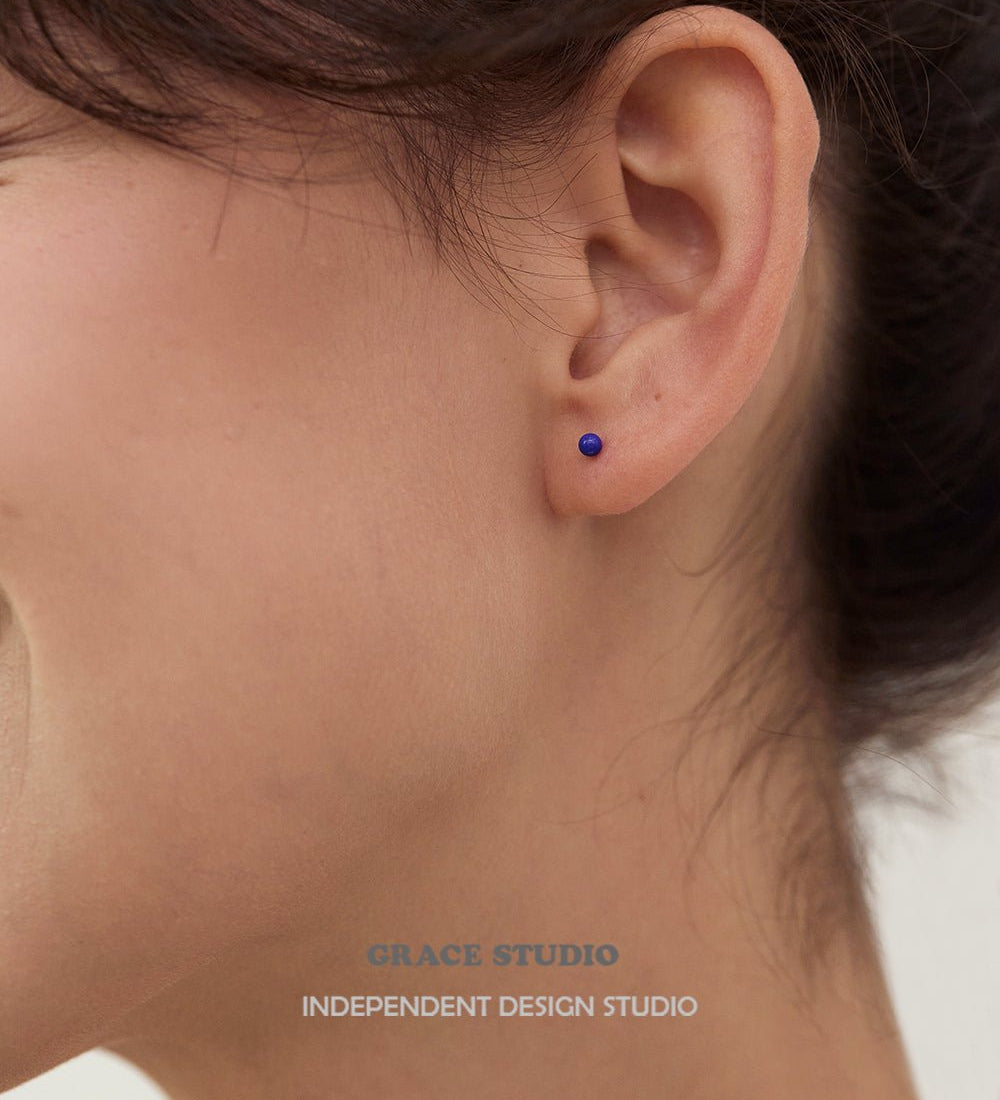
4. Use Coloured Studs to Break Up a Monochrome Outfit

When I wear one colour head to toe, I sometimes want one small interruption.
Coloured studs are good for that. They add contrast close to the face without forcing me to change the bag, shoes, or belt.
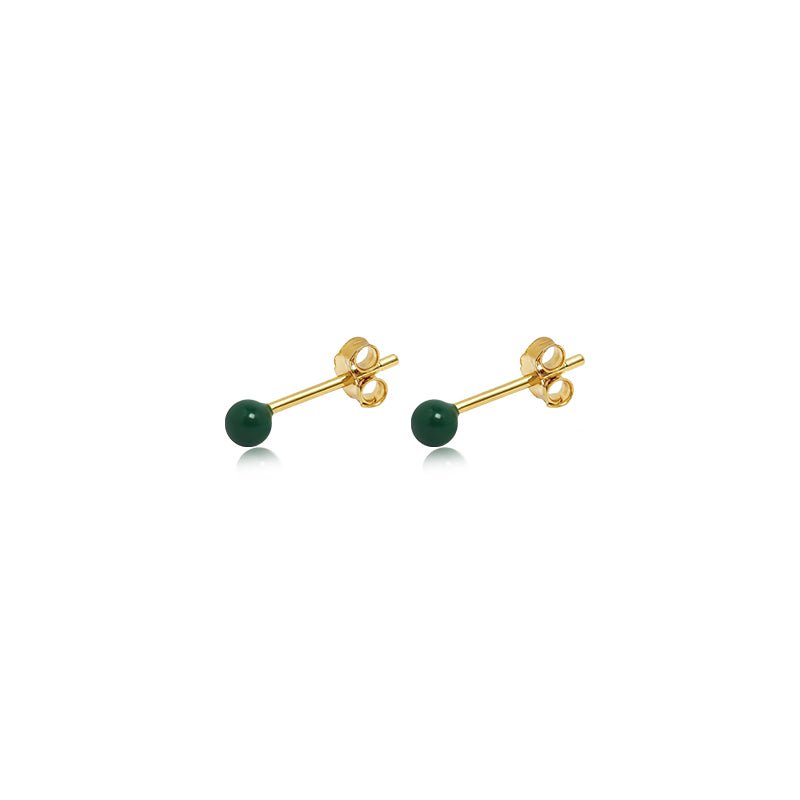
With black, I tend to like dark green, burgundy, blue, amber, or pearl. With cream and beige, black enamel or a deeper stone can look sharper.
One outfit I wear often is:
- Black sleeveless top
- Black trousers
- Dark green studs
- Black shoes
- Black bag
The colour appears once. That is enough for me.
I used to think an accent colour had to repeat somewhere else in the outfit. Now I rarely bother. When the earrings are the only coloured detail, they often look more deliberate.
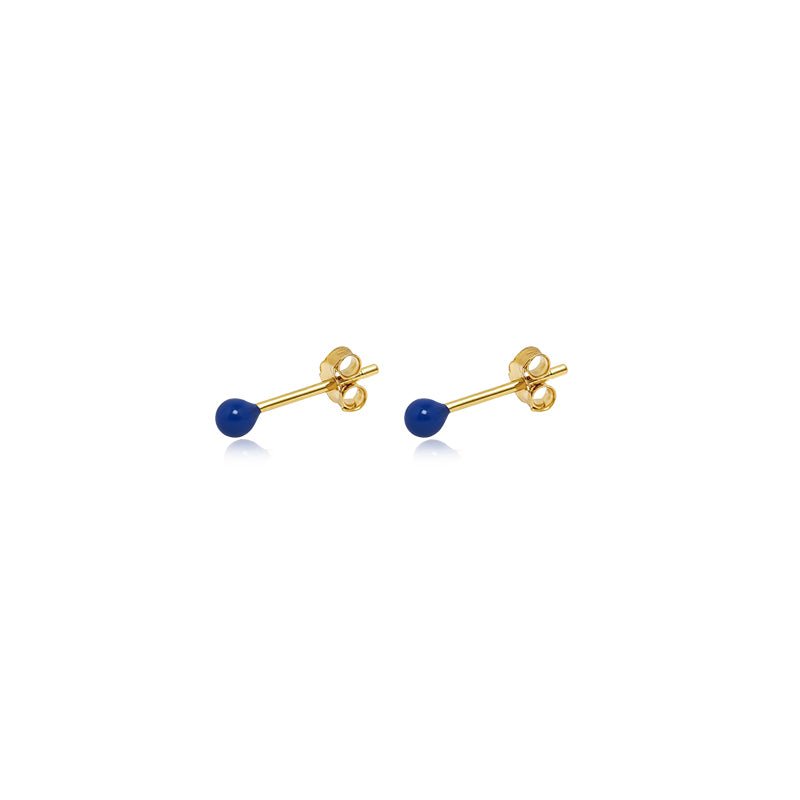
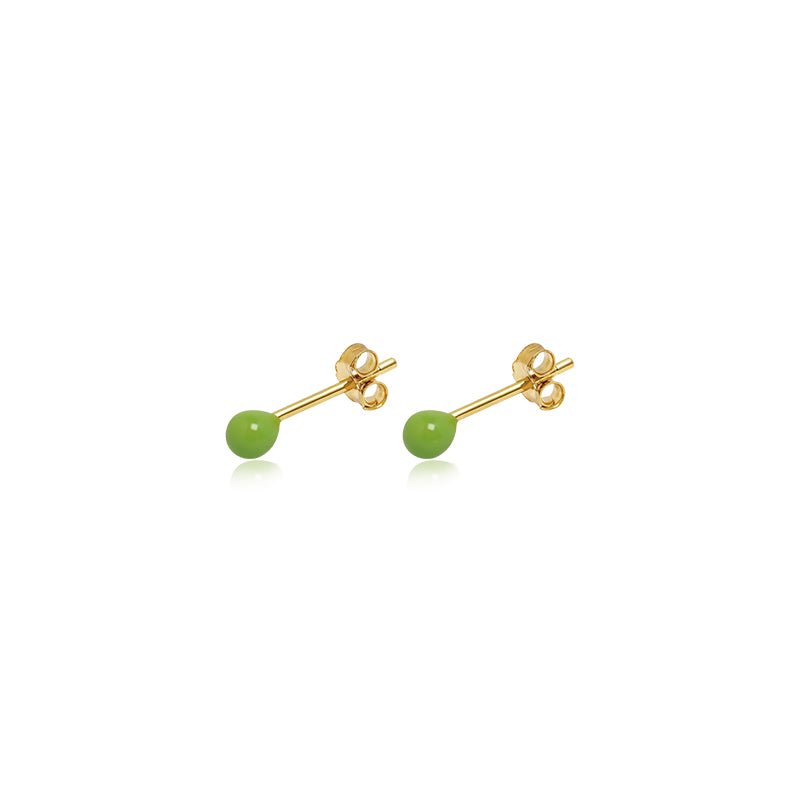
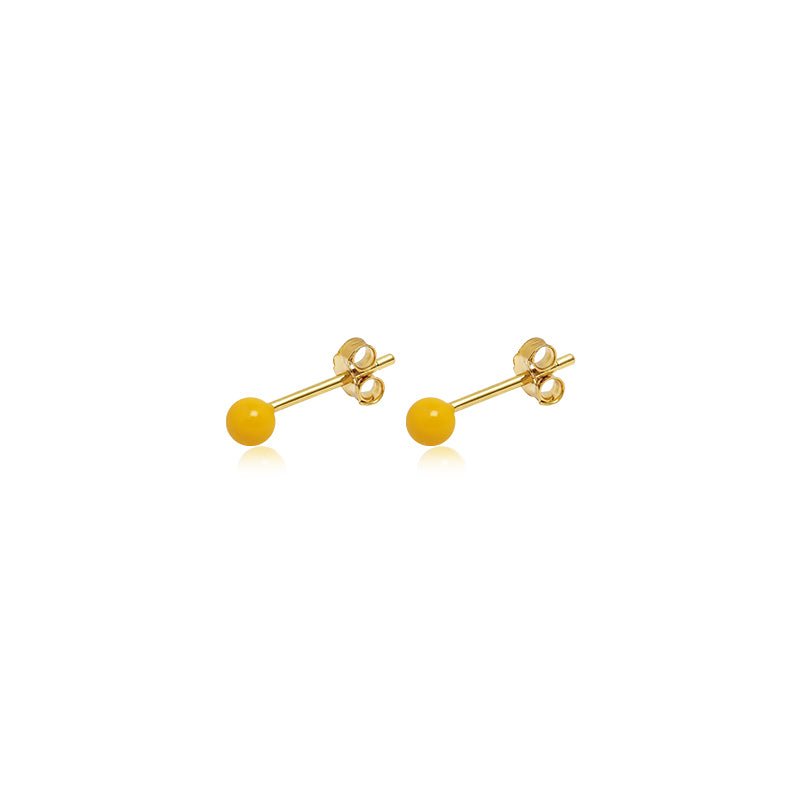
Enamel studs can work well too. They give you a clear, even colour, while natural stones often have more variation.
I would keep the shape fairly simple if the colour is already strong. A plain circle, square, oval, or small flower usually does the job.
5. Wear Larger Studs When Your Hair Is Up

When my hair is tied back, I usually choose a wider stud.
A bun, ponytail, claw clip, or short haircut leaves the whole ear visible. Tiny earrings can still work, but this is when larger shapes tend to make more sense.
I might choose:
- Oversized pearls
- Smooth metal domes
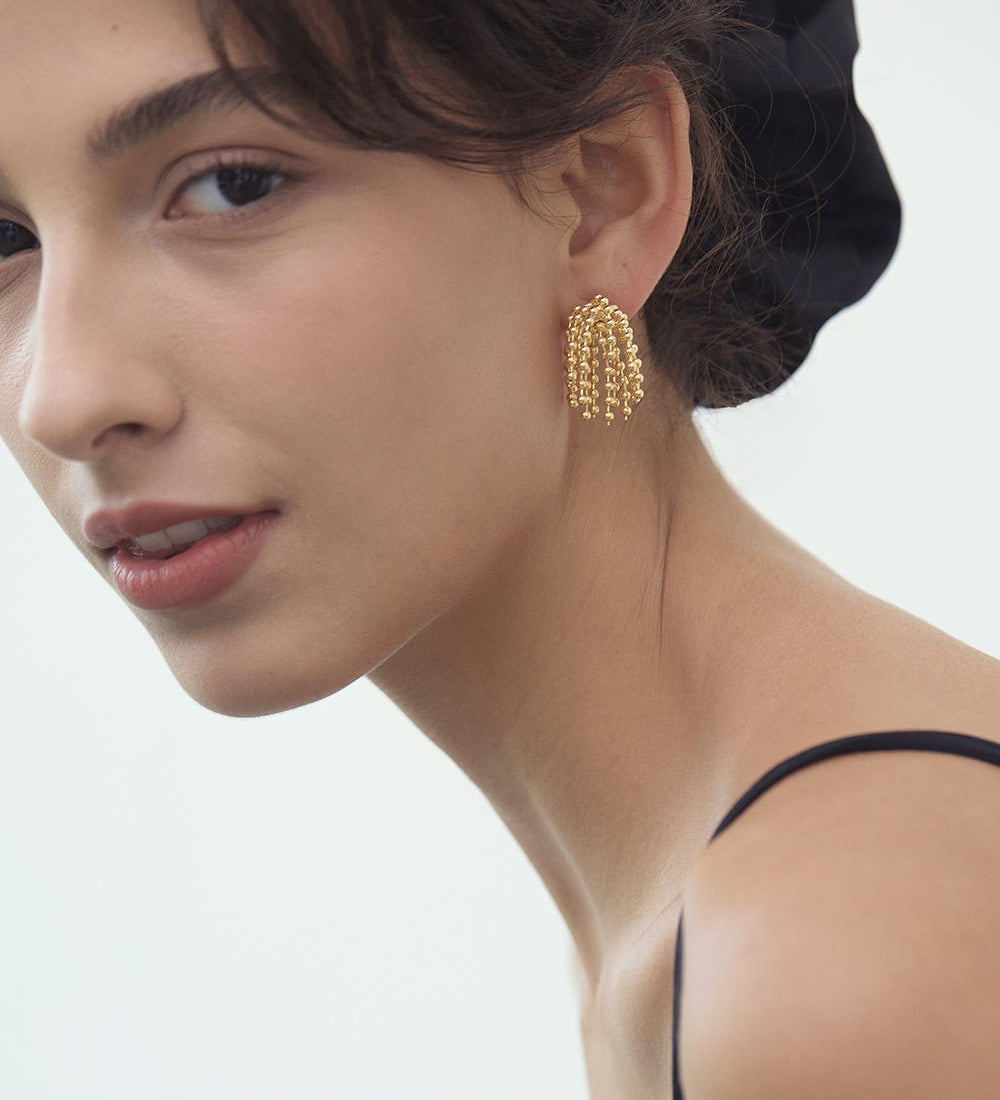
- Rounded clusters
- Floral shapes
- Sculptural silver or gold designs
I pay attention to weight, especially if I plan to wear them all day. A stud can look substantial without being heavy. Hollow designs and lighter materials are often more comfortable than solid pieces.
I like larger studs with plain necklines:
- Black tank and trousers
- White tee and jeans
- Strapless dress
- Crewneck knit
- Simple slip dress
I often leave out the necklace. With my hair up and my neck exposed, the earrings already provide enough detail.
One thing I always check is the side view.
Some larger studs tip forward, particularly when the back is too small or loose. A wider support back may help them sit flatter against the lobe.
6. Choose Reflective Studs When You Wear Your Hair Down

Long or thick hair can hide small earrings almost completely.
In that situation, the finish matters as much as the size. Polished silver, bright gold, pale pearls, and clear stones tend to catch more light than matte black or dark metal.
A stud around 7 mm or larger is usually easier to see, but there is no exact size that works for everyone. My hair, your hair, and the shape of the earring can all change the result.
One of my easiest combinations is:
- Loose hair with a side part
- Plain knit or T-shirt
- One side tucked behind the ear
- Polished metal or pearl studs
I like this because it feels casual. The earrings are visible, but the hairstyle does not look too arranged.
You can also wear different studs on each ear.
I sometimes use the more noticeable earring on the exposed side and a smaller related one on the side covered by my hair. The difference may be subtle, especially from the front, but it gives the look a little more personality.
The pair does not need to be dramatic. Two shapes in the same metal are enough.
7. Keep Your Studs Smaller When You Wear a Larger Necklace

When I wear a noticeable necklace, I tend to reduce the size of my earrings.
It is mostly a balance issue. If the necklace already adds detail around the collarbone and neckline, large earrings can make the area feel crowded.
Some combinations I like are:
- Chunky silver necklace with small silver ball studs
- Pearl necklace with tiny pearl or plain gold studs
- Coloured pendant with simple studs in a related shade
- Cord necklace with small metal studs
- Layered chains with tiny flat discs
A size between 3 and 6 mm often works for me, although it depends on the necklace.
I do not automatically wear matching sets. In fact, I often split them up.
A large necklace with equally detailed cluster studs can feel heavier than I want. I would rather repeat the metal and simplify the earring shape.
The shapes do not need to match either. You can pair a curved necklace with square studs or an angular pendant with round ones.
I pay more attention to the total amount of detail than whether every piece belongs to the same collection.
8. Let Bold Studs Take the Place of a Necklace

Some tops look better when the neckline stays clear.
Square necks, scoop necks, halters, strapless tops, and high crewnecks are a few examples. Necklines with ruching, pleating, or an unusual collar can also make a necklace awkward.
That is when I wear a stronger stud instead.
A few combinations I would try:
- Black square-neck top with gold domes
- White halter with silver sculptural studs
- Strapless dress with pearl clusters
- Fitted crewneck with oversized rounded studs
- Asymmetric top with a smooth metal stud
This approach works well for evening outfits too.
I do not always reach for crystals when I dress up. Smooth metal can look better with satin, silk, or a plain black dress, especially when the fabric already has some shine.
There is something I like about leaving the neckline bare. The earrings feel more noticeable, and the outfit looks less busy.
9. Build a Graduated Stud Stack

If you have multiple piercings, a graduated stack is one of the easiest arrangements to put together.
I usually place the largest stud in the first lobe piercing, then reduce the size as I move upward.
For example:
- First piercing: 6 mm dome
- Second piercing: 4 mm ball
- Third piercing: 2 mm stone
Repeating the same metal keeps the group connected, even when the shapes are different.
You could also wear the same shape in three sizes. Three pearls, balls, or clear stones create a clean line and are easy to pair with other jewellery.
Spacing matters more than I expected.
When two larger studs sit too close together, they may overlap or tilt. Smaller pieces higher on the ear often feel more comfortable too, since there is less room as you move upward.
Sometimes I add a slim cuff near the top. Sometimes I stop at three studs.
I do not feel the need to fill every open area. A little space between pieces makes the arrangement easier to read.
10. Try Mismatched Studs Without Making Them Feel Random

I like mismatched studs, but I still want the pair to look connected.
The easiest way is to repeat one detail:
- The same metal
- A similar size
- The same stone
- Related shapes
- One shared colour
I might wear a silver sphere on one ear and a silver pebble on the other. Or a single pearl on one side and a small pearl cluster on the other.
Black enamel works well too. A circle and a square can feel related even though the shapes are different.
I tend to prefer abstract mismatches over themed pairs. Stars and moons can be fun, but simple shapes fit more easily with the clothes I wear every day.
You can start gently.
Try the same design in two sizes. Wear one plain stud and one with a small stone. Use two earrings from the same collection rather than a matching pair.
With multiple piercings, you can reverse the placement on each ear. Put the larger stud in the first hole on one side, then place it in the second hole on the other.
The result is uneven, but still balanced.
How I Choose the Right Stud Size
Stud size affects an outfit more than I used to realise.
A tiny stud can almost disappear. A wider one can change how the whole upper half of the outfit looks, especially when your hair is tied back or the neckline is plain.
Here is the rough guide I use:
- 2 to 4 mm: Very subtle. Useful for upper piercings or days when you want the jewellery to stay in the background.
- 5 to 7 mm: Easy for everyday wear. Visible without feeling large.
- 8 to 12 mm: Better with loose hair, simple tops, or evening outfits.
- Over 12 mm: More noticeable. Weight and backing become more important.
These measurements refer to the visible front of the earring, not the post.
Your earlobe size changes the result too. A 10 mm dome may cover most of one person’s lobe and look fairly moderate on someone else.
That is why I check the actual dimensions before buying. Product photos can be hard to judge, especially when the model is photographed from a distance.
If a brand only says small, medium, or large, I usually look for measurements or ask. Those labels are not very consistent.
(Related article: How to choose hoop earrings size)
| Size | Best For | Watch Out For |
|---|---|---|
| 2–4 mm | Upper piercings, quiet everyday looks | Can disappear with loose hair |
| 5–7 mm | Most outfits, all hair types | May feel small with hair fully up |
| 8–12 mm | Hair up, plain necklines, evening | Check weight before wearing all day |
| 12 mm+ | Statement looks, bare necklines | Backing and post support matter more |
Do I Choose Studs Based on Face Shape?
I do not pay much attention to face-shape rules.
You may have read that round faces should avoid round earrings, or that square faces need curved shapes. I have tried enough earrings to know that those rules do not tell the full story.
Hair, glasses, neckline, makeup, and earring size all affect the result.
Someone with a round face may look great in round domes. Someone with an angular face may prefer square studs. Personal taste still matters.
I find it more useful to try the earrings with the actual outfit.
Wear your hair down. Tie it back. Tuck one side behind your ear. Put on your glasses if you normally wear them.
Then look at the scale.
Can you see the earrings? Do they feel too small beside the collar? Are they competing with your glasses? Do they sit comfortably?
That quick check tells me more than a face-shape chart ever has.
(Related article: How to choose earrings for your face shape)
How I Choose a Metal and Material
I usually start with the jewellery I already wear most.
Gold works easily with many of my cream, brown, navy, olive, denim, and warm-white clothes. I often choose silver with black, grey, crisp white, blue, and cooler pastels.
Still, I do not treat those combinations as rules.
I wear silver with beige. I wear gold with grey. I mix metals regularly, especially when the outfit is plain.
A silver stud can sit next to a gold ear cuff. Gold earrings can work with a silver watch. The mix rarely bothers me unless every piece is large and detailed.
If you have sensitive ears, look beyond the decorative front. The post and backing may use a different metal.
Titanium, niobium, and some types of solid gold are common choices for people who react to certain materials. Sensitivities vary, so what feels fine for one person may still irritate another.
Plated earrings can wear down over time, particularly around the post and back. I would not coat the post with nail polish. The coating may chip, collect residue, or irritate the piercing.
(Related article: Common types of metal for jewelry making)
| Metal | Works Well With | Sensitive Ears Option |
|---|---|---|
| Gold | Cream, brown, olive, navy, warm white, denim | Solid 18k or 14k gold |
| Silver | Black, grey, crisp white, blue, cool pastels | Titanium or niobium |
| Mixed | Plain, minimal outfits where detail is small | Match the post material to your skin |
Which Earring Back Do I Prefer?
The backing depends on the earring and what I am doing that day.
Butterfly or friction backs are quick and familiar. Most of my everyday studs come with them. I check the fit once in a while because they can loosen over time.
Screw backs take longer to put on, but they may feel safer with valuable earrings or during active days. I avoid tightening them firmly against my ear.
Flat backs sit smoothly behind the lobe. I find them useful with headphones, phones, scarves, and certain hairstyles. Threaded and threadless versions work differently, so it helps to follow the instructions for your pair.
Support disc backs can help wider studs sit straighter. I use them when an earring starts tipping forward.
Whatever back you choose, it should hold the earring without pressing tightly into the skin.
Comfort first. I have learned that one the hard way.
(Related article: Common types of earring backs)
| Back Type | Good For | Worth Knowing |
|---|---|---|
| Butterfly / Friction | Everyday wear, quick changes | Can loosen over time — check fit regularly |
| Screw Back | Valuable earrings, active days | Slower to put on; do not overtighten |
| Flat Back | Headphones, scarves, side-sleepers | Threaded and threadless versions work differently |
| Support Disc | Wider or heavier studs | Helps prevent forward tipping |
How I Put On Stud Earrings
For healed piercings, I keep the process simple:
- I wash and dry my hands.
- I hold the front of the stud and guide the post gently through the piercing.
- I attach the back according to its design.
- I leave a little room so the earring does not pinch.
- I give it a light check before leaving home.
I do not force an earring through resistance or pain.
If the piercing feels swollen, hot, unusually sore, or irritated, I leave it alone and speak with a qualified piercer or medical professional.
For a newer piercing, follow the changing and aftercare timeline given by your piercer. I would not rush that part for the sake of wearing a different pair.
How You Can Wear Stud Earrings Without Pierced Ears
You can still get the same close-to-the-lobe look without pierced ears.
Clip-on and magnetic studs are the most common options.
Padded clip-ons may feel more comfortable for longer wear. Magnetic studs are easy to position, although heavier fronts can move or slip.
I would test either style at home before wearing it for a full day. Pressure that feels fine for 10 minutes may become uncomfortable after two hours.
Screw-adjustable clip-ons are useful because you can control the pressure more precisely than you can with a standard spring clip.
I would also choose earrings made for non-pierced ears instead of cutting the posts from a regular pair. Purpose-made designs tend to have smoother edges and sit more securely.
How I Care for My Stud Earrings
Stud earrings collect more residue than they appear to.
Makeup, skin oil, shampoo, hair products, and soap can build up around the post and back. I clean mine based on the material.
For many plain metal earrings, mild soapy water and a soft cloth are enough. Pearls, plated finishes, glued stones, and porous gemstones may need gentler care, so I check the maker’s instructions first.
I store each pair together and attach the backs before putting them away. Small divided compartments help. They also make missing backs easier to notice.
Before wearing gemstone studs, I check the setting. If a stone moves or a prong catches on fabric, I stop wearing the pair until it can be repaired.
It takes less than a minute, and it has probably saved me from losing a stone more than once.
(Related article: How to keep jewelry from tarnishing)
| Material | How to Clean | Avoid |
|---|---|---|
| Plain gold / silver | Mild soapy water, soft cloth, air dry | Abrasive cloths, ultrasonic cleaners for plated pieces |
| Pearls | Damp soft cloth only, lay flat to dry | Soaking, chemicals, ultrasonic cleaners |
| Enamel | Soft damp cloth, gentle wipe | Harsh chemicals, prolonged water exposure |
| Plated finishes | Dry soft cloth after each wear | Water, perfume, nail polish on the post |
| Porous gemstones | Dry brush or barely damp cloth | Soaking, steam cleaning |
Final Thoughts
I used to think of stud earrings as the sensible option. The pair you wear when you do not want to make a decision.
Now I see them differently.
I look at my hair, neckline, and other jewellery. Then I decide whether the outfit needs colour, shine, shape, or something smaller and quieter.
You do not need a large collection to try any of these ideas.
Start with one pair you already own. Wear wider silver studs with your usual white tee. Try pearl clusters with a loose sweater. Move your largest stud to the first piercing and build upward with smaller ones.
Even a small change in size or placement can make the same earrings feel different.
And honestly, that is probably why I wear them so often.
Infographic






Leave a comment