
Types of Earring Backs Explained: How I’d Choose the Right One
Earring backs are easy to forget about. Until they start being annoying.
Maybe one feels too tight after an hour. Maybe one slips off while you’re changing clothes. Maybe it pokes the back of your ear every time you lie down, and suddenly the cute little stud you liked so much is driving you mad.
I’ve had all of that happen. And the funny thing is, the earring itself may be fine. It’s the back that ruins it.
A tiny pearl stud for work does not need the same back as a heavier hoop. A pair of diamond studs you wear while traveling needs more hold than a casual pair you wear for coffee. And if your ears get irritated easily, the wrong back can make even a nice pair feel impossible after a few hours.
So I usually keep it simple when I choose earring backs.
Do they stay on?
Do they still feel okay after a few hours?
Can I put them on without standing in front of the mirror for five minutes, getting annoyed at myself?
That’s really most of it.
In this guide, we’ll go through the common types of earring backs, including friction backs, screw backs, locking backs, flat backs, ball backs, lever backs, latch backs, and a few options for non-pierced ears. I’ll also share when I’d use each one, what can get annoying, and what I’d check before wearing them all day.
Friction Backs

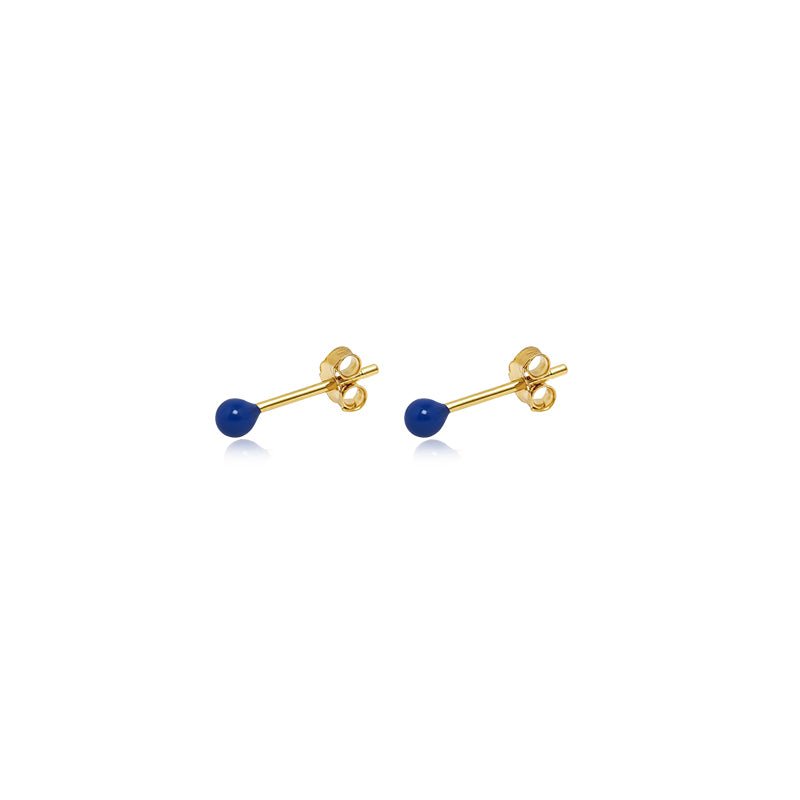
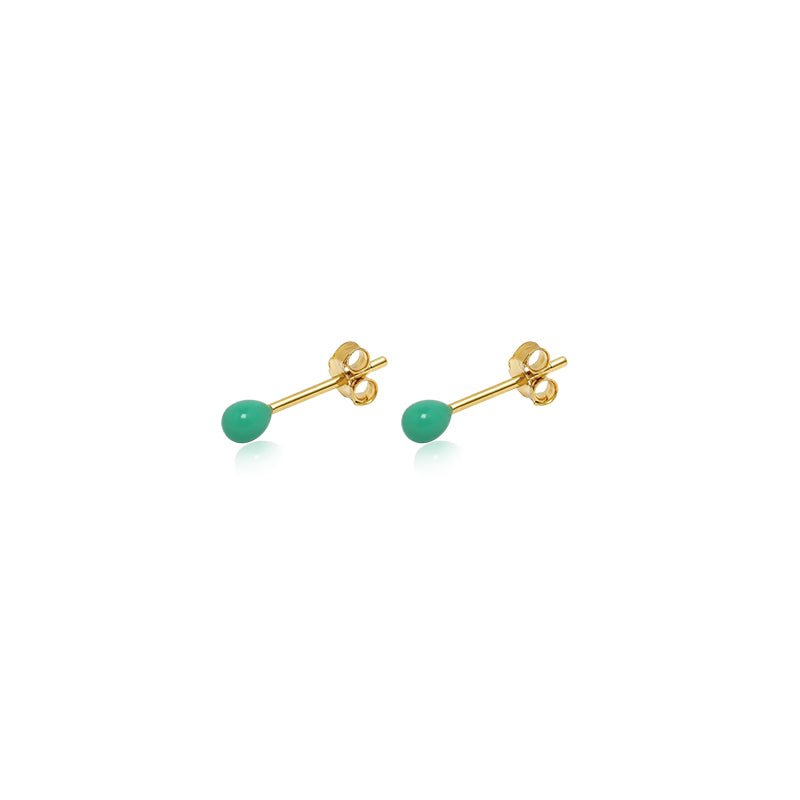
Friction backs are also called push backs or butterfly backs. They slide onto the earring post and stay there through pressure.
These are probably the first earring backs most of us use. You see them on small studs, pearl earrings, tiny gold studs, and plenty of everyday earrings.
I like friction backs when I want something quick. You push the back onto the post, and you’re done. No twisting. No tiny lock. No trying to understand a mechanism when you’re already late.
They work best with light earrings. Small studs. Delicate earrings. A simple pair you wear to work, lunch, or errands.
The problem is that they can loosen. Not always right away. Sometimes they seem fine for months. Then one day the back slides on a little too easily, and the earring does not feel as steady as before. That’s when I stop trusting them so much.
I would not rely on basic friction backs for heavy earrings, expensive studs, or anything I’d be upset to lose. If I’m going to the gym, dancing, traveling, or wearing earrings I really care about, I’d rather use something with more hold.
A small silicone stopper can help. I like this as a cheap backup when the friction back still works but feels a bit loose. It does not make the earring impossible to lose, of course. But it gives a little extra grip, which is sometimes enough for normal wear.
If your ears react easily, check the material too. Gold, surgical steel, titanium, or nickel-free backs are usually safer choices. Cheaper backs may contain nickel, and that can lead to itching, redness, or that warm irritated feeling around the piercing.
To remove friction backs, wash your hands first. Hold the front of the earring with one hand. Use your other hand to pinch the back gently and pull it straight off.
I would avoid twisting it. Twisting can bend the post or make the back grip unevenly over time.
If the back feels stuck, use a little warm soapy water around the area. Wait a moment. Then try again slowly.
| Metal | Sensitive Ears? | Notes |
|---|---|---|
| Titanium | ✓ Yes | Best for reactive skin |
| Surgical Steel | ✓ Usually | Widely available, affordable |
| 14K / 18K Gold | ✓ Yes | Nickel-free if solid gold |
| Sterling Silver | △ Sometimes | May contain trace nickel |
| Mixed / Plated Metals | ✗ Avoid | Common source of irritation |
Screw Backs

Screw backs twist onto a threaded earring post. Instead of pushing the back on, you turn it until it sits behind your ear.
I’d use screw backs when I really do not want to lose the earrings. They feel more secure than regular friction backs, which is why you often see them on fine jewelry, especially diamond studs. They also make sense for earrings with sentimental value. Anniversary earrings. A gift. A pair you saved up for. Anything that would make you feel sick if one disappeared.
I’d also consider them for travel. Losing an earring in a hotel room, airport bathroom, or packed suitcase is exactly the kind of tiny disaster I’d rather avoid.
Screw backs can also work well for children’s earrings because they are harder to pull off by accident.
The hold is the main reason to use them. Once you twist them on properly, they are less likely to slide off during normal wear. Sweat, movement, and brushing your hair behind your ear should not loosen them as easily as a basic push back.
The annoying part is the time. They take longer to put on. They take longer to remove. If you change earrings every morning, you may get tired of them pretty quickly.
They can also feel too tight if you keep twisting after they already feel secure. I’ve done this before. You think, maybe one more turn. Then ten minutes later your ear feels sore.
Secure should not mean painful. If the back presses into your ear, loosen it a little.
For sensitive ears, I’d look for 14k gold, titanium, or another nickel-free metal. The back sits against your skin for hours, so I would not ignore the material.
To remove screw backs, hold the front of the earring steady. Use your other hand to twist the back counterclockwise until it comes off.
Do this over a towel, table, or soft surface. These backs are tiny. Once they drop, they somehow become invisible.
If the back feels stuck, add a very small amount of coconut oil or another gentle oil to the threaded area. Wait a moment, then try again slowly.
Locking Backs
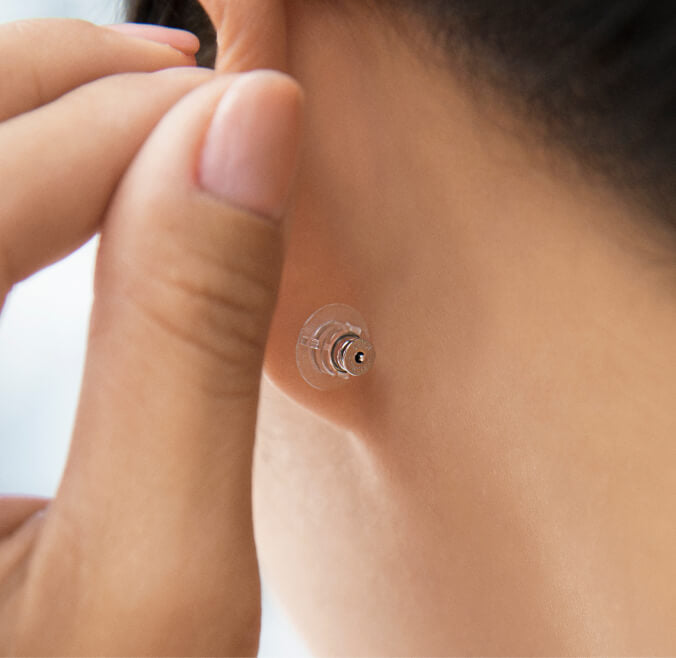
Locking backs are also called La Pousette backs or clutch backs. They look a little like push backs, but they have a small lock inside.
I see them as a middle option. Easier than screw backs. Safer than basic friction backs.
You push the back onto the post, and the lock helps hold it in place. That makes them useful for earrings you wear often, especially if you do not want to keep touching your ears during the day to check if everything is still there.
I’d use locking backs for work, travel, long days out, or earrings I care about but still want to wear regularly. They are quicker than screw backs, which I appreciate, but they still feel more secure than a plain push back.
They can be good for studs that are nicer than your casual pairs but still part of your normal rotation.
The downside is the size. Some locking backs feel a little bulky behind the ear. If you have small earlobes or you like tiny earrings, the back may feel larger than expected.
Not always uncomfortable. Just noticeable. If your ears are sensitive, look for nickel-free or skin-friendly metals. Some locking backs also have softer inserts, which can help reduce pressure.
To remove La Pousette backs, gently squeeze the side tabs while pulling the back off. Hold the front of the earring with your other hand so you do not tug on your piercing.
If you are using them for the first time, practice while the earring is off your ear. Open it. Close it. See where your fingers need to press.
Flat Backs
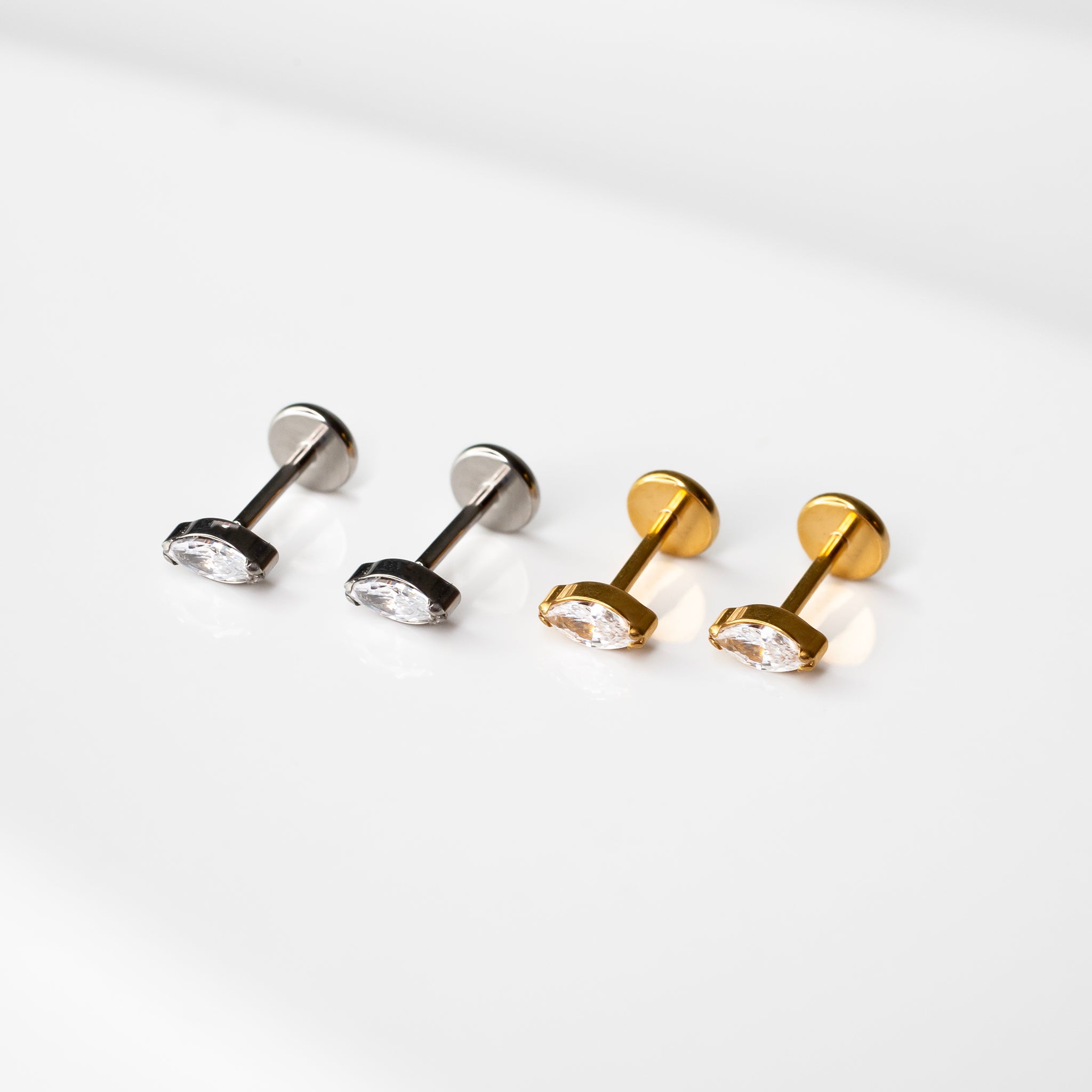
Flat backs sit flat against the back of your ear. They usually have a small disc or bar shape, so they feel smoother and lower-profile than many regular backs.
I’d choose flat backs when comfort comes first. They are common for new piercings, cartilage piercings, and earrings you want to leave in for longer periods. They are also helpful if you sleep in your earrings.
Regular backs can poke. They can catch on your hair. They can press into your skin when you lie on your side. Flat backs usually feel less annoying because there is no sharp piece sticking out behind the ear.
If you have a second lobe piercing or a cartilage piercing that you do not change often, flat backs can be a good choice. They are less likely to catch on sweaters, towels, pillowcases, or hair.
The flat shape also spreads pressure more evenly. For me, that is the reason they feel better for long wear.
The downside is removal. Flat backs can be harder to grip, especially if your fingers are wet, slippery, or you have long nails. Some screw on. Some push in. Some use a threadless design where the front piece pulls out from the post.
So before you start pulling, check the style. For sensitive ears, titanium flat backs are worth considering. Titanium is often used for body jewelry because it is lightweight and tends to work well for many people with metal sensitivities.
To remove flat backs, hold the front of the earring steady. Then gently unscrew or pull the back, depending on the design. If you need tweezers, be careful. You do not want to scratch the metal or pull at the piercing.
If your piercing is new, I would not remove the earring too early. Follow your piercer’s timing instead of guessing.
Ball Backs

Ball backs have a round shape that looks like a small bead. Depending on the design, they either screw onto the post or push on.
I like ball backs when the back of the earring might show. If you have short hair, wear your hair up, or wear earrings in upper ear piercings, a ball back can look neater than a basic butterfly back. It is a small detail, but sometimes small details do change how finished a pair feels.
Some ball backs are made to match the front of the earring. That can work nicely with simple studs, especially when people can see the earring from the side.
They are good for dressier outfits, date nights, or small studs you want to feel a little less plain. The rounded shape also has no sharp edges, so it usually feels smooth behind the ear.
The annoying part is how easy they are to drop. Small round backs roll fast. If one falls on the bathroom floor, good luck. It can disappear under the sink before you even understand what happened.
If your ears are sensitive, choose ball backs made from gold, sterling silver, titanium, or another nickel-free metal. I’d avoid cheap mixed metals if your ears turn red or itchy easily.
To remove ball backs, twist counterclockwise if they are screw-on backs. If they are push-on backs, pull them straight off gently.
I’d remove them over a towel or soft surface. The towel stops the back from bouncing or rolling away.
A tiny habit, but useful.
Lever Backs
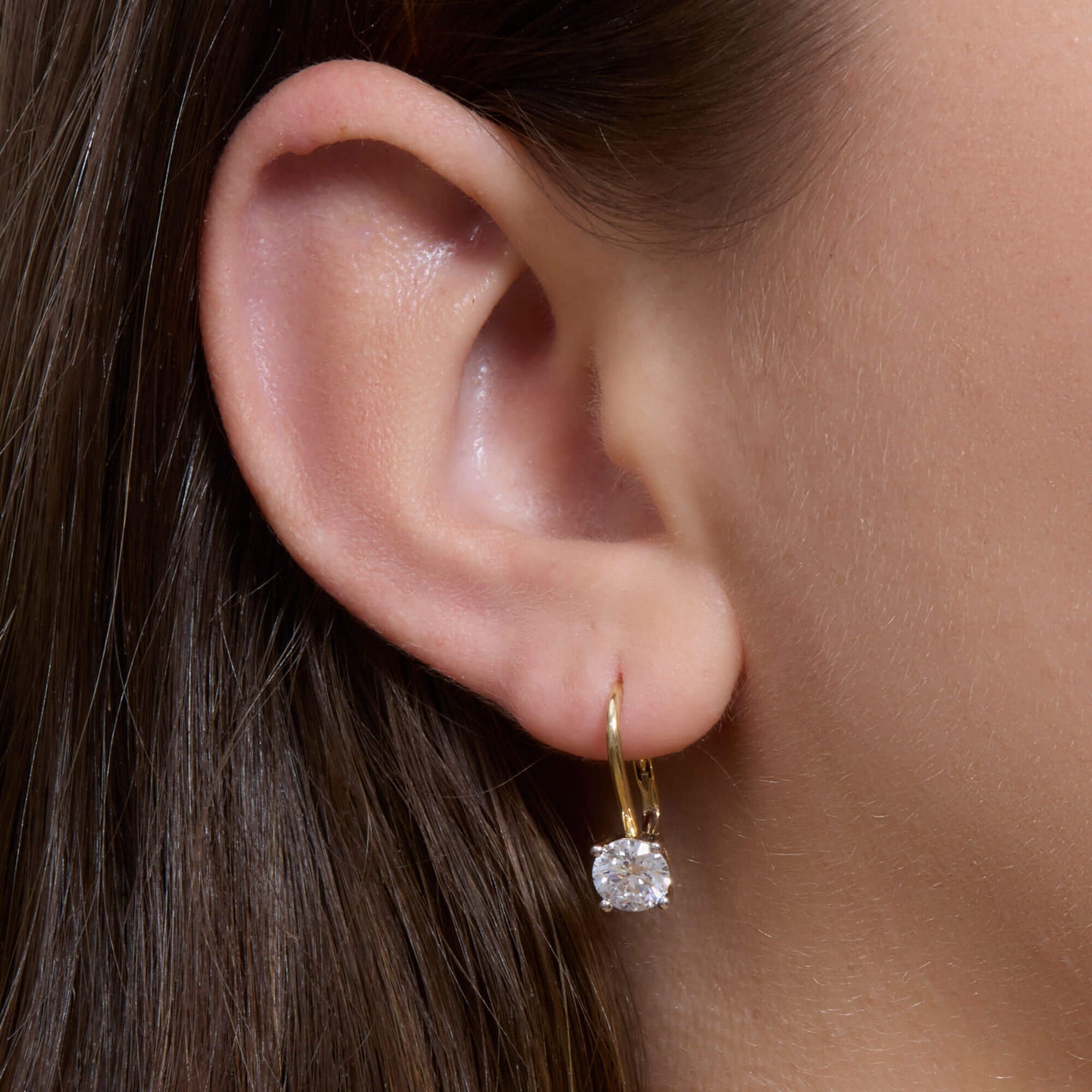
Lever backs have a small hinged arm that closes behind your earlobe. You open the lever, slide the earring through your piercing, then snap the lever shut.
You’ll often see them on drop earrings, dangle earrings, and some hoop styles.
I like lever backs because they do not need a separate tiny back. That alone makes them easier for me. Less to lose. Less to drop. Less crawling around on the floor looking for something the size of a breadcrumb.
They work especially well for pearl drops, gemstone drops, and dressier earrings you might wear to dinner, work, or a wedding. They hold the earring in place but still let the design move naturally.
Another thing I like is that there is no sharp post sticking out behind your ear. If regular studs poke you or start bothering you after a few hours, lever backs may feel easier.
The hold is usually good. Once the lever is closed, the earring is less likely to fall out during normal wear.
Still, the hinge can catch on hair, scarves, or high collars. It does not happen all the time, but I’d be careful with chunky knits or anything that brushes against your ears a lot.
If your ears are sensitive, choose lever backs made from titanium, surgical steel, gold, or another nickel-free metal.
To remove them, gently lift the lever open and slide the earring out. If the hinge feels stiff, wipe it with a soft cloth and a little rubbing alcohol. Let it dry fully before wearing it again.
I would not force the hinge. If it bends, the earring may stop closing properly.
Latch Backs
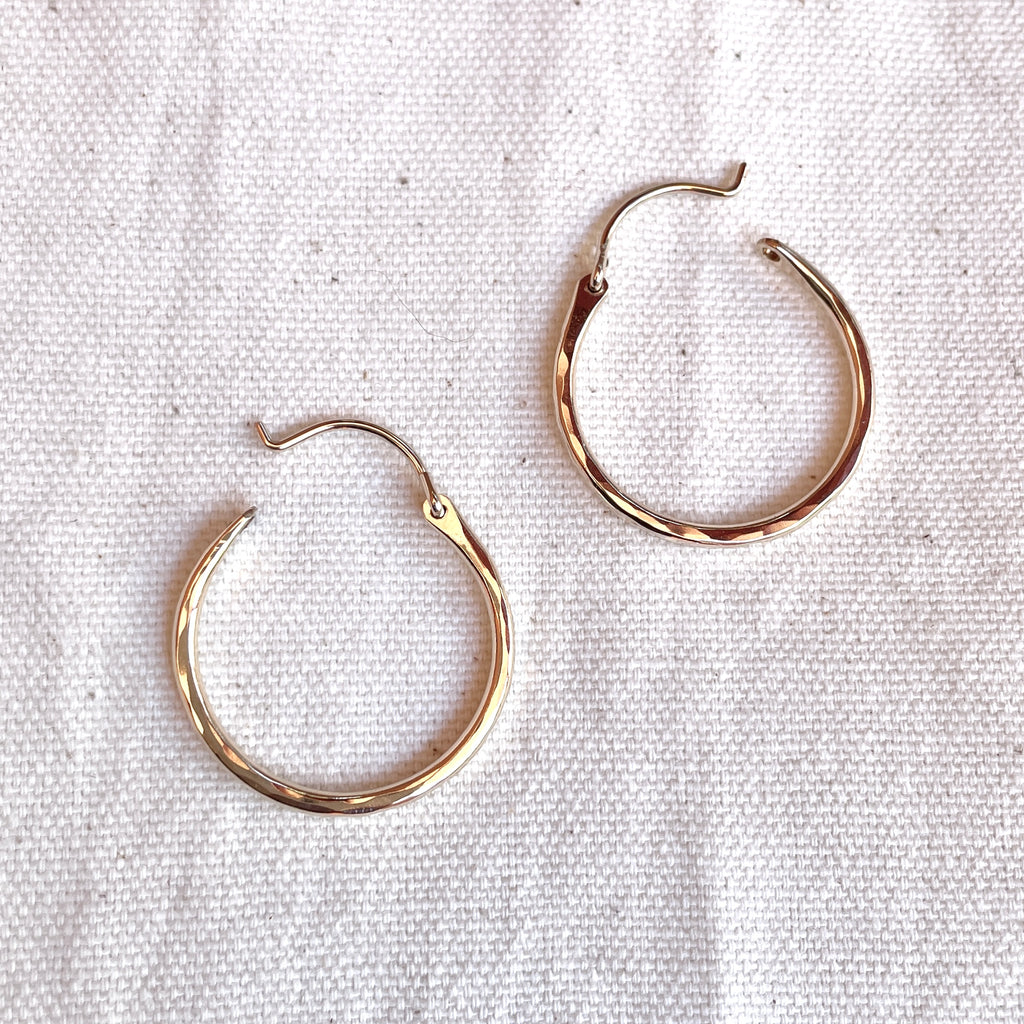
Latch backs close with a small hinged latch. You open the earring, put it through your piercing, then close the latch until it clicks or feels firmly shut.
These are common on hoop earrings and loop-style earrings. If you wear hoops often, you have probably used this type before.
I like latch backs for everyday hoops because they are quick and practical. They are faster than screw backs and feel more secure than open hook styles.
They work well for daily hoops, weekend earrings, and simple pairs you reach for often. They are also beginner-friendly because you can usually feel when the latch closes.
A good latch should stay closed during normal wear. Turning your head, brushing your hair back, walking around, sitting at your desk. None of that should make it open.
The part to watch is the hinge. Over time, the latch can loosen, especially if you wear the earrings often or open and close them roughly. If the earring no longer clicks shut, or if the latch feels weak, I’d stop wearing that pair until it is fixed.
This matters more with hoops because once the latch opens, the earring can slip out quickly.
If your ears are sensitive, look for nickel-free metals or materials your skin already handles well.
To remove latch-back earrings, gently open the latch, pull the hoop apart, and slide it out of your ear.
Before wearing them, I like to check the closure quickly. Open. Close. Listen or feel for the click.
Other Types

You do not need pierced ears to wear earrings. Clip-ons, omega backs, and magnetic earrings give you options without getting a piercing. I also think they are useful if you want to test earrings before committing to one.
You can figure out what size you like. What weight feels comfortable. Whether you actually enjoy wearing earrings for more than a quick photo. That part is worth knowing.
Clip-On Earrings
Clip-on earrings use a small clasp that pinches the earlobe gently. They come in many styles, including studs, drops, pearls, and statement earrings.
They are easy to use, but comfort depends on pressure.
If the clip is too tight, your ears may start hurting after 30 minutes. If it is too loose, the earring may slip. This is the tricky part with clip-ons. You want enough hold, but not so much pressure that you spend the whole day thinking about your ears.
If your ears are sensitive, I’d look for padded clip-ons. A soft pad can reduce pinching and make the earring easier to wear for a few hours.
To remove clip-ons, open the clasp gently and lift the earring off your ear. I would not yank it off, especially if the clip feels tight.
(Related article: How to wear clip-on earrings)
Omega Backs
Omega backs have a curved clip that wraps around the earlobe. Some are made for non-pierced ears. Others are used on pierced earrings to add support.
You often see omega backs on larger earrings because they help spread the weight. They can make a heavier earring feel steadier on the ear.
They also make the back of the earring look cleaner.
The first thing I’d check is comfort. If the clip presses too hard, it can start to hurt after a while. Try wearing them around the house for 20 minutes before wearing them to a full event.
That little test tells you a lot.
If you already feel pressure after 20 minutes at home, you probably will not enjoy wearing them for dinner, a wedding, or a full workday.
Magnetic Earrings
Magnetic earrings use two small magnets. One sits in front of your earlobe, and the other sits behind it. The magnets snap together and hold the earring in place.
They are easy to put on and give the look of pierced earrings without a piercing.
The downside is hold.
Magnetic earrings may slip off if you move a lot, sweat, dance, run, or wear them with high collars and scarves. I’d treat them as a short-wear option rather than something I’d trust for a full active day.
They can be fun for photos, short outings, or trying a style before getting pierced. For anything more active, I’d be cautious.
To remove magnetic earrings, gently pull the two pieces apart. Try not to slide them hard across your skin, because that can irritate your ear.
Non-pierced styles are great for trying earrings without pain or commitment. I’d still test the comfort and hold before wearing them out all day.
Related Video
| Type | Best For | Security |
|---|---|---|
| Friction / Push Back | Everyday studs | △ Basic |
| Screw Back | Fine jewelry, travel | ✓ High |
| Locking Back | Daily wear, busy days | ✓ High |
| Flat Back | New piercings, cartilage, sleeping | ✓ Good |
| Ball Back | Dressier studs | △ Basic–medium |
| Lever Back | Drop & dangle earrings | ✓ High |
| Latch Back | Hoops, casual wear | ✓ Good |
| Clip-On | No piercing needed | △ Medium |
| Omega Back | Larger earrings, no piercing | ✓ Good |
| Magnetic | No piercing, trying styles | ✗ Low |
How to Choose the Right Earring Back?

When I choose an earring back, I usually think about three things: the earrings, my ears, and what I’m doing that day.
- For a small pair of studs, friction backs are fine. They are quick, easy, and usually comfortable enough for a normal day.
- For earrings I really care about, I’d rather have screw backs or locking backs. Especially for travel, expensive studs, or sentimental pieces. I do not want to spend the day touching my ear every few minutes to make sure the earring is still there.
- For long wear, I’d look at flat backs. They are especially useful for cartilage piercings, second lobe piercings, and earrings you may sleep in.
- For hoops, latch backs usually make the most sense. They close securely and are easy to use.
- For drop earrings, I usually like lever backs. They hold the earring in place, and you do not have to deal with a separate back.
Your routine changes the answer too.
If you change earrings every morning, screw backs may feel annoying. If you wear the same studs for several days, flat backs may feel easier. If you work out, travel, or wear expensive earrings, basic friction backs may not give you enough peace of mind.
Material is another thing I’d pay attention to, especially if your ears react easily. Titanium, surgical steel, solid gold, and nickel-free metals are usually better choices for sensitive ears. Nickel is a common reason earrings cause itching, redness, or soreness.
I’d also think about weight. A tiny stud does not need much support. A larger earring, hoop, or dangling style needs a back that can handle movement.
The easiest way to decide is to try a few styles in person. Put the earrings on. Move your head a little. Touch your hair. See how they feel.
Some backs feel secure but too tight.
Some feel comfortable but slip too easily.
Some look good on paper and annoy you within an hour.
Price can also guide your choice. Friction backs are usually the cheapest. Screw backs and locking backs often cost more, but they may be worth it for earrings you wear often or really do not want to lose.
I do not think there is one perfect earring back for everyone. I’d choose the one that feels comfortable on your ear, fits the earring style, and stays in place during your normal day.
| Your Situation | Back to Use | Why |
|---|---|---|
| Everyday casual wear | Friction / Latch | Quick, easy, good enough |
| Traveling or active days | Screw / Locking | Less likely to slip off |
| Fine or sentimental earrings | Screw / Locking | Peace of mind |
| New or cartilage piercing | Flat back | Low profile, no snagging |
| Sleeping in earrings | Flat back | Nothing poking your ear |
| Drop or dangle earrings | Lever back | No separate back to lose |
| Hoops | Latch back | Secure click closure |
| No piercing | Clip-on / Magnetic | No piercing needed |
Infographic







Leave a comment