
Best Earrings for Curly Hair: Styles That Don’t Snag
Curly hair changes how earrings behave. A pair can look perfect on its own and then disappear into curls, catch on a strand, or twist into the hair once you put it on.
So I would choose earrings for curly hair by construction first, visibility second.
Smooth huggies, endless hoops, flat-back studs, statement studs, larger polished hoops, and structured drops are usually easy places to start. The exact category matters less than the closure, the number of openings, the amount of exposed hardware, and where the earring sits in relation to your curls. If the category names themselves are unclear, I would first compare the main types of earrings and then come back to construction.
That is the useful rule I would keep in mind:
The best earring for curly hair is usually the one your curls have the least opportunity to grab.
Best Earrings for Curly Hair at a Glance
Here is the short version I would use before comparing individual designs.
| Earring style | Good starting point | Watch for |
|---|---|---|
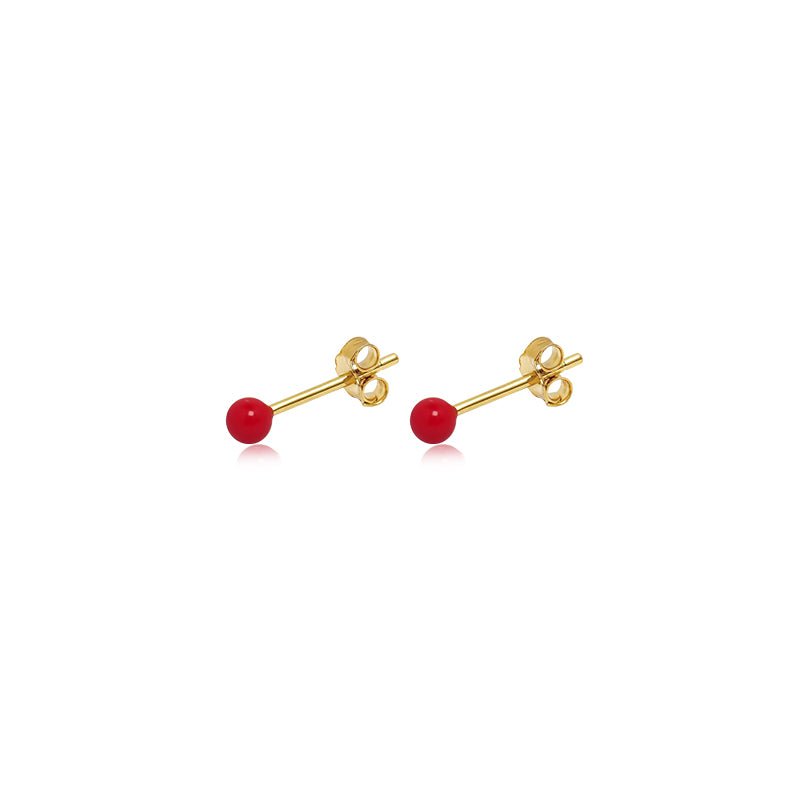
| Huggies | Everyday low-snag option | Raised prongs, tiny charms, rough texture |
| Endless hoops | Smooth continuous circle | Rough or misaligned connection |
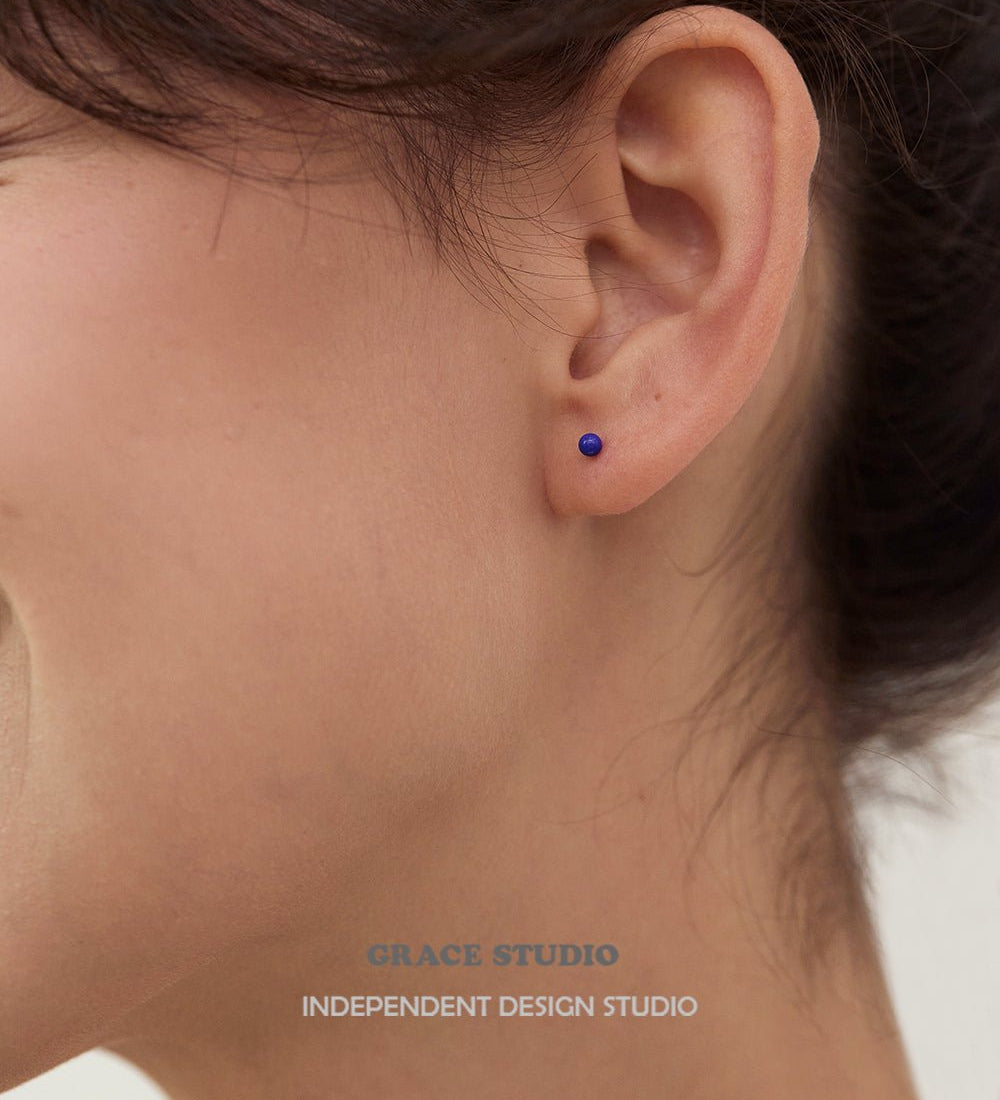
| Flat-back studs | Hair that catches behind the ear | Long posts or raised settings |
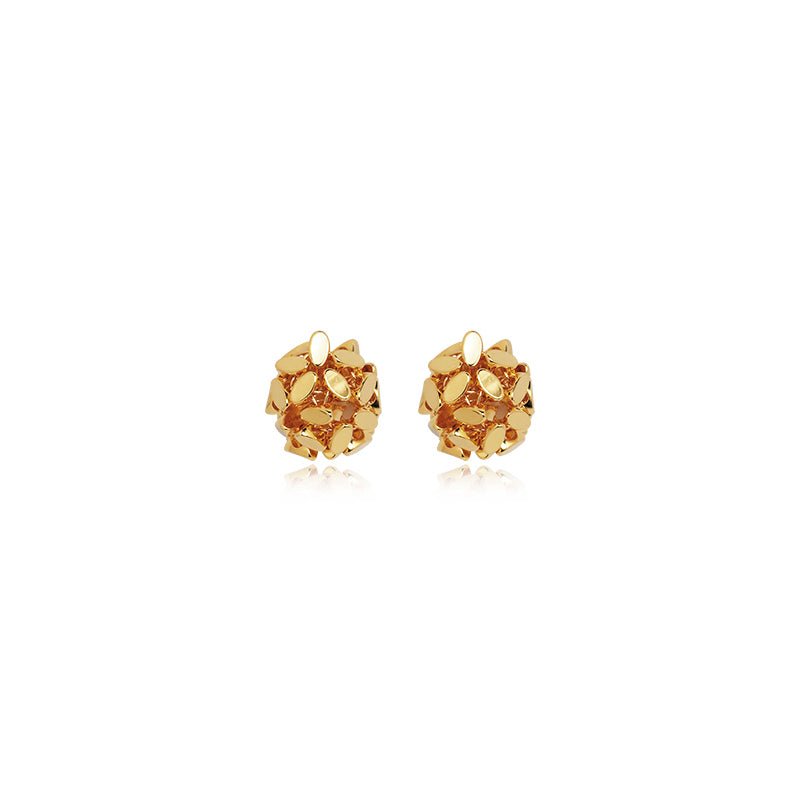
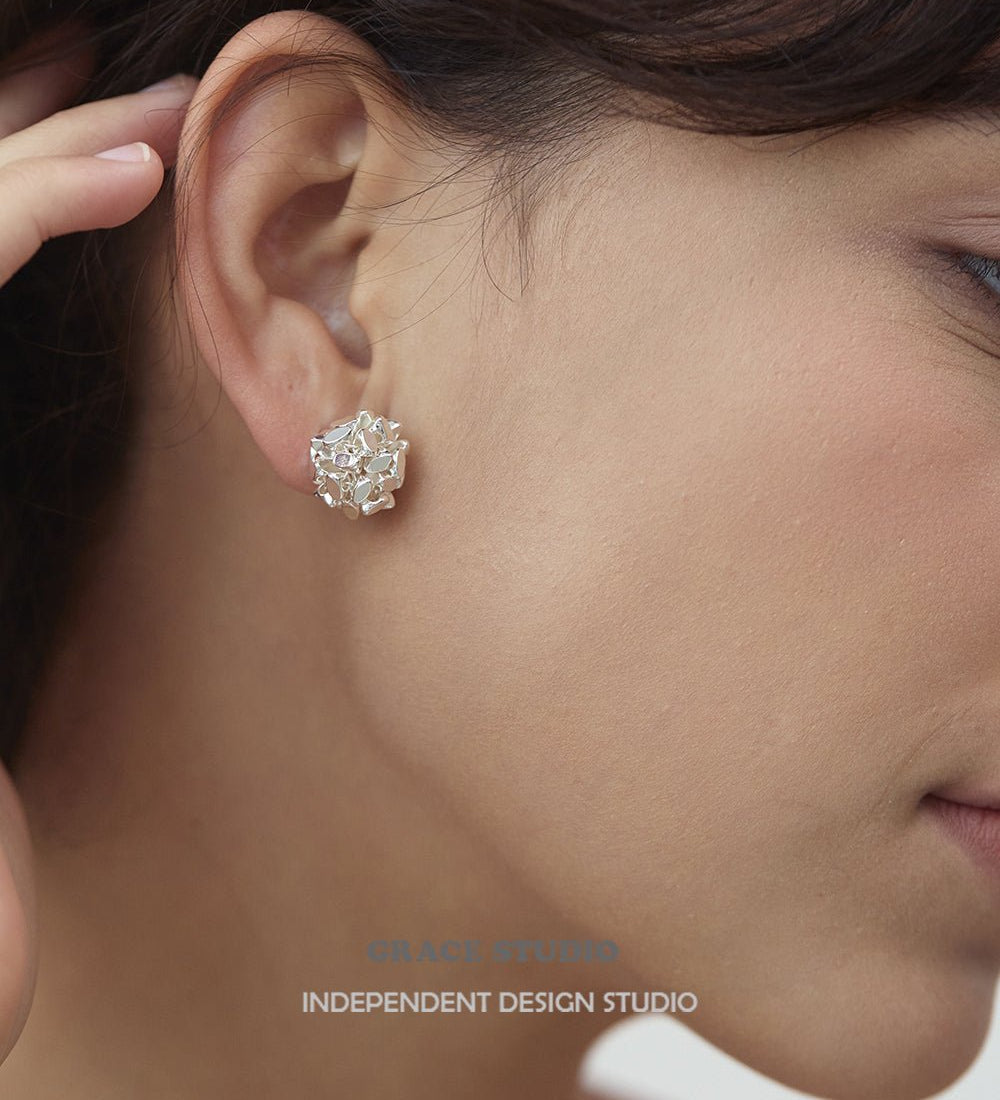
| Statement studs | Dense curls needing visibility | Intricate wirework or open loops |
| Large smooth hoops | Long or voluminous curls | Loose charms or rough closures |
| Structured drops | More movement with control | Fine chains, fringe, tassels |
| Geometric earrings | Strong visibility | Open wire shapes with many gaps |
| Sculptural earrings | Full curls or events | Too much weight or complexity |
| Chandeliers | Hair-up styling | Loose chains and fine fringe |
I would not treat “low snag” as a promise. Any earring can catch depending on your hair and the exact construction.
What this table does is help me decide where to look first.
Start With Construction, Not the Earring Category
This is the biggest shift I would make from generic “best earrings for curly hair” advice.
A hoop is not automatically good. A stud is not automatically safe. A large earring is not automatically harder to wear.
The actual hardware decides a lot.
Look for Smooth Closed Shapes
Curls need somewhere to enter before they can wrap around an earring.
That is why smooth, closed shapes tend to be easier.
I would look for:
- Complete or nearly complete circles
- Rounded edges
- Smooth metal surfaces
- Flat backs
- Click closures
- Few gaps
- Few protruding parts
Huggies and endless hoops work well for this reason. There is simply less open space for a curl to slip through. The difference between hoops and huggies is especially useful when you are deciding how close you want the earring to sit to the lobe.
Check the Back as Carefully as the Front
A tiny stud may look like the safest possible earring. Then you turn it around.
A long post and butterfly clutch can create more exposed hardware than a smooth hoop.
If your hair catches behind your ear, I would look closely at:
- Post length
- Backing size
- Gaps between the ear and backing
- Rough edges
- Protruding metal
This is where flat-back studs can be much easier.
Count the Moving Parts
I use a simple test.
How many pieces can move independently?
A solid teardrop may swing, but it still moves as one unit. A multi-chain tassel may have ten or twenty small sections moving into the hair.
The second one gives curls far more opportunities to wrap around something.
That is why I often prefer:
one larger structured shape
over:
many tiny moving pieces
even when the larger earring looks more dramatic.
Run a Finger Over the Earring
This is one of the easiest checks you can do before wearing a pair.
Run your fingertip around:
- The closure
- Solder joints
- Stone settings
- Decorative edges
- The back
- Any openings
If you can feel a rough point immediately, your hair may find it too.
It is a small check. Very useful.
Curly Hair Snag-Risk Guide
I would judge the hardware before the earring category.
| Construction detail | Lower-risk version | Higher-risk version |
|---|---|---|
| Closure | Click, hinged, or smooth endless | Open hook or rough joint |
| Stone setting | Bezel or low-profile | Raised prongs |
| Back | Flat back | Long post + bulky butterfly |
| Surface | Smooth polished metal | Rough texture or sharp edges |
| Movement | One solid drop | Many fine chains or tassels |
The Earring Styles I Would Start With
Once the construction looks workable, I would choose the style based on how visible I want the earring to be.
Huggies

If snagging is the main problem, I would start here.
Huggies sit close to the lobe and usually close into a compact circle. They do not swing much, and there is less room for curls to get between the jewelry and the ear.
I would choose huggies with:
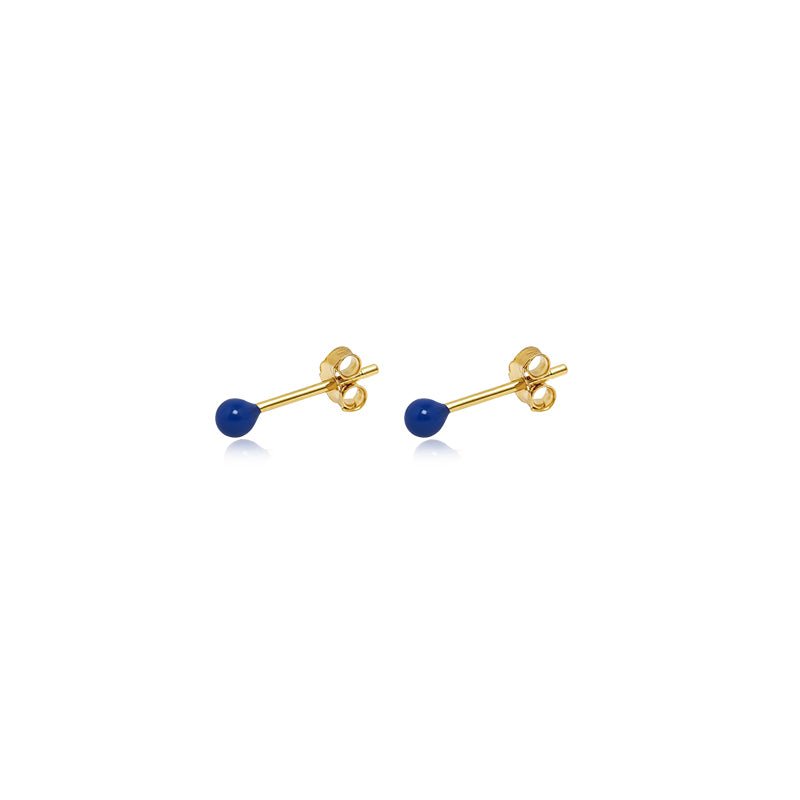
- Smooth metal
- Rounded edges
- A click or hinged closure
- Minimal surface texture
- A shape that closes completely
I would be more selective with huggies covered in:
- Raised prongs
- Tiny charms
- Open decorative shapes
- Sharp stone settings
- Rough texture
A huggie can still catch. The small size alone does not make it curl-friendly.
For completely down hair, though, a smooth pair is one of the easiest low-maintenance options.
Endless Hoops

Endless hoops use a thin post that connects back into the opposite side of the hoop.
When the connection lines up well, the earring forms an almost continuous circle.
That is useful with curls.
There is no large butterfly back and usually no open hook hanging behind the ear.
I would inspect the connection closely.
A good endless hoop should feel smooth when closed. If the joint is rough, loose, or slightly misaligned, hair can still catch there.
Endless hoops are especially useful if you like the shape of a hoop but dislike traditional posts and backs.
Flat-Back Studs

Studs make sense for curly hair because they stay close to the ear.
The backing is what changes the experience.
A flat-back stud sits closer to the skin behind the ear, so there is less metal sticking into the hair.
I would look for:
- Bezel-set stones
- Small domes
- Smooth round metal studs
- Pearl-style studs
- Compact sculptural shapes
- Flush or low-profile settings
Bezel vs. Prong Settings
If hair catches easily, I usually prefer a bezel or similarly smooth stone setting. If the ear itself is also sensitive, I would separately check which materials tend to work better for sensitive ears.
A bezel surrounds the stone with metal.
A prong setting uses small claws.
Prongs can be perfectly secure and wearable, but they create more exposed edges.
For curls that snag frequently, fewer exposed edges usually make life easier.
Statement Studs

This is where curly hair advice becomes less obvious.
Very small earrings can be practical and still disappear completely.
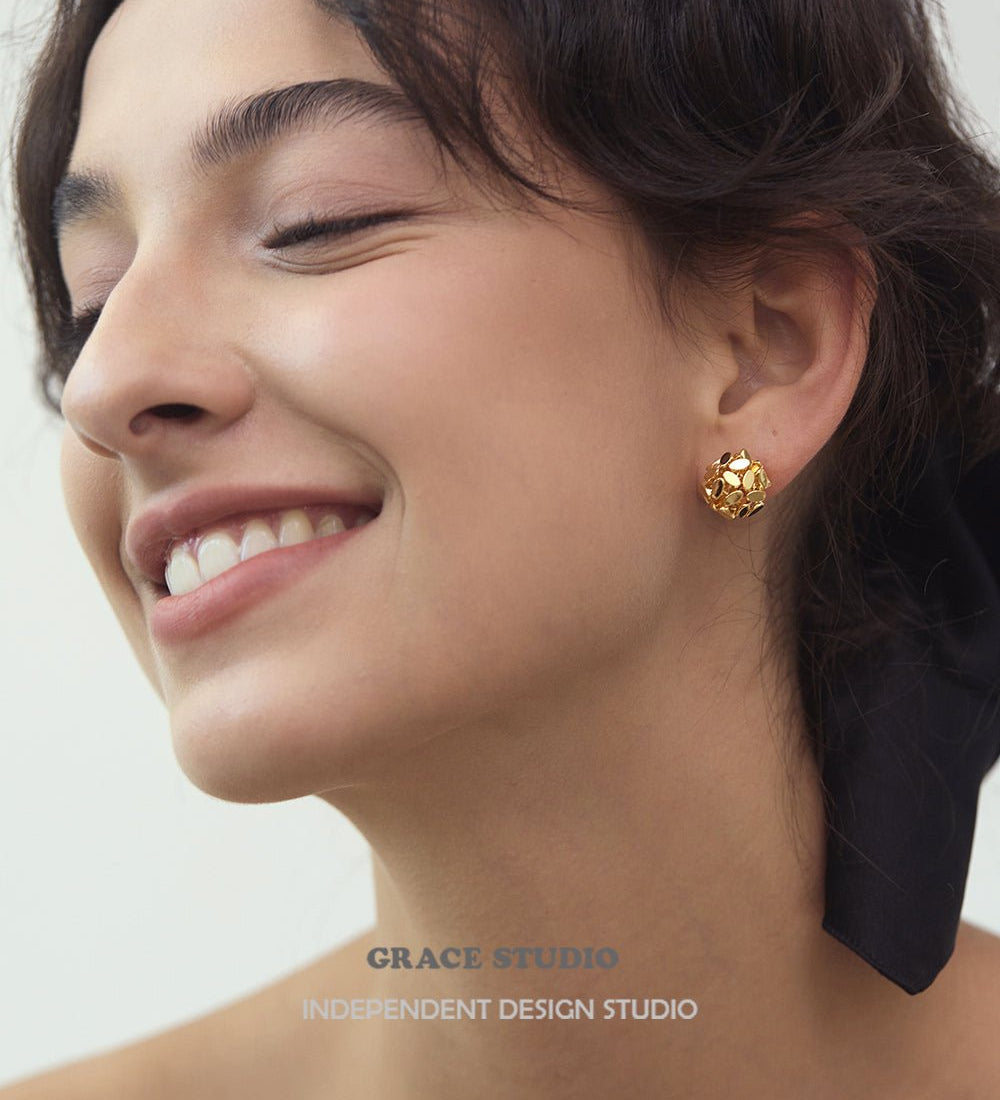
If you have dense curls around the sides of your face, a statement stud may make more sense than a delicate one.
I would look at:
- Polished domes
- Broad geometric studs
- Smooth floral shapes
- Pearl clusters with controlled settings
- Sculptural metal studs
- Solid rounded forms
What I would avoid is assuming “statement” means intricate.
A large polished dome can be easier with curls than a much smaller piece covered in wirework and open loops.
Bigger can actually be simpler.
Large Smooth Hoops

Large hoops sound like they should create more tangling.
Sometimes they do. Sometimes the opposite happens.
If a larger hoop sits outside the densest part of your curls, it may have less contact with the hair than a medium hoop sitting directly inside it.
That is why I would think about placement, not diameter alone.
I like larger hoops when they have:
- Smooth polished metal
- A secure closure
- Moderate thickness
- Few decorative details
- No loose charms
- A shape that closes cleanly
Small vs. Medium vs. Large Hoops
Small huggies usually interact with the hair the least.
Medium hoops can be the awkward size if your curls sit around the jaw or shoulders. The hoop may end up directly inside the thickest section of hair.
Large hoops can sometimes clear that section and stay more visible.
I would test the actual pair with your normal hair placement rather than assuming one size is always better. Comparing a few hoop earring sizes on the ear is more useful than relying on diameter alone.
Structured Drop Earrings

Drop earrings can work very well with curls.
The question is how the drop is built.
I would look for:
- One solid drop
- Smooth teardrops
- Pearl drops
- Solid metal drops
- Broad sculptural drops
- Wider shapes with a clean outline
These are easier to separate from the hair than a design built from many fine chains. The difference between drop and dangle earrings becomes useful here because extra movement usually means more opportunities for curls to wrap around the jewelry.
A structured drop also makes tangling easier to notice because the whole earring moves as one piece.
I would be more careful with:
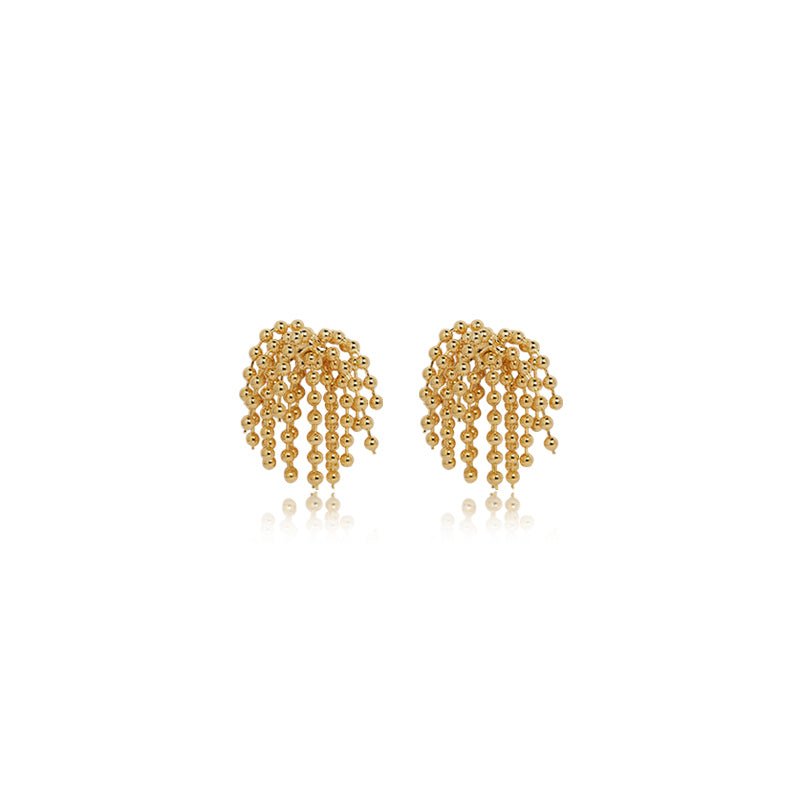
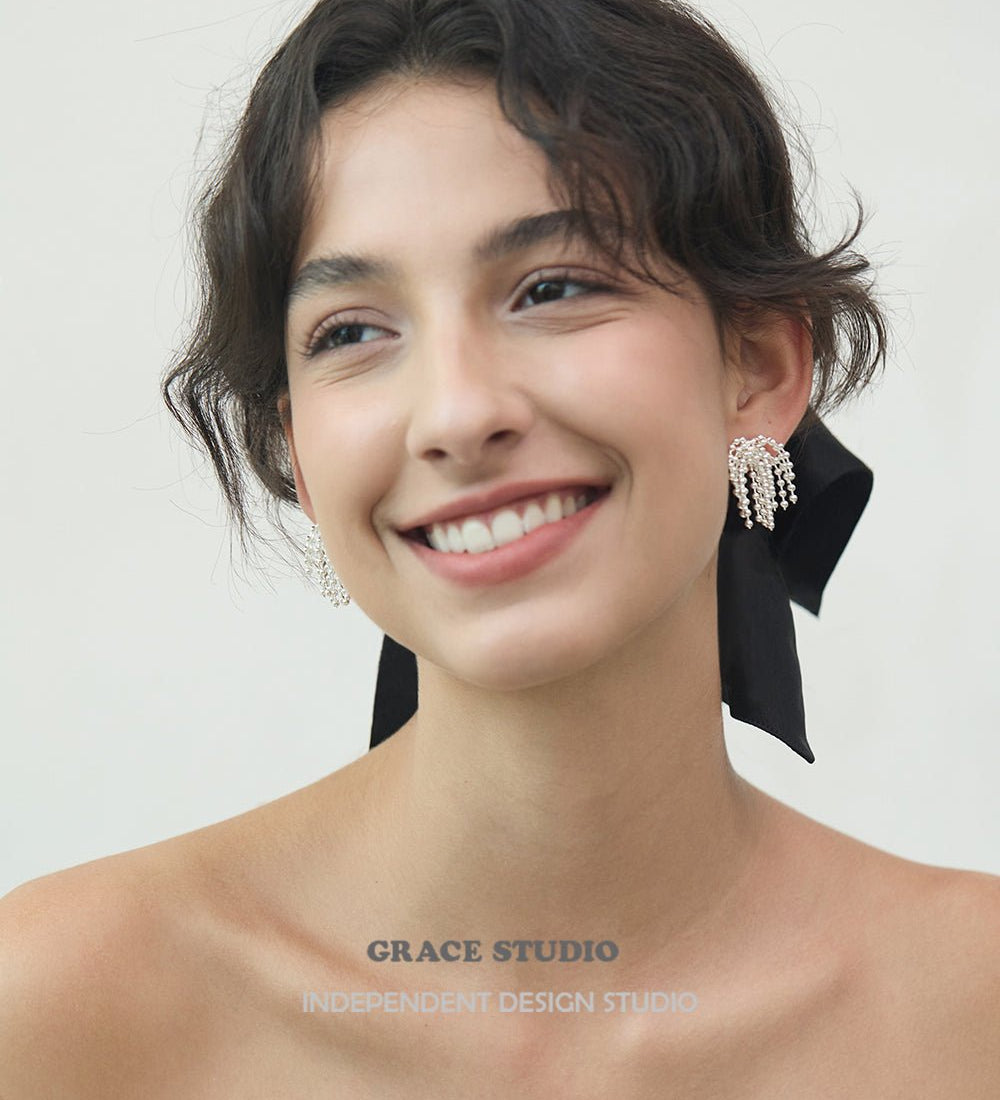
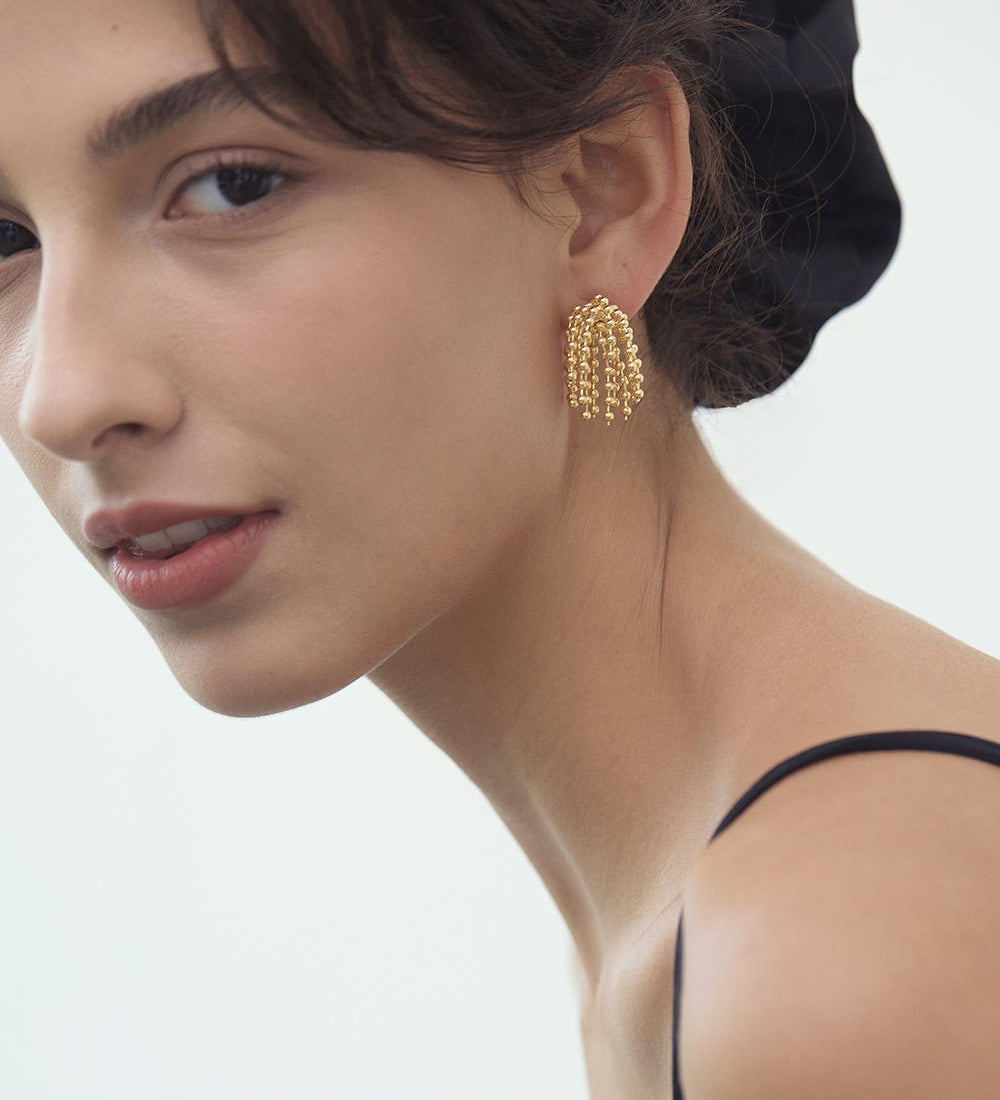
- Fringe
- Tassels
- Threaders
- Fine chain drops
- Multiple linked sections
- Open wirework
Geometric Earrings

Geometric earrings can be useful when you want the jewelry to remain visible through textured hair.
A broad, simple shape often reads more clearly than a tiny detailed design.
I would look at:
- Discs
- Domes
- Arches
- Crescents
- Broad rectangles
- Smooth abstract forms
Construction still comes first.
A smooth metal disc and an open wire star are both geometric, but the wire star gives curls many more openings.
So I would choose the surface before the category name.
Sculptural Statement Earrings

If you have very full curls, a larger silhouette may be the easiest way to keep the jewelry visible. That is where a smoother piece with a strong outline can move naturally into a more sculptural jewelry direction.
That might be:
- A broad metal shape
- A wide statement hoop
- A large smooth stud
- A bold crescent
- A sculptural drop
I would look for a strong outline with relatively little mechanical complexity.
Smooth edges. Limited moving parts. Lightweight construction.
That combination gives you visibility without asking your curls to navigate a complicated piece of jewelry.
Chandelier Earrings
I would keep chandeliers for situations where the hair is at least partly pulled away from the ears. If they are part of a bridal or formal look, I would also consider how they fit with the rest of your wedding jewelry.
They can work beautifully with:
- Updos
- Ponytails
- Hair pinned behind the ear
- Formal hairstyles
- Half-up styles with good clearance
The problem is not the size. It is the number of parts.
For curly hair, I prefer chandeliers with:
- Defined tiers
- Broad solid sections
- Smooth edges
- Limited loose chains
- Fewer tiny moving elements
I would be more careful with fine fringe, open filigree, and dense chainwork.
What Actually Makes Curly Hair Catch on Earrings?

Once you understand the snag points, a lot of earring choices become easier.
Open Gaps
A curl enters an opening and loops around the jewelry.
This can happen with:
- Open hooks
- Wire shapes
- Filigree
- Incomplete hoop closures
- Decorative cutouts
The more openings you add, the more possible entry points you create.
Protruding Hardware
Posts, butterfly backs, hooks, and prongs all extend away from the smooth body of the earring.
That does not make them unusable.
It means I inspect them more carefully if snagging is already a recurring problem.
Fine Chains and Small Moving Parts
This is probably the construction I would use most selectively.
Individual curls can wrap around:
- Threader chains
- Tassels
- Fringe
- Linked charms
- Fine chain drops
Once several strands are involved, the tangle can become harder to see and harder to undo.
Rough Joints and Edges
A tiny rough solder point may be barely noticeable to your finger and still catch fine strands repeatedly.
This is why finish quality matters.
A smooth inexpensive hoop may behave better with curls than a more decorative earring with rough connections.
Closure Type Can Matter More Than Style

Two earrings can look almost identical from the front and behave very differently because of the closure.
Huggie or Click Closure
This is one of my easiest choices.
The earring closes into a compact shape with relatively little exposed hardware.
Endless Hoop Closure
Also a strong option if the connection is smooth and secure.
The almost continuous circle gives curls fewer entry points.
Flat-Back Stud
Useful when the problem happens behind the ear rather than at the front of the earring.
Butterfly Back
Butterfly backs are common and can work fine.
I would check:
- How long the post is
- How far the backing sticks out
- Whether the edges feel rough
- Whether hair regularly gathers behind the ear
If that area catches constantly, I would compare a flat-back version.
Fishhook Ear Wire
Fishhooks can work, especially with hair pulled back.
With hair down, the open hook gives curls another place to enter.
If you love this type of drop, I would think about the hairstyle at the same time.
Earring Closure Guide for Curly Hair
Two earrings that look similar from the front can behave very differently because of the closure.
| Closure | Why it can work | Watch for |
|---|---|---|
| Huggie / click | Compact, little exposed hardware | Rough hinge or incomplete closure |
| Endless hoop | Almost continuous circle | Misaligned joint |
| Flat-back stud | Less hardware behind the ear | Raised front setting |
| Butterfly back | Common and easy to find | Long post or protruding edges |
| Fishhook | Fine with hair pulled back | Open hook catching curls |
Choose Earrings by Hair Length, Hairstyle, Volume, and Visibility
Choose Earring Size by Where Your Curls Sit
Hair length matters because it decides where the jewelry and curls overlap.
Short Curly Hair
With short curls, the ear is usually more visible.
That gives you plenty of freedom.
I would consider:
- Studs
- Huggies
- Small hoops
- Geometric earrings
- Drops
- Statement earrings
You do not need a large earring for visibility unless you want one.
Shoulder-Length Curly Hair
This can be the trickiest length.
The curls often sit directly around the ear, jaw, and shoulder, which is exactly where many earrings hang.
I would compare:
- Huggies
- Statement studs
- Larger smooth hoops
- Structured drops
Medium hoops deserve a test here.
Depending on the curl pattern, a medium hoop may sit directly inside the thickest part of the hair. A smaller huggie or larger hoop may create less contact.
Long Curly Hair
With longer curls, I think about two things at once:
snagging + visibility
Good starting points include:
- Huggies
- Endless hoops
- Large smooth hoops
- Statement studs
- Structured drops
You can still wear tiny jewelry.
It may simply become a detail you see only when the hair moves, and that can look very good if that is what you want.
Your Hairstyle Changes the Answer
The same earrings can work very differently depending on how you wear your curls that day.
Curls Fully Down
I would prioritize lower-snag construction.
My first choices would be:
- Huggies
- Endless hoops
- Flat-back or statement studs
- Smooth hoops
- Structured drops
If the hair is thick around the ears, visibility becomes the second decision.
Half-Up, Half-Down
This gives you more room.
Some of the hair is cleared from the ear while the curls still frame the face.
I would feel more comfortable adding:
- Medium hoops
- Larger hoops
- Drops
- Geometric earrings
- Statement studs
Curly Ponytail
A ponytail exposes the earring much more.
Now I am less worried about hair interaction and more interested in scale.
This is a good time for:
- Hoops
- Drops
- Statement earrings
- Chandeliers
Curly Bun or Updo
This gives you the most freedom.
Long drops, chandeliers, detailed statement earrings, and larger sculptural designs become much easier because the hair is largely out of the way.
If you love intricate earrings but hate untangling them from curls, I would save them for this kind of hairstyle.
Curl Type Matters Less Than Hair Behavior
I would not choose earrings from a curl-type number alone.
Density, strand fineness, length, and where the hair sits around the ears usually tell me more.
Loose Waves and Curls
Loose curls can still wrap around hooks, chains, and hoops, but they may be easier to move away from the ear.
I would still inspect open hardware.
Tight Curls and Coils
Small openings can become particularly annoying because a curl can enter the opening and stay there.
Smooth, closed shapes become more useful.
Dense or High-Volume Hair
Visibility becomes the bigger issue.
I would compare:
- Larger silhouettes
- Wider studs
- Hoops
- Broad drops
- Sculptural shapes
You need more visible area, not necessarily more weight.
Fine Curly Hair
For fine strands, I would be especially careful with rough edges and sharp points.
I would prioritize:
- Smooth surfaces
- Secure closures
- Few protruding parts
- Lightweight construction
Visibility Is a Separate Decision From Snag Risk
Sometimes people solve the tangling problem and then realize they cannot see the earrings at all.
So I treat visibility as its own decision.
If You Want the Earrings to Blend In
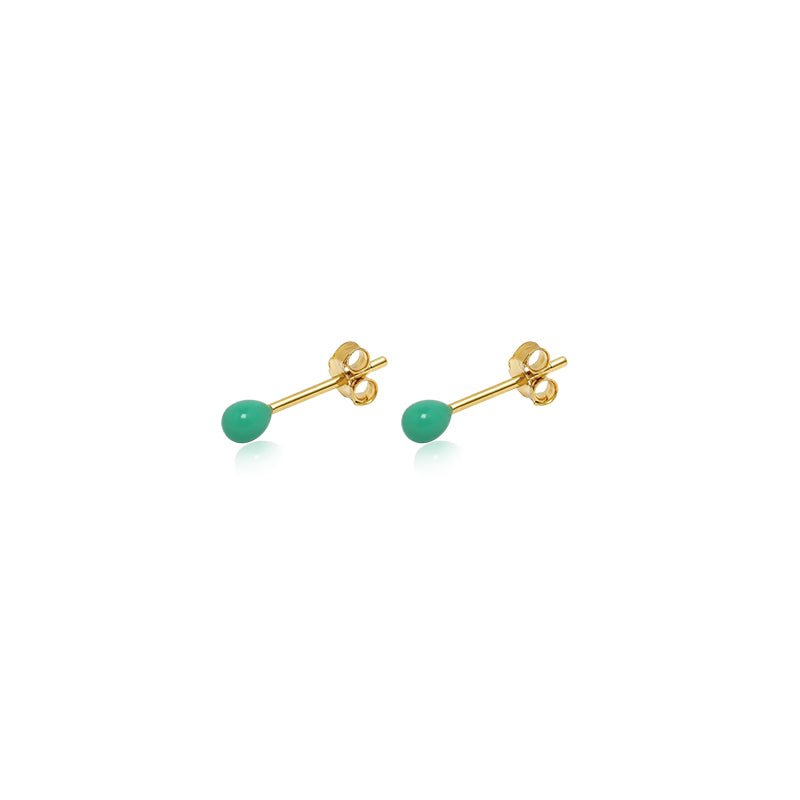
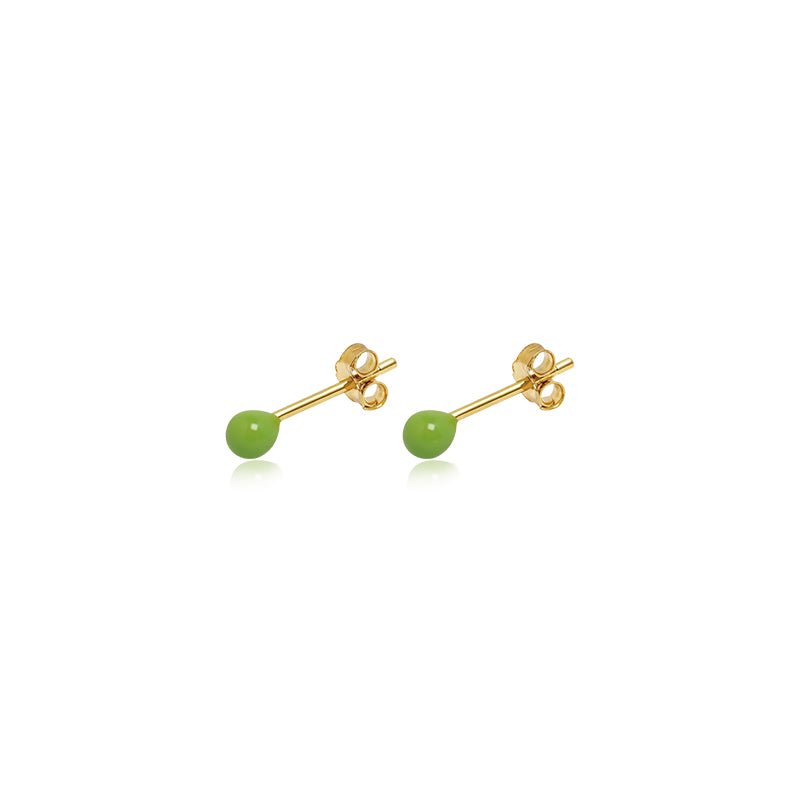
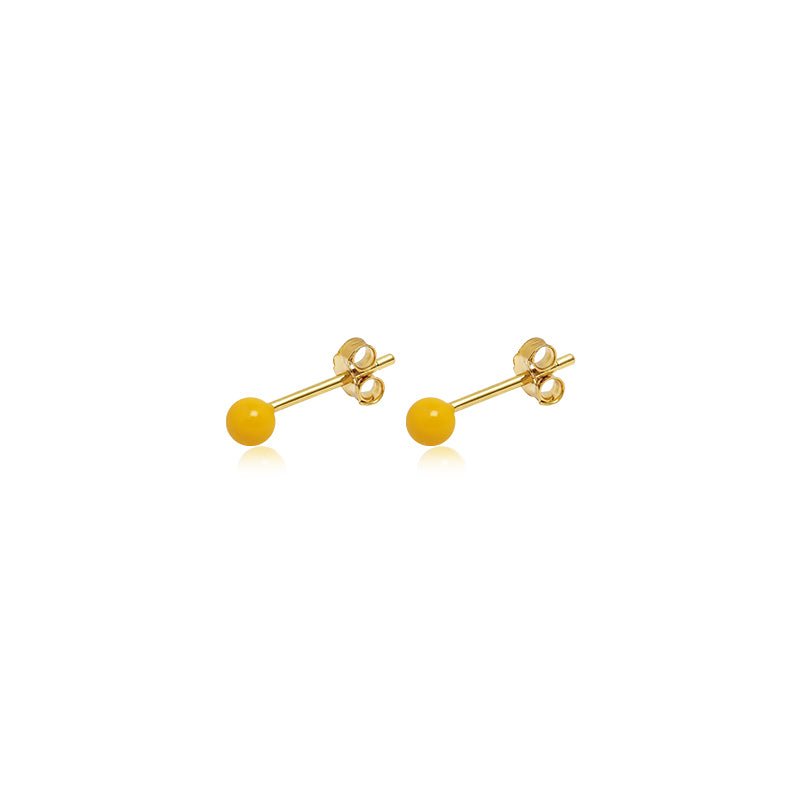
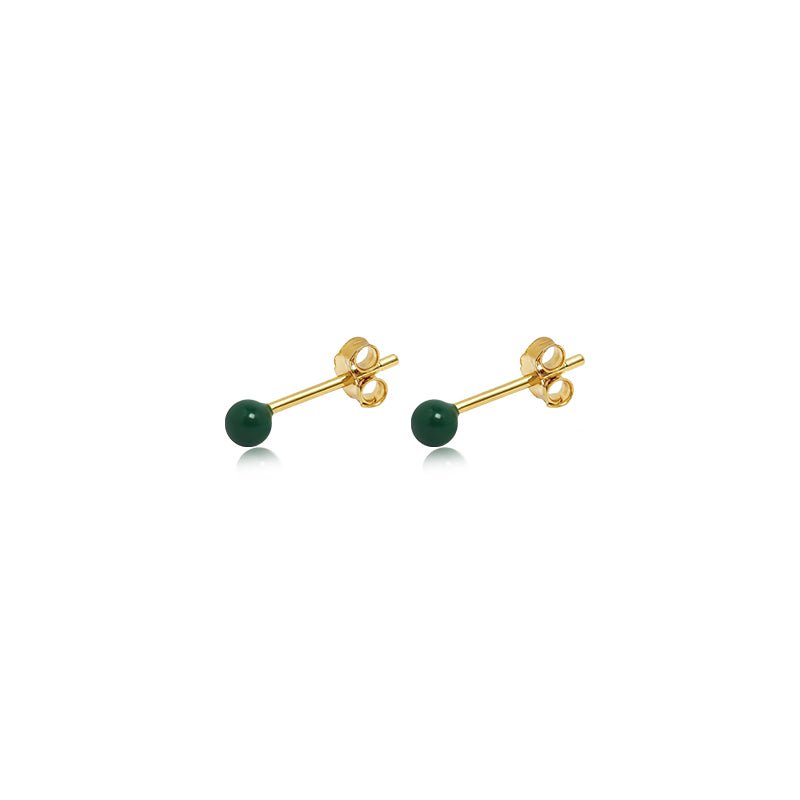
Small huggies and studs can look very good partly hidden by curls. That quieter scale also fits easily into a classic jewelry rotation if you prefer pieces that work across many outfits.
There is no reason every earring needs to be visible from across the room.
If subtle is the goal, let subtle be the goal.
If You Want the Earrings to Stand Out
I would increase:
- Width
- Overall size
- Shine
- Contrast
- Surface area
before increasing weight.
A broad polished shape can stand out through curls without being heavy.
Use Color and Contrast
Contrast can make a modest earring easier to see.
For example:
- Polished gold against dark hair
- Pearls against dark curls
- Dark stones against lighter hair
- Colored gemstones
- Enamel
Gold vs. Silver With Curly Hair
Neither is inherently better.
I would choose based on hair color, skin tone, outfit, and the amount of contrast you want.
Gold may read more strongly against very dark hair.
Silver can look crisp against many brown and warmer hair colors.
Rose gold often gives a softer contrast.
But if snagging is the problem, construction matters far more than metal color.
Big Earrings Do Not Need to Be Heavy
Voluminous hair can make tiny earrings disappear, but that does not mean you need heavy jewelry.
I separate visual size from physical weight.
For everyday wear, I would prioritize the same comfort and practicality checks I use when choosing jewelry for office wear:
- Lightweight construction
- Smooth edges
- Secure closures
- Comfortable backs
For larger earrings, I would look for:
- Hollow metal
- Lightweight resin
- Thin broad shapes
- Large silhouettes with low weight
If you need more presence, add size or contrast before adding mass.
That is usually the more comfortable route.
Hair Length and Hairstyle Match Guide
Where the curls sit usually matters more than the curl-type label.
| Hair situation | Good starting point | Watch for |
|---|---|---|
| Short curls | Studs, huggies, small hoops, drops | Going larger only for visibility |
| Shoulder-length curls | Huggies, statement studs, larger smooth hoops | Medium hoops sitting inside the curl mass |
| Long curls | Endless hoops, statement studs, structured drops | Fine chains hidden in the hair |
| Hair fully down | Closed, smooth, low-snag designs | Open hooks and loose pieces |
| Updo / ponytail | Drops, chandeliers, larger sculptural earrings | Weight and comfort |
How to Keep Curly Hair From Getting Caught in Earrings
The earring matters, but the way you put it on matters too.
Put Earrings On After Styling Your Hair
I would finish the hair first.
That includes:
- Curl cream
- Gel
- Mousse
- Diffusing
- Hairspray
- Final arranging
Then put the earrings on.
This reduces the chance of styling tools, wet curls, and your hands catching the jewelry while you work.
Clear the Hair Around the Ear First
Do not push an earring through a mass of curls.
Move the hair away from the ear, put the earring on, then let the curls fall back naturally.
That small sequence can save a lot of untangling.
Pin Back Only the Section You Need
You do not have to change the whole hairstyle.
A bobby pin or small hidden pin near the ear can keep one section of curls away from the earring while the rest of the hair remains down.
If a Curl Gets Caught, Stop Pulling
Do not yank the earring away from the hair.
That can tighten the curl around the jewelry.
Stop moving the earring.
If necessary, take the earring off first.
Then unwind the strand gently.
How to Add Visibility Without Adding Too Much Weight
If curls hide small jewelry, I would increase visual presence before increasing mass.
| Need more visibility? | Try first | Why |
|---|---|---|
| A little more | More shine or contrast | Adds definition without extra size |
| Moderate | Wider stud or smooth hoop | More visible surface area |
| Strong | Broad geometric or sculptural shape | Clear outline through dense curls |
| Very strong | Large lightweight hoop or hollow statement earring | Big silhouette with less weight |
| Formal look | Structured chandelier or broad drop | Adds presence and movement |
Face Shape and Gender Come After the Hair Practicalities
I would treat both of these as secondary decisions.
First ask:
Will this earring actually work with my hair?
Then think about the rest.
Face Shape
Face shape can still help with proportion.
You may prefer:
- Longer shapes for more vertical direction
- Wider shapes for more horizontal presence
- Rounded earrings against angular features
- Geometric earrings against softer features
But if the “perfect” shape spends all day tangled in your curls, it is not a useful recommendation.
I would solve the hair interaction first.
Men, Women, and Personal Style
The physical interaction between curls and jewelry does not change by gender.
The same construction advice applies.
For a minimal look, I would compare:
- Flat-back studs
- Small huggies
- Endless hoops
- Smooth metal studs
For more visibility, especially when you want the earring to act as a stronger fashion jewelry detail:
- Larger hoops
- Geometric studs
- Sculptural drops
- Statement studs
Personal style does the rest.
My Simple Shopping Test for Curly Hair
When I compare earrings for curly hair, I run through this order.
1. How Easily Does My Hair Catch?
If snagging happens constantly, I start with:
- Huggies
- Endless hoops
- Flat-back studs
2. Where Do My Curls Sit?
I look at whether the hair:
- Covers the ear
- Sits at the jaw
- Hits the shoulder
- Moves across the earring constantly
This tells me which earring sizes are likely to sit inside the curl mass.
3. How Visible Do I Want the Earring?
For something subtle:
- Flat-back studs
- Huggies
- Small endless hoops
For more visibility:
- Large hoops
- Statement studs
- Structured drops
- Geometric earrings
4. What Does the Hardware Look Like?
I check:
- Gaps
- Hooks
- Long posts
- Prongs
- Rough joints
- Loose pieces
- Fine chains
The front is only half the earring.
5. How Do I Normally Wear My Hair?
Hair down means I am stricter about snag points.
Hair up gives me much more freedom.
6. Is the Earring Lightweight Enough?
Large can be fine.
Heavy is the part I would question.
7. Does It Work When I Move?
I would not judge the pair while standing perfectly still.
Turn your head.
Move your shoulders.
Tuck the hair behind your ear.
Let it fall back.
If the earring catches immediately, that tells you more than the product description ever will.
Frequently Asked Questions About Earrings and Curly Hair
What Earrings Are Least Likely to Catch in Curly Hair?
No earring is completely snag-proof, but I would start with smooth, closed designs.
Huggies, endless hoops, flat-back studs, and smooth solid hoops tend to give curls fewer openings and protruding parts to catch on.
Can You Wear Long Earrings With Curly Hair?
Yes.
I would choose long earrings that are smooth and structured rather than designs made from many fine chains or loose pieces.
They are also much easier to wear when your hair is pinned back, half-up, or fully up.
Should Earrings Be Bigger With Curly Hair?
Only if you want more visibility.
Dense or voluminous curls can hide tiny jewelry, so a larger silhouette may show more clearly. I would increase width, size, shine, or contrast before choosing a heavier earring.
What If Butterfly Backs Keep Catching My Hair?
I would compare flat-back studs.
A flat back sits closer to the skin behind the ear and gives the hair less protruding hardware to wrap around.
You can also check whether the traditional stud post is longer than you need.
Should I Put Earrings On Before or After Styling Curly Hair?
After.
Finish applying products, diffusing, and arranging your curls first. Then move the hair away from the ear, put the earrings on, and let the curls settle back around them.
Infographic






Leave a comment