
How to Choose Earrings for Sensitive Ears?
If a pair of earrings looks fine for the first hour and then leaves your ears itchy, hot, sore, or oddly tender by the end of the day, I would not start by blaming the style.
I would start with the parts that actually touch your piercing.
That usually means the post, hook, hoop section, and backing. If you are comparing unfamiliar designs, it helps to know the main types of earrings first. The decorative front can be beautiful, expensive, and made from a metal you normally tolerate, while the post uses something completely different.
That is one of the first things I learned to pay attention to with sensitive ears: the material name on the front of the product page is not always the material sitting inside your piercing.
For me, a sensible starting point is a clearly disclosed, nickel-free material rather than a vague "hypoallergenic" label.
Titanium is one of the easiest materials to evaluate when the seller gives you the actual grade or standard. Niobium, platinum, and some nickel-free solid-gold options can also be good choices. Sterling silver and stainless steel may work perfectly well too, but I would want more information about the exact alloy.
And metal is only half the story.
A pair can be made from a material your skin usually tolerates and still hurt because:
- The earring is too heavy
- The backing is pressed too tightly against the lobe
- The post is scratched
- The hook has a rough join
- The hoop is too tight
- The design swings against the piercing all day
So when I shop for sensitive ears, I look at the whole earring. Material first. Then the part passing through the piercing. Then weight, movement, and fit.
That approach has always made more sense to me than hunting for one supposedly perfect metal.
What "Sensitive Ears" Can Actually Look Like

People use "sensitive ears" as a catch-all phrase, but the discomfort can show up in several ways.
You might notice:
- Itching
- Redness
- Burning
- Soreness
- Swelling
- Small bumps or a rash
- Tenderness around the piercing
- A pulling or tired feeling after several hours
The timing can be different too.
Some earrings feel wrong almost immediately.
Others are fine through lunch and become uncomfortable late in the day.
That difference matters because not every reaction points to the same problem.
Itching and a recurring rash may make you more suspicious of a material sensitivity. A heavy pair that leaves the lobe aching after six hours may simply be putting too much pressure on the piercing. A very tight butterfly back can make the ear sore even when the metal itself is not causing trouble.
I would not try to diagnose the cause from one symptom alone.
If the reaction is strong, keeps returning, spreads beyond the piercing, or does not settle after you stop wearing the earrings, the source material recommends getting professional advice rather than trying to work it out by yourself.
What the Discomfort May Be Telling You
The symptom alone does not diagnose the cause, but it can tell you what to check first.
| What you notice | Possible issue | Check first |
|---|---|---|
| Itching or recurring rash | Material sensitivity | Post, hook, or hoop material |
| Aching after several hours | Weight or pressure | Earring weight and backing tension |
| Pinching behind the lobe | Backing too tight | Post length and backing position |
| Soreness with hoops | Fit or friction | Diameter and wire thickness |
| Irritation from an older pair | Worn plating or rough surface | Post and high-friction areas |
Nickel Is the Material I Would Check First
Nickel comes up again and again in discussions about sensitive ears for a reason.
It is commonly used in metal alloys, and it is also a common cause of allergic contact dermatitis.
The tricky part is that you cannot identify nickel by color.
A gold-colored earring could be several things, which is why the difference between gold-plated and solid gold matters:
- Solid gold
- Gold filled
- Gold vermeil
- Gold plated
- Gold-colored base metal
A silver-colored earring could be:
- Sterling silver
- Stainless steel
- Platinum
- Silver-plated metal
- Another alloy entirely
So I do not use "gold-colored" or "silver-colored" as a shortcut for sensitive-ear safety.
I want to know what the metal actually is.
Why an Old Pair Can Suddenly Start Bothering You
This is one of the more useful clues in the original material.
Suppose you have worn a plated pair comfortably for months.
Then one day your ears start itching.
That does not necessarily mean your ears suddenly reject every earring.
The plating may simply have worn down around the post or another high-friction area. That is also why care for gold-plated jewelry matters most around posts, hooks, hinges, and other rubbing points. If the base metal underneath contains something you react to, more of that metal may now be reaching your skin.
Other things may have changed too:
- You bought a different alloy
- The post became scratched
- The backing got tighter
- You started wearing the earrings longer
- You moved to a heavier style
- Your piercing was already irritated
I find it much more useful to ask, "What changed?" than to decide that your ears have suddenly become allergic to jewelry as a whole.
Material Is Not the Only Reason Earrings Hurt
This is where generic sensitive-ear guides often lose me.
They spend ten paragraphs ranking metals and almost nothing on the physical design of the earring.
But your ear does not experience a metal label. It experiences an object sitting in and around a piercing for hours.
Heavy Earrings
A heavy earring pulls downward.
That pressure keeps going while you walk, turn your head, or move around.
After several hours, you may notice:
- Soreness
- Redness
- Tenderness
- Stretching
- A pulling sensation
That can happen even if the metal is one you normally tolerate.
Rough Posts
A post can technically be made from a good material and still be uncomfortable if the surface is scratched, rough, or poorly finished.
I always look at the post itself.
If it feels rough against my fingertip, I would not expect it to feel better inside a piercing.
Tight Backs
Butterfly backs do not need to be pushed as tightly as possible.
If the backing compresses the lobe, you add pressure and trap more sweat and moisture.
I want the earring secure, but I also want a little breathing room.
Constant Movement
Large hoops and long drops move more than small studs.
Movement is not automatically bad, but it adds friction.
If your ears are already easily irritated, that can be the difference between a pair you forget about and one you keep touching all afternoon.
The Earring Materials I Would Look at First

There is no material that guarantees zero reaction for everyone.
Still, some options give you more predictable information than others.
Sensitive-Ear Materials at a Glance
I would compare the exact material and alloy rather than rely on color or marketing labels.
| Material | Why I would consider it | What to verify |
|---|---|---|
| Titanium | Lightweight and corrosion-resistant | Grade or standard, plus nickel-free claim |
| Niobium | Corrosion-resistant and often well tolerated | Exact metal and finishing |
| Platinum | High platinum content and corrosion resistance | Price and complete construction |
| Solid gold | Common fine-jewelry option | Karat, alloy, nickel-free status, post material |
| Sterling silver | Works well for many wearers | Nickel-free alloy and post material |
| Stainless steel | Durable and affordable | Exact grade and nickel content |
Titanium
If I were starting from zero with very sensitive ears, titanium would be near the top of my list. It is also one of the materials I would compare when looking for jewelry that resists tarnish.
It is lightweight, corrosion-resistant, and commonly used for body jewelry.
That low weight is useful in a very practical way. You can sometimes wear a visually larger earring without getting the same pulling sensation you might get from a denser metal.
Titanium can show up in:
- Studs
- Flat backs
- Huggies
- Hoops
- Ear hooks
- Piercing jewelry
The part I care about is not simply seeing the word titanium.
I want to know what kind.
Why the Titanium Grade Matters
You will see phrases such as:
- Surgical titanium
- Medical-grade titanium
- Implant-grade titanium
They sound reassuring. They are also broad labels.
The original source gives two examples of more specific standards:
- ASTM F136, commonly associated with implant-grade titanium alloy
- ASTM F67, which covers commercially pure titanium grades used in medical applications
I do not think most people need to memorize those numbers.
The practical habit is simpler.
If a seller says "medical grade," I look for the actual material or standard behind the phrase.
"ASTM F136 titanium post, nickel-free" tells me much more than "premium hypoallergenic titanium."
That difference in disclosure matters more to me than a reassuring adjective.
Niobium
Niobium gets much less attention than gold, silver, and titanium, but it is worth knowing about if your ears react to common jewelry metals.
It is naturally corrosion-resistant and is often chosen by people who want to avoid common jewelry allergens.
One thing I find interesting about niobium is that it can be anodized.
That process changes the way the surface reflects light, so the metal can appear in different colors without relying on conventional paint or plating.
If you like color but still want to know exactly what metal is underneath, that can be useful.
The downside is availability.
You may need to look beyond mainstream fashion-jewelry stores to find a good selection.
Platinum
Platinum is another material I would put in the sensitive-ear conversation, especially for fine jewelry.
Jewelry made from platinum usually contains a high proportion of platinum, and the metal is highly resistant to corrosion.
It also has a naturally white appearance.
The obvious drawback is price.
Platinum earrings can cost much more than titanium, sterling silver, or stainless steel.
So I would not call it the practical first choice for everyone. But if you already buy fine jewelry and budget is not the main issue, it is worth considering.
Gold
"Gold is good for sensitive ears" sounds simple.
I do not think it is simple enough.
The word gold leaves out several things I would want to know:
- What karat is it?
- Is it solid gold?
- Is it plated?
- What metals are in the alloy?
- Is the alloy nickel-free?
- What is the post made from?
Pure 24K gold is soft, so most wearable gold jewelry uses an alloy.
That means other metals are mixed in.
14K Gold
14K solid gold can work well for many sensitive wearers.
If nickel is your issue, though, I would prefer a listing that says 14K nickel-free gold rather than stopping at "14K."
There is another detail people miss.
The decorative front may be 14K gold while the post or backing uses something else.
Again, the post matters.
18K Gold
18K gold contains more gold and less alloying metal than 14K.
For some people, that may make it easier to tolerate.
I would still avoid treating higher karat as an allergy guarantee.
The exact alloy matters.
If you know you react to nickel or another metal, I would check for that information directly.
White Gold
White gold deserves more scrutiny than people sometimes give it.
Different white-gold alloys can use different metals.
Some use nickel.
Others use alternatives.
White gold may also be rhodium plated to create a brighter white surface.
So if nickel is a known problem, I would specifically look for nickel-free white gold rather than assuming "gold" settles the question.
Solid Gold vs. Gold-Plated Earrings

Two pairs can look almost identical when they are new and behave very differently after months of wear.
With solid gold, the gold alloy runs through the piece.
With gold-plated jewelry, a thinner gold layer sits over another metal.
That underlying metal matters.
If the plating wears away around the post, hook, hinge, or another area that rubs against your ear, the base metal may reach the skin.
This does not mean I would automatically reject every plated earring for sensitive ears.
I would just want answers to three questions:
- What is the base metal?
- Is that base metal nickel-free?
- What is the post actually made from?
For something I plan to wear several times a week, a clearly disclosed solid-metal post is easier for me to evaluate.
Sterling Silver
Sterling silver is another material that gets oversimplified.
Standard sterling silver is 92.5% silver, which is why you often see the 925 mark.
The remaining percentage consists of other metals added for strength.
Many people with sensitive ears wear sterling silver with no trouble.
But "925" tells you the silver content. It does not tell you every detail about the rest of the alloy.
If I already know nickel bothers me, I would look for sterling silver that is also described as nickel-free.
And, once again, I would check the post.
A sterling-silver decorative front with a different post material is not the same thing as an all-sterling construction.
Stainless Steel and Surgical Steel
Stainless steel jewelry has a lot going for it.
It is strong, relatively affordable, and resistant to corrosion.
Plenty of people wear stainless-steel earrings comfortably.
The complication is the alloy.
Some stainless steels contain nickel.
That makes the broad label "stainless steel" less informative for someone with a known nickel sensitivity than a clearly specified titanium material.
The phrase surgical steel does not automatically solve that problem.
It can refer to different stainless-steel alloys, and some contain nickel.
So when I see "surgical steel," I do not mentally translate that to "nickel-free."
I look for the actual material information.
Sterling Silver vs. Stainless Steel
I would not name one universal winner.
Sterling silver gives you a defined minimum silver content.
Stainless steel gives you durability and corrosion resistance.
Both still depend on the exact alloy.
If you already wear a particular nickel-free sterling silver comfortably, I see no reason to switch because stainless steel sounds tougher.
If you already tolerate a particular stainless-steel grade, I would not assume sterling silver is automatically gentler.
If you have a strong known nickel allergy and want the easiest material to evaluate, the source points back toward verified titanium.
Non-Metal Options
Some people start searching for plastic or other non-metal earrings after reacting to several metals.
That can be useful, but I would not buy an unknown plastic simply because I cannot see metal.
Quality varies.
If you are considering a non-metal material for prolonged wear, I would still want to know what the material actually is and whether it is intended for long-term skin contact.
"Not metal" is not enough information by itself.
Materials That Make Me Ask More Questions
I do not think there is a useful blacklist that works for every person.
There are, however, product descriptions that make me slow down.
"Alloy" With No Details
Words such as:
- Alloy
- Mixed metal
- Fashion metal
- Metal blend
do not automatically mean poor quality.
They simply tell me very little.
If you already have sensitive ears, that lack of information becomes a problem because you cannot easily judge whether the earring contains nickel or another material you have reacted to.
Thin or Worn Plating
I pay the most attention to:
- Posts
- Hooks
- Hinges
- The inner side of hoops
- Areas rubbing directly against the lobe
Those are the places where friction can wear a surface coating faster.
The decorative front may still look perfect while the post has already changed.
White Gold With No Alloy Information
I would not avoid white gold across the board.
I would simply ask what is in it.
For someone with a nickel sensitivity, that question is more useful than the color or karat alone.
"Surgical Steel" With No Grade
Same issue.
The word sounds medical.
The composition matters more.
What "Hypoallergenic" Tells Me, and What It Does Not
"Hypoallergenic" is probably one of the most common sensitive-ear claims you will see.
I do not ignore it.
I just do not stop there.
The term generally suggests a product is intended to reduce the chance of an allergic reaction.
It does not mean nobody can react.
People have different sensitivities, and two earrings carrying the same broad label can use very different materials.
Hypoallergenic vs. Nickel-Free
These phrases answer different questions.
Nickel-free addresses one particular metal.
Hypoallergenic is broader.
If you already know nickel is your trigger, I find nickel-free information more directly useful.
What I really want is both a clear material description and a nickel-free statement.
For example:
Hypoallergenic earrings for sensitive ears
tells me very little.
ASTM F136 titanium posts, nickel-free
tells me what is actually going through the piercing.
That is the kind of product description I prefer.
Sensitive-Ear Product Page Red Flags
The less specific the material description is, the more cautious I get.
| Product wording | What is missing | What I would look for instead |
|---|---|---|
| Hypoallergenic | Exact material | Named metal plus nickel-free information |
| Medical grade | Actual standard or grade | A specific titanium or steel standard |
| Premium alloy | Alloy composition | Named base metal and post material |
| Gold color | Whether it is solid, filled, vermeil, or plated | Exact construction and base metal |
| Surgical steel | Specific steel grade | Grade plus nickel information |
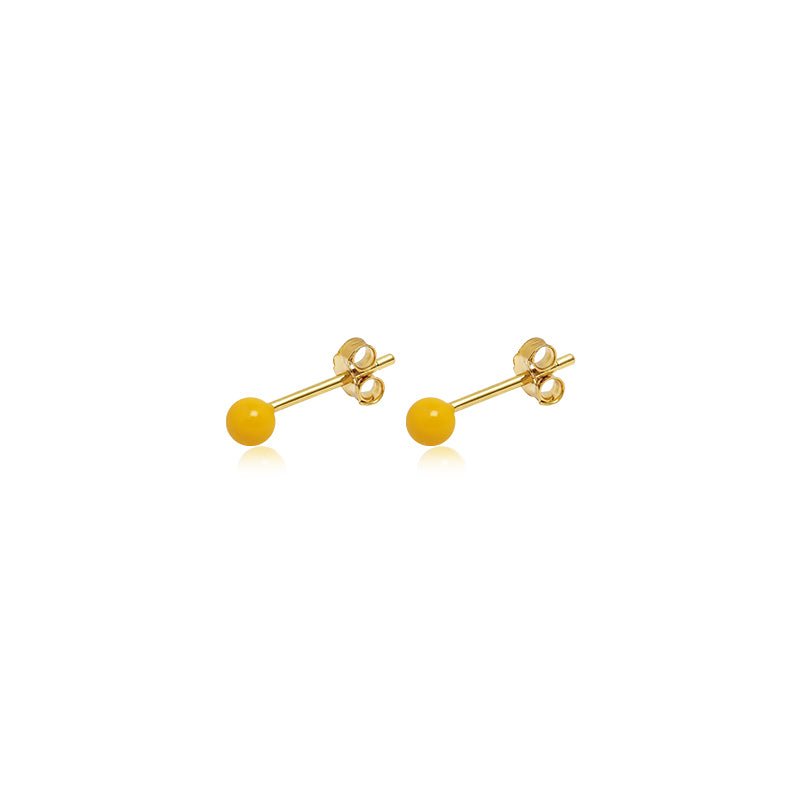
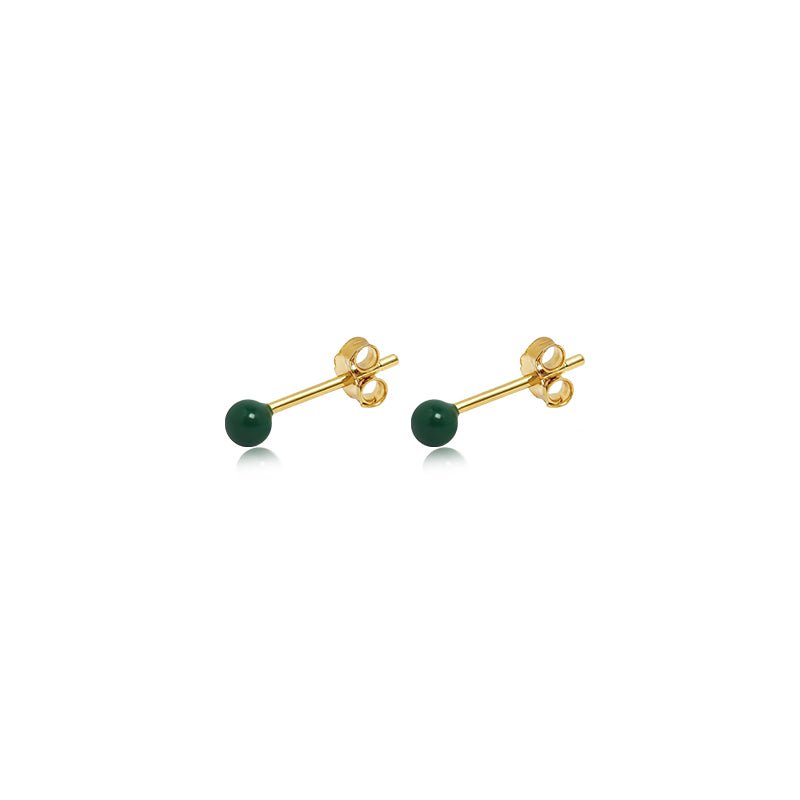
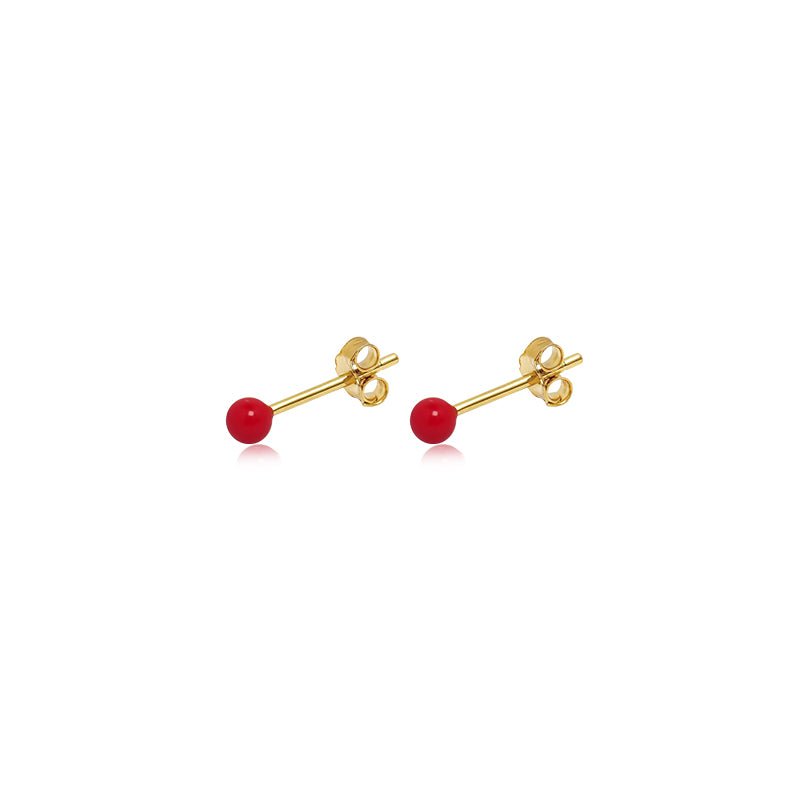
The Post Matters More Than Most Product Photos Suggest

When you look at an earring online, almost all the visual attention goes to the front.
That is not where I focus first for sensitive ears.
The post or wire sits inside the piercing for hours.
So I check:
- Stud post material
- Ear wire material
- Hook material
- The section of a hoop passing through the ear
- Backing material
A decorative front can be made from a material you tolerate while the post is not.
This is easy to miss.
I Also Look at the Finish
A good material can still be badly finished.
Run a finger gently over the post.
I want smooth.
No burrs.
No sharp join.
No rough soldered spot.
No scratched edge.
A tiny irregularity that feels barely noticeable on your finger can feel much bigger after moving inside a piercing for half a day.
Flat Backs, Butterfly Backs, and Pressure
The backing itself changes comfort.
A traditional butterfly back is fine for many people, but I do not push it tightly against the lobe.
Secure is enough.
Flat-back earrings can feel more comfortable for some people because there is no long post sticking out behind the ear.
That can help if you wear headphones or rest your head against something.
But flat-back does not automatically mean sensitive-ear friendly.
You still need a suitable material and the correct post length.
Too short, and the ear gets compressed.
Too long, and the earring moves more.
Which Earring Styles Tend to Be Easier?

Once I know the material works for me, I start thinking about movement and weight.
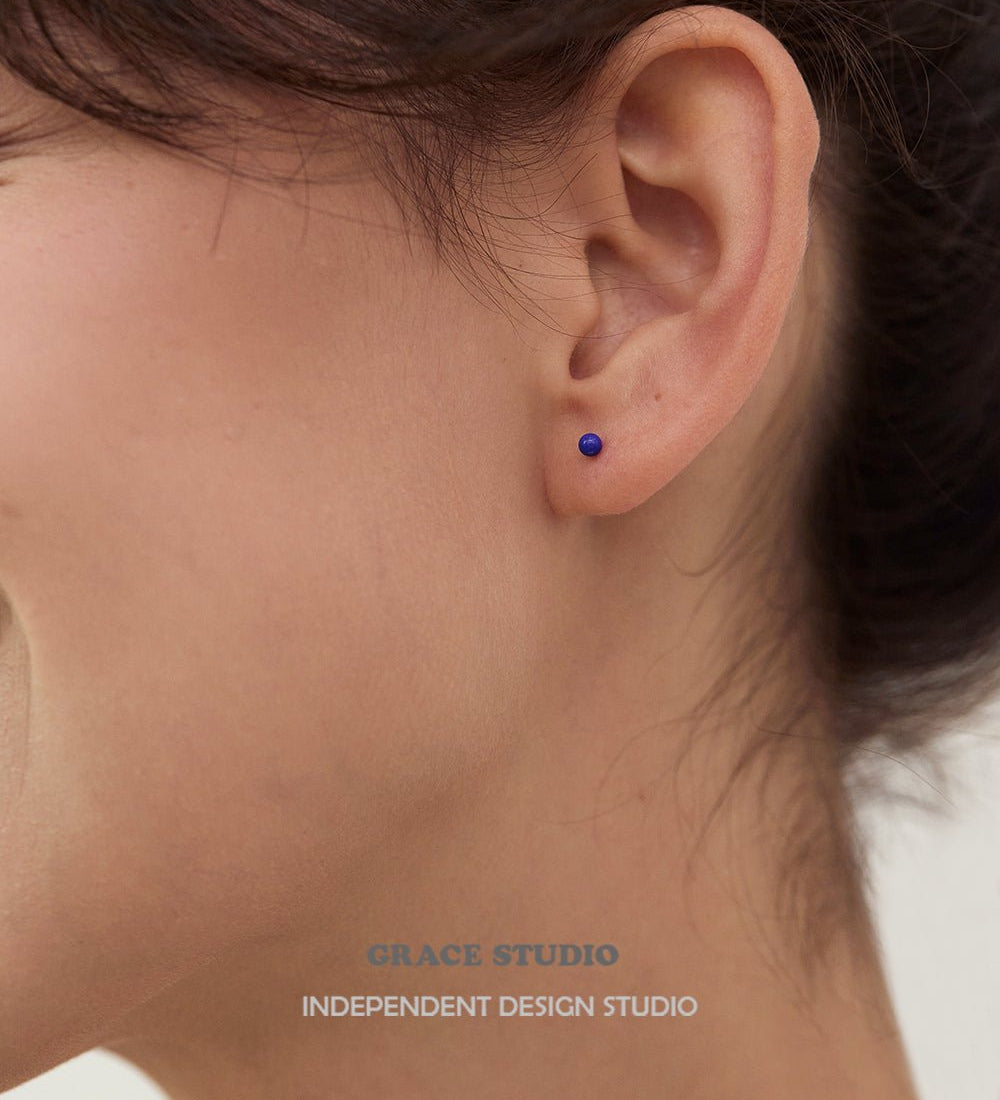
Stud Earrings
For sensitive ears, stud earrings are a sensible first option because they are often:
- Small
- Lightweight
- Stable
- Less likely to swing against the piercing
I would not say studs are automatically "better" than hoops.
A nickel-containing stud can be much worse for you than a well-made titanium hoop.
Stud is a shape.
It is not a material guarantee.
Flat-Back Studs
Flat backs can be useful if a conventional post keeps poking you behind the ear.
I also like the lower-profile shape for headphones.
Fit matters, though.
If your ear feels compressed, the post may simply be too short.
Huggies
Huggies sit close to the lobe.
That means less swinging and usually less weight.
I like them for daily wear, but only if the diameter is right. The difference between hoops and huggies becomes especially noticeable when fit and movement affect comfort.
A huggie should sit close.
It should not squeeze the bottom of your lobe.
That small fit difference can completely change how the pair feels after a few hours.
Small Hoops
Small hoops can work very well if the material and closure are right. I would also pay attention to hoop earring size, since a pair that is too tight can press into the lobe even when the metal itself is fine.
I check:
- Weight
- Diameter
- Closure
- Smoothness
- The thickness of the section passing through the piercing
The last point is easy to miss.
A hoop post or wire that feels unusually thick for your piercing may be uncomfortable even if the metal itself is fine.
Drop and Dangle Earrings
Sensitive ears do not mean you have to give up drops. The same comfort checks still apply when wearing drop earrings.
I would focus on weight.
A long earring made from thin, lightweight material may feel much easier than a shorter solid-metal design. The difference between drop and dangle earrings can also affect how much movement you get through the day.
Visual size is a poor way to judge comfort.
Weight is better.
If a product page gives the earring weight, I find that information much more useful than a photo alone.
Earring Style Comfort Guide
Once the material works for you, weight, movement, and fit become the next checks.
| Style | Why it may work | Watch for |
|---|---|---|
| Studs | Usually small and stable | Tight backs or rough posts |
| Flat-back studs | Low profile behind the ear | Post that is too short or too long |
| Huggies | Low movement and close fit | Diameter that squeezes the lobe |
| Small hoops | Can stay light and easy to wear | Wire thickness and closure pressure |
| Drops / dangles | Can still be comfortable if lightweight | Swinging, pulling, and total weight |
The Everyday Earrings I Would Start With
If I wanted something I could wear for hours without thinking about it, I would start with:
- Lightweight titanium studs
- Flat-back titanium studs
- Small titanium huggies
- Nickel-free solid-gold studs
- Lightweight nickel-free gold hoops
- Niobium hooks or hoops
- A material I already know my ears tolerate
That last option deserves more attention.
Once you know a particular material and construction works for you, you do not necessarily need to keep chasing a "better" one. Keeping those reliable pairs easy to find is one reason I like organizing a jewelry box around what you actually wear.
Comfort is the goal.
Why Weight Deserves Its Own Check
Sensitive-ear advice is often framed as a metal problem.
I think that is incomplete.
Heavy earrings create mechanical stress.
A pair can be made from an excellent material and still leave your ears sore because it pulls too much.
If you like larger designs, I look for construction that removes unnecessary mass:
- Hollow hoops
- Open-frame earrings
- Thin metal drops
- Fine wire designs
- Lightweight decorative pieces paired with suitable posts
Large does not always mean heavy.
Small does not always mean light.
Again, the actual specification beats the photo.
My Sensitive-Ear Shopping Checklist

I do not memorize every alloy before I buy earrings.
I use a short sequence.
1. What Is the Exact Material?
"Titanium" tells me more than "silver-tone."
"14K solid gold" tells me more than "gold color."
"Alloy" by itself leaves me guessing.
2. Is Nickel-Free Information Provided?
If nickel has bothered you before, look for the claim directly.
Do not infer it from color.
Do not infer it from price.
Do not infer it from "surgical."
3. What Goes Through the Piercing?
This may be the most useful question on the whole list.
What is the post?
What is the hook?
What is the hoop wire?
If the seller only tells you what the decorative front is made from, I would keep looking for the missing information.
4. Is the Earring Plated?
If yes, I want to know:
- The base metal
- The plating material
- Whether the post is plated
- Whether the base metal is nickel-free
Plating wear matters more the more often you wear the pair. Simple habits for keeping jewelry from tarnishing can help slow surface wear and buildup.
5. How Heavy Is It?
For all-day wear, this matters.
A beautiful earring that leaves your lobe aching after three hours is not an everyday pair for you.
6. Are the Edges and Backing Comfortable?
I check:
- Smooth posts
- Smooth hinges
- Secure closures
- Comfortable backs
- No obvious sharp joins
Construction quality is part of sensitive-ear comfort.
7. Does the Seller Actually Disclose Materials?
I get cautious when the description leans heavily on words such as:
- Hypoallergenic
- Sensitive-ear friendly
- Medical grade
- Premium alloy
without telling me what the metal is.
The more sensitive your ears are, the more I value boring, specific material information.
What I Would Do If a Pair Starts Irritating My Ears
If an established, healed piercing repeatedly becomes uncomfortable with the same pair, I would stop wearing that pair and look for the cause.
I would not try to "push through" the irritation.
Compare It With a Pair You Can Wear
This is one of the simplest troubleshooting steps.
Put the product details side by side.
What is different?
- Post material?
- Base metal?
- Plating?
- Weight?
- Backing?
- Hoop thickness?
- Surface condition?
Sometimes the pattern becomes obvious.
Look at the Post Closely
Has the plating worn away?
Is the post scratched?
Is it bent?
Has a rough join developed?
The front of the earring may look brand-new while the part inside the piercing has changed.
Clean According to the Material
Earrings collect:
- Sweat
- Skin oils
- Makeup
- Hair products
- General debris
The post and backing deserve particular attention because they sit directly against the piercing. After cleaning, I also prefer to store jewelry somewhere dry and separated so posts and backs do not scratch against other pieces.
I would not use one aggressive cleaner for everything. For silver pieces specifically, the method you use to clean tarnished silver jewelry should be gentler than many common DIY shortcuts.
Pearls, plated pieces, gemstones, and solid metal can need different care.
Give a Healed Piercing Time to Settle
If a healed piercing becomes sore after wearing a particular pair, repeatedly swapping earrings may keep irritating the area.
The source suggests giving the ear time to settle, then returning to a material you already know is comfortable.
I Would Not Rely on Clear Nail Polish
You may see the tip to paint earring posts with clear nail polish.
That can create a temporary barrier.
It also wears off, chips, and does not change the material underneath.
For a pair that repeatedly irritates my ears, I would rather switch to a better-tolerated post material than keep recoating the same problem.
When I Would Stop Experimenting
Persistent or severe irritation is different from a pair simply feeling a little heavy.
The source recommends professional advice if the problem is:
- Persistent
- Severe
- Getting worse
- Repeatedly returning
- Spreading beyond the piercing
- Associated with significant swelling, pain, or discharge
If you suspect a specific metal allergy, professional evaluation can also be more useful than guessing from jewelry color.
Frequently Asked Questions About Sensitive-Ear Earrings
I would keep this section short because most of the detailed material questions are already covered above.
What Metal Would I Start With for Sensitive Ears?
Titanium is one of the most practical starting points, especially when the grade or standard is clearly disclosed.
Niobium and platinum are other options discussed in the source.
Nickel-free solid gold can also work well.
There is no single material that guarantees zero reaction for everyone, so your own tolerance still matters.
Are Titanium Earrings Good for Sensitive Ears?
They are commonly chosen for this purpose because titanium is lightweight, corrosion-resistant, and does not need nickel for its basic properties.
If possible, I would choose a clearly specified material rather than a vague "titanium" or "medical-grade" claim.
Is Sterling Silver Good for Sensitive Ears?
It can be.
Sterling silver is 92.5% silver, with other metals making up the remaining percentage.
If nickel is a problem for you, I would check that the alloy is described as nickel-free and verify the post material too.
Is 14K or 18K Gold Better?
Both can work.
18K contains more gold and less alloying metal than 14K, which may make it easier for some people to tolerate.
I still would not judge by karat alone.
The exact alloy and the post material matter.
Are Gold-Plated Earrings a Bad Choice?
Not automatically.
I would want to know the base metal and what happens when the plating eventually wears.
If the underlying metal contains something you react to, the pair may become uncomfortable later even if it felt fine when new.
Are Hypoallergenic Earrings the Same as Nickel-Free?
No.
"Hypoallergenic" is broad.
"Nickel-free" addresses nickel specifically.
If nickel is your known trigger, the second claim is more directly useful.
Are Flat-Back Earrings Better?
They can be more comfortable because the backing is low profile.
But a flat back does not make an irritating material safe.
Material and fit still come first.
Can Heavy Earrings Irritate Your Ears Even Without an Allergy?
Yes.
Weight can create pressure, pulling, and friction even when the material itself does not trigger an allergic reaction.
If your ears feel sore or tired rather than itchy, I would consider weight as part of the problem.
Infographic








Leave a comment