
What Earrings are Best for a Round Face?
When I choose earrings for a round face, I do not start with a list of styles you are supposedly allowed to wear.
I start with the shape of the actual earring.
Where does it get wider? Does it pull the eye down or out? Does it stop beside the cheek, at the jaw, or below it? Is the outline soft, angular, tapered, open, or dense?
Those details tell me much more than the label “hoop,” “stud,” or “drop.” If the category names themselves are getting confusing, I would first compare the main types of earrings and then come back to shape and proportion.
If you want a little more definition around a round face, earrings with length, vertical direction, tapering, or clean angles are usually the easiest place to start. Drop earrings, narrow dangles, teardrops, pear shapes, slim geometric earrings, and elongated hoops all create some downward or structured movement beside softer facial curves.
But I would not turn that into a rule that says round faces should avoid round jewelry.
Sometimes you want contrast. Sometimes you want to repeat the curves of your face with a bold hoop. Both can work.
For me, face-shape advice is useful when it helps you predict the effect of an earring before you put it on. After that, you decide whether you actually like that effect.
How I Think About Earrings on a Round Face
A round face usually has fairly similar length and width, fuller cheek or cheekbone proportions, and a softer jaw rather than a sharply angular one. You do not need to measure your face to the millimeter. Looking straight into a mirror or at a level front-facing photo is usually enough to see whether your face reads more round, oval, square, or somewhere in between.
I would also leave room for “somewhere in between.”
Face-shape categories are useful descriptions, not exact boxes. If your face is slightly longer than a typical round face but you still have full cheeks and a soft jaw, some of this advice may still be useful.
The bigger point is this: the earring sits beside your cheeks and jaw, so its own proportions can change what your eye notices first.
I use four checks.
1. Direction
Does the earring visually move downward or outward?
A long drop, vertical bar, threader, or narrow chain naturally sends the eye down.
A broad disc or very wide circular hoop places more attention beside the cheek.
Neither is automatically better. The effect is simply different.
2. Where the Width Sits
This is the check I think people overlook most.
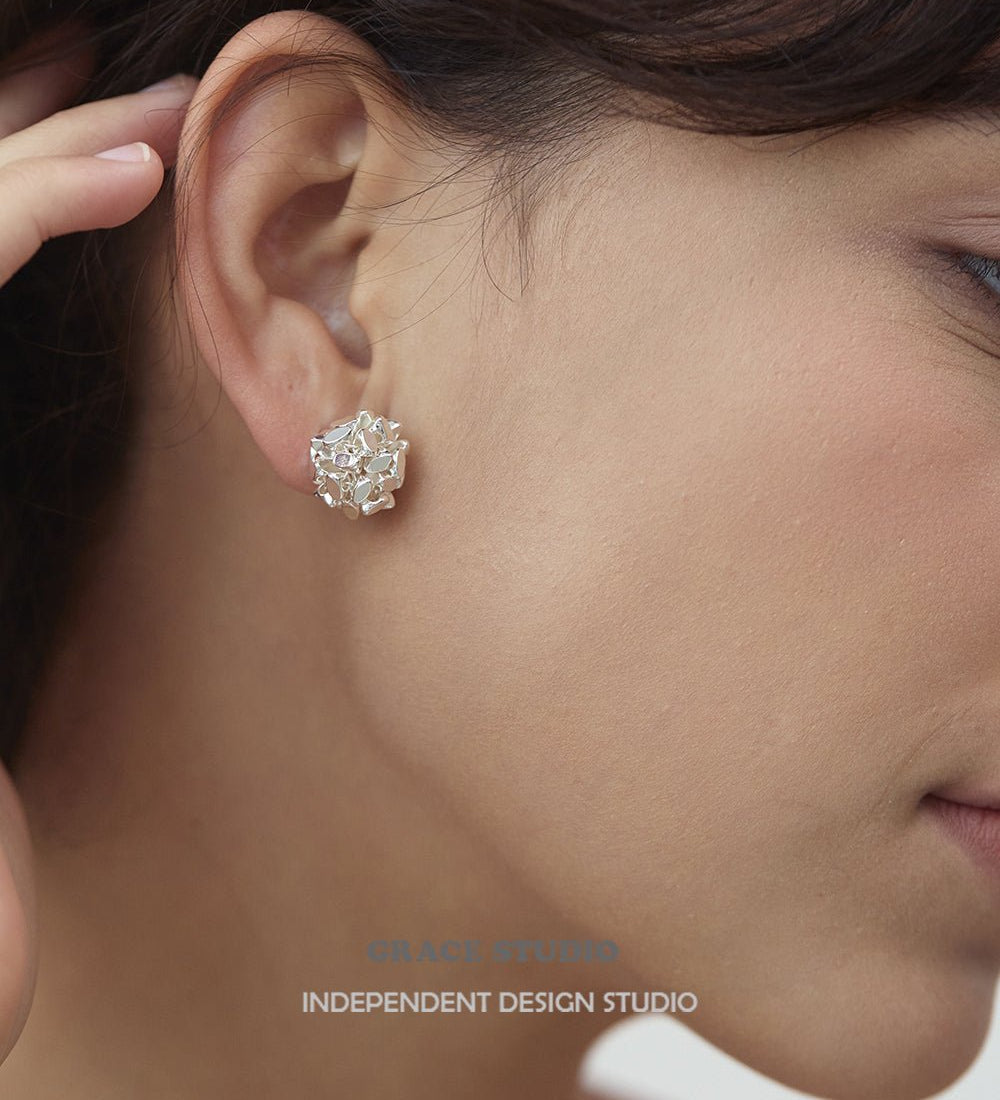
A long earring can still make the area beside the cheeks feel wide if the design has a large fan, broad cluster, or heavy shape near the top.
Meanwhile, a large open rectangle can look surprisingly light because most of its area is empty space.
So I do not look at length alone.
I look for the widest point and ask where that point will sit next to my face.
3. Outline
Round faces already have plenty of curved lines.
If I want more definition, I usually reach for something with a taper, point, edge, or clear vertical line.
That might be:
- A pear-shaped stone
- A marquise stud
- A slim rectangle
- A long teardrop
- An elongated oval hoop
- A geometric drop
The contrast can be tiny.
A narrow baguette stud may give you enough structure without becoming a statement earring.
4. Visual Weight
Two earrings can have almost identical measurements and feel completely different on the face.
Solid metal, dark stones, thick outlines, dense clusters, and high contrast tend to look heavier.
Fine wire, open frames, pale stones, narrow chains, and negative space tend to look lighter.
This is why I always prefer a model photo when I am shopping online.
A product shot by itself tells you the design.
A photo on an ear tells you the scale.
Quick Earring Shape Guide for Round Faces
Start with the visual effect you want rather than the category name.
| If you want | Good starting point | Watch for |
|---|---|---|
| More vertical direction | Drops, threaders, long teardrops | Broad shapes beside the cheek |
| More definition | Geometric, marquise, baguette shapes | Very wide horizontal outlines |
| A softer look | Pearls, teardrops, slim ovals | Too much visual weight near the cheek |
| A bold curved look | Classic round hoops | Diameter and tube thickness |
| A larger but lighter look | Open-frame earrings | Dense metal or heavy clusters |
The Earring Styles I Would Start With
There is no one “best” earring for every round face. These are simply the styles I find easiest to work with when the goal is more length, definition, or a little less visual width beside the cheeks.
Drop Earrings
Drop earrings are probably my first stop.
The reason is simple: they continue below the earlobe.
Even a short drop can give you vertical direction without feeling dramatic.
I usually prefer a pair with a relatively narrow upper section and a shape that stays controlled as it moves toward the jaw.
A slim metal drop, a fine chain ending in a stone, or a compact huggie with something suspended underneath can all work.
The Open Heart Dangle Huggie Earrings are a good example of the smaller approach. The hoop stays compact while the hanging heart creates movement below the earlobe.

What I would watch is the bottom of the drop.
A short earring ending in a broad ball, disc, or dense cluster may technically be a “drop,” but most of its visual weight can still sit beside the cheek.
That is why I would never choose from the category name alone.
Long Dangles and Threaders
Long dangles create a stronger vertical line. The distinction between drop and dangle earrings becomes useful here because the extra movement can change how much length the earring appears to create.
Threaders can be especially useful because they may look very light even when they are fairly long.
I like these with:
- Tucked-back hair
- Ponytails
- Updos
- Open necklines
- Simple tops where the earring has room to move
There is one practical issue, though.
Fine chains can catch in long, curly, or highly textured hair.
If that happens to you, I would look at a smooth bar, linked drop, or other streamlined design rather than giving up the vertical shape.
The Double-Drop Oval Dangle Earrings use two oval shapes stacked vertically. That combination adds movement but keeps the overall direction clearly downward.

Teardrop and Pear-Shaped Earrings
This is one of my favorite middle-ground shapes for a round face.
A teardrop still feels soft.
It is not as sharp as a rectangle or long geometric bar.
But the taper gives the eye a clear direction.
Longer, narrower teardrops tend to create more visible length. Shorter, fuller teardrops create a softer and broader effect near the lower cheek or jaw.
Both can be beautiful.
I just choose them for different reasons.
For a more defined version, the Teardrop Black Agate Drop Earrings finish in a clear point without becoming extremely wide.

The Scallop Shell Teardrop Drop Earrings keep the tapered outline but feel softer and more decorative.

Linear Earrings and Bar Drops
If your wardrobe is fairly minimal, this may be the easiest category.
A vertical bar does not need much explanation.
The line is clear.
It gives structure beside the cheek without adding a lot of visual mass.
I like:
- Slim bars
- Y-shaped drops
- Fine chains with narrow metal ends
- Vertical stone arrangements
They can work with a T-shirt, a button-down, workwear, or an evening dress without feeling overdone.
This is also a good option if you want the face-shape effect but dislike elaborate earrings.
You get direction without needing a large stone or a complicated shape.
Angular and Geometric Earrings
Geometric shapes can add definition because they introduce lines that are not already present in the face.
I would look at:
- Narrow rectangles
- Open diamonds
- Elongated triangles
- Marquise shapes
- Angular hoops
- Vertical geometric clusters
Orientation matters.
A wide rectangle running sideways behaves very differently from a narrow one standing vertically.
If I want more length, I look for something taller than it is wide.
Open-frame designs are especially useful when I want a bigger earring without making the area beside my cheeks feel heavy. They can also give a larger pair more of a sculptural jewelry feel without adding the same visual density as solid metal.
Oval and Elongated Hoops
I would not put hoops on an “avoid” list.
That is too broad to be useful.
A perfect circle repeats the curves of a round face.
An oval changes the proportion.
A teardrop hoop changes it again.
An angular hoop creates an entirely different effect.
So if you already love hoops, I would look at the shape before I replace them. The difference between hoops and huggies can also help if you are deciding how much movement and diameter you actually want.
Oval, oblong, teardrop, and slightly angular hoops are usually easier when you want a little more vertical direction.
Thin profiles also tend to look lighter beside the cheeks than thick tube hoops.
Slim Chandeliers
Chandelier earrings can work very well, but I pay attention to where they become widest.
If most of the decorative volume sits directly beside the cheeks, the earring can make that area feel fuller.
If the design starts narrow and becomes more decorative lower down, you get more downward movement.
I would look for:
- Fine chains
- Graduated stones
- Narrow upper sections
- Tapered arrangements
- Decorative detail below the cheek
The Elegant Crystal Cascade Dangle Hoop Earrings are a useful example because the sparkle continues downward rather than spreading widely beside the ear.

Jhumkas and Other Indian Earring Styles
I would never reduce Indian earrings to one rule.
There are too many shapes.
Long kundan drops, vertical stone arrangements, elongated chandbalis, narrow shoulder dusters, and jhumkas can all sit very differently beside a round face.
With a traditional jhumka, I look at the bell and the section above it.
A large rounded bell adds more volume near the jaw.
If you want a more vertical effect, a longer upper section, narrower bell, smaller scale, or tapered stone arrangement can help.
If you love a large traditional jhumka, I would not try to make it disappear.
An updo and open neckline can give the earring enough space to look intentional rather than crowded.
Asymmetrical and Mismatched Earrings
This is a more fashion-led option, but I like it for round faces because asymmetry interrupts repetition. It also fits naturally into fashion jewelry styling, where shape and contrast can matter more than symmetry.
You could wear:
- One long drop and one shorter earring
- Different geometric shapes on each side
- One statement earring with a simpler companion
- A single long earring on the exposed side of a side-swept hairstyle
The North Star Mismatch Huggie Drop Earrings keep the hanging elements narrow while using different celestial details on each side.
Choosing the Right Length and Size
I do not think there is one ideal earring length for a round face.
Neck length, ear size, hairstyle, clothing, comfort, and your own scale all change the answer.
The useful question is not “How many centimeters should my earrings be?”
It is:
Where do I want the earring to stop, and what happens around that point?
Short Earrings
If you like smaller earrings, you still have plenty of options.
I would try:
- Petite teardrops
- Baguette studs
- Marquise studs
- Narrow huggies with vertical charms
- Short bars
- Small geometric shapes
Small does not have to mean round.
And round does not have to mean wrong.
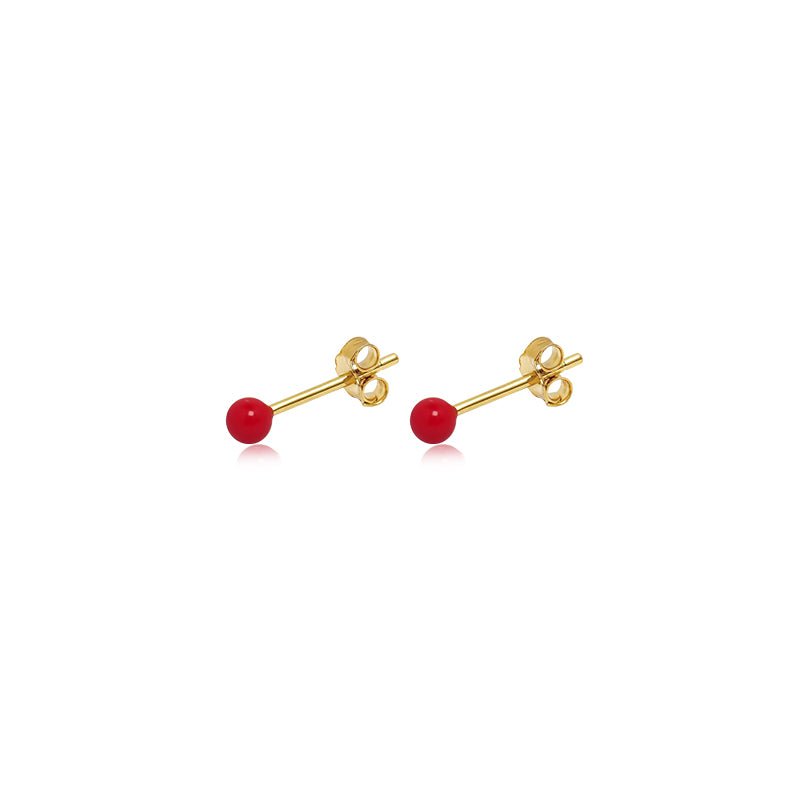
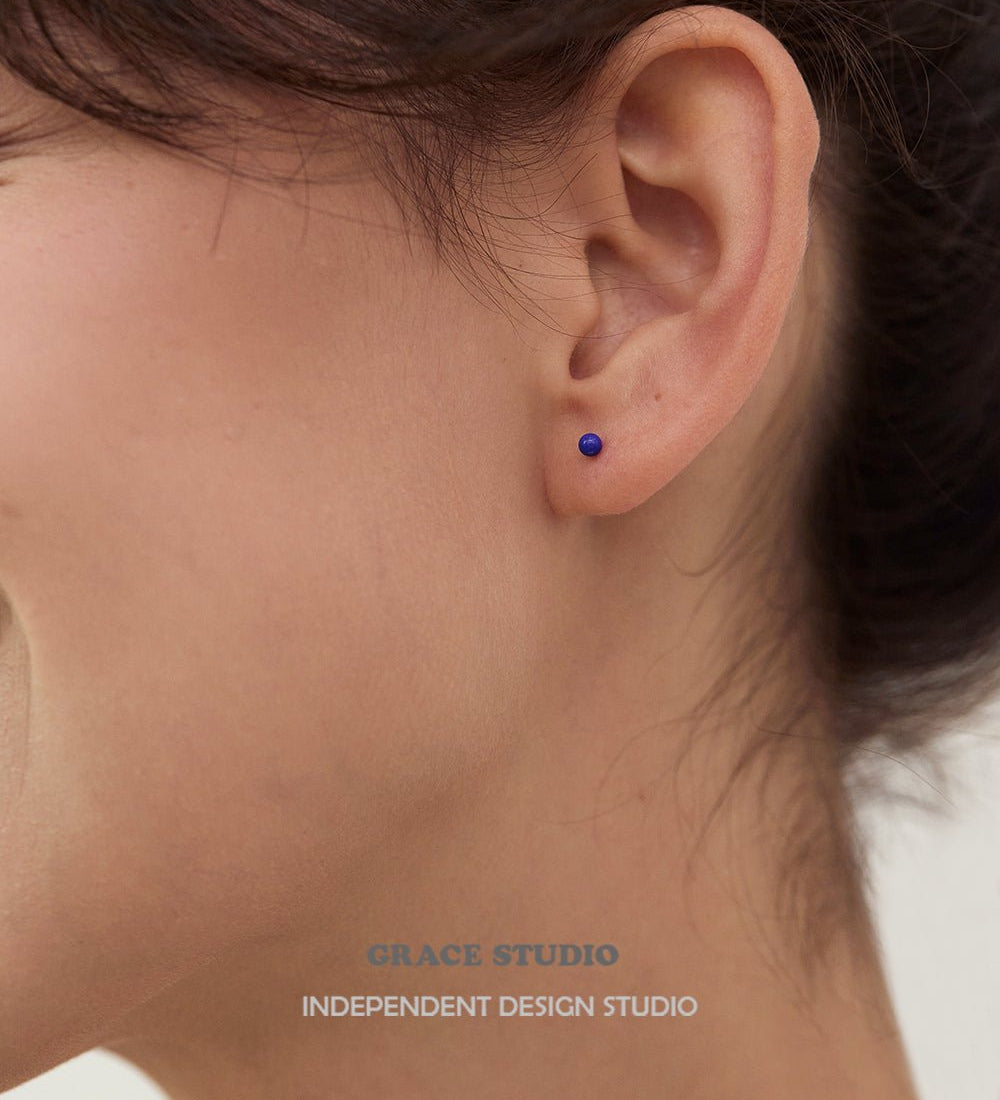
A tiny round stud can simply create a quiet, neutral effect.
If you want more structure, switch the outline rather than automatically making the earring larger.
Medium-Length Earrings
For everyday wear, this is probably the range I find easiest.
Earrings that finish around the jawline give you visible length without reaching the shoulder.
That usually means less tangling and less interference with collars.
Good options include:
- Delicate drops
- Narrow geometric earrings
- Slim oval hoops
- Lightweight threaders
- Short chandeliers
If I needed one pair I could wear for work, dinner, and casual clothes, I would probably start around this scale.
Long Earrings
Long earrings create the clearest downward line.
They can work beautifully when you want the earring to become a major part of the look.
I would consider:
- Shoulder dusters
- Long gemstone drops
- Extended threaders
- Narrow chandeliers
- Long linked designs
But I would test them while moving.
Turn your head.
Lift your shoulders.
Put on the jacket or top you plan to wear.
An earring that keeps hitting your collar or shoulder may look great for a photo and become irritating within an hour.
Weight matters too.
A strong shape does not help much if you want to take the earring off halfway through the day.
If You Have a Round Face and a Shorter Neck
I would not automatically choose very long earrings.
Sometimes a short-to-medium drop gives you a cleaner result because there is visible space between the earring and shoulder.
Slim teardrops, vertical bars, pear or marquise studs, narrow oval hoops, and adjustable threaders can all work.
The stopping point matters.
I prefer an earring that hangs freely rather than one that keeps bunching against a collar or resting on the shoulder.
Think About Width as Much as Length
This is probably the biggest mistake I see in generic face-shape advice.
“Wear long earrings” is incomplete.
A long earring with a large fan beside the cheek can still create plenty of width.
If I want a narrower effect, I keep the upper section relatively controlled and let any fullness happen lower down.
If I want a bigger statement, I may deliberately choose more width.
The useful part is knowing what the width is doing.
Earring Length and Scale Guide
Length matters, but the stopping point and width matter just as much.
| Length | Good starting point | Watch for |
|---|---|---|
| Short | Baguette studs, petite teardrops, short bars | Broad shapes sitting beside the cheek |
| Medium | Jaw-length drops, slim hoops, short chandeliers | Collars and hair tangling |
| Long | Threaders, shoulder dusters, narrow chandeliers | Shoulder contact and weight |
| Shorter neck | Short-to-medium drops | Earrings bunching against collars |
Yes, Round Faces Can Wear Hoops
I would never tell someone with a round face to stop wearing hoops.
I would just explain the options.
If You Want a More Elongated Hoop
Look at:
- Oval hoops
- Teardrop hoops
- Oblong hoops
- Angular hoops
- Hoops with hanging charms
- Hoops with pearls or stones suspended below
The Petal Hollow Teardrop Hoop Earrings are a clear example. The open teardrop shape adds a taper while keeping the overall earring visually light.

The Tiger Eye Oval Drop Hoop Earrings use an oval hoop with a hanging stone, so the eye continues below the hoop itself.

If You Prefer Small Hoops or Huggies
A compact hoop can still create structure if the outline is oval, tapered, or angular.
The Crossbar Oval Huggie Earrings use an oval shape plus a structural crossbar.

The Starry Matte Teardrop Zirconia Huggie Earrings keep the scale small while adding a tapered outline.

Another option is a small hoop with a hanging element.
That lets you keep the casual feel of a huggie while adding a little vertical movement.
If You Love Classic Round Hoops
Keep them.
A thinner profile can make them feel lighter.
A small or moderate diameter may place less width directly beside the fullest part of the cheek. If you are unsure where that range starts for you, compare a few hoop earring sizes on the ear rather than judging from the product photo alone.
You can also create vertical direction elsewhere with:
- A V-neck
- A longer necklace
- A high ponytail
- A side part
- An open neckline
And sometimes you may want the hoop to repeat the curves of your face rather than contrast with them.
That can look strong on purpose.
Stud Earrings Can Work Just as Well
Stud earrings are often treated as if they are one category visually.
They are not.
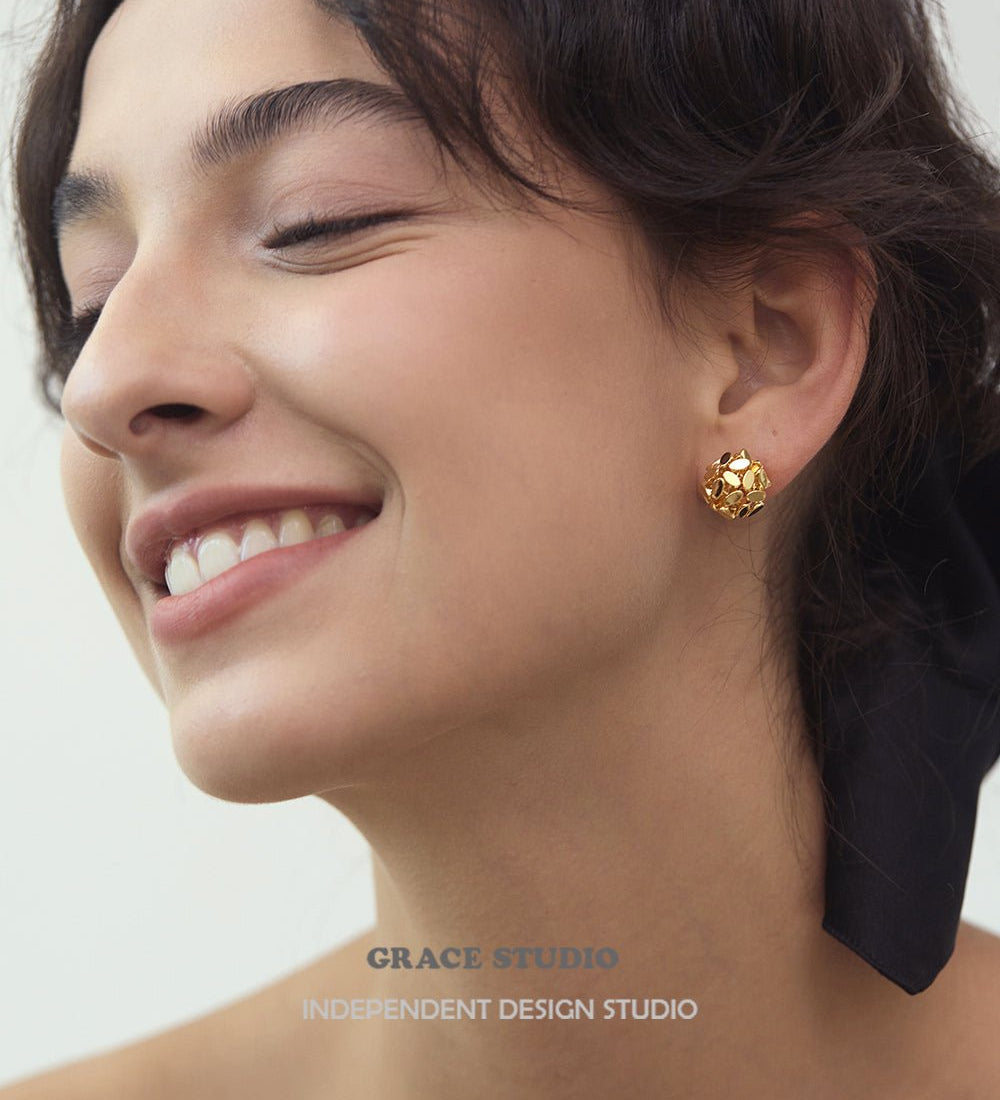
A round pearl stud, baguette stud, large button earring, teardrop stud, and geometric square all sit close to the ear, but the effect is completely different.
Stud Shapes I Would Try First
If I want more definition, I usually look at:
- Baguette
- Marquise
- Pear
- Slim oval
- Teardrop
- Geometric
- Vertical clusters
The Sleek Sculptural Teardrop Stud Earrings give you a larger metal shape while keeping a tapered outline.

The Teardrop Cubic Zirconia Stud Earrings are a smaller version of the same idea.

The Minimalist Bar Pearl Stud Earrings combine a vertical bar with a pearl, which is useful if you like the softness of pearl jewelry but want a more linear shape.

For other alternatives, the Molten Oval Zirconia Stud Earrings give you an elongated curve, while the Twisted Square Stud Earrings introduce sharper geometry.

If Your Cheeks Are Fuller
I would not frame cheek fullness as something you need to hide.
But if you personally want the area to read a little narrower, I would control the width of the stud.
A slim stone, vertical cluster, small angular motif, or narrow drop tends to place less solid area beside the cheek.
That is why the Minimalist Bar Pearl Studs and Teardrop Cubic Zirconia Studs are useful examples.
They create direction without covering much space.
Making Round Studs Work
Small round studs are easy.
They may not create a strong lengthening effect, but they usually sit quietly enough that they do not dominate the face.
Larger button or disc earrings create a stronger circular shape beside the cheek.
Again, that is not a problem unless it is an effect you do not want.
If you want a round stud with a little more vertical direction, look for:
- A hanging drop
- An offset setting
- An open halo
- A vertical attachment
- A descending cluster
The Classic Pearl and Zircon Drop Stud Earrings take a round pearl and add a hanging zircon detail below it.

For a more formal stud, the Dazzling Cascading Moissanite Stud Earrings arrange the stones in a descending line.

If you prefer compact geometry rather than extra length, the Faceted Cube Crystal Stud Earrings use an angular shape.

Hoops vs. Studs for a Round Face
Both can work. The outline and proportion usually matter more than the category.
| Style | Good starting point | Watch for |
|---|---|---|
| Hoops | Oval, teardrop, oblong, angular | Very thick circular profiles |
| Huggies | Compact oval or tapered designs | Chunky rounded shapes |
| Studs | Baguette, marquise, pear, geometric | Oversized button or disc shapes |
| Round studs | Small scale or hanging detail | Large solid circular coverage |
When You Want More Length, Watch Where the Width Sits
I would not create a blacklist of earrings for round faces.
It is more useful to understand which designs tend to emphasize width or curves.
These include:
- Very large circular hoops
- Thick tube hoops
- Oversized button studs
- Large round discs
- Short, broad drops
- Wide chandeliers
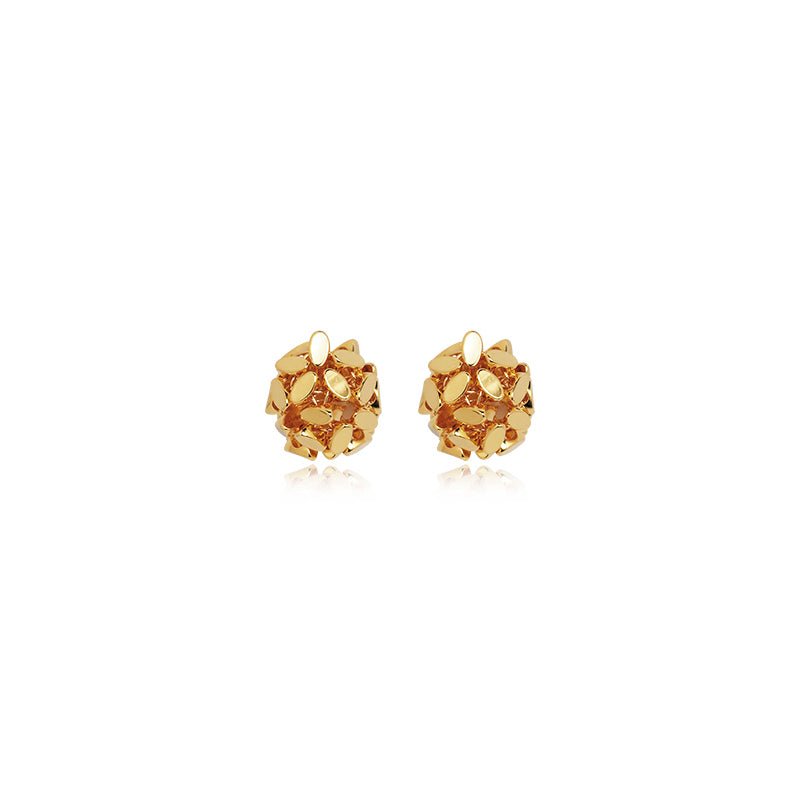
- Dense clusters near the cheek
- Very chunky rounded huggies
- Large bell-shaped jhumkas with little vertical structure above them
If you want more length, I would either narrow the upper section, move the widest part lower, or add a vertical detail.
But if you like the fuller effect, wear it.
A bold round hoop can look striking precisely because it echoes the face rather than trying to reshape it visually.
That is still a deliberate styling choice.
Style the Earrings With the Rest of Your Look
Face shape is one part of the picture.
Hair, necklines, glasses, and other jewelry can completely change how the same earring reads. Glasses deserve their own check because frame width and visual weight can change how much earring detail feels balanced, especially when styling earrings with glasses.
Hair
Updos and high ponytails give long earrings more room.
A side part or side-swept style adds asymmetry and works well with geometric earrings or one stronger earring on the exposed side.
Short hair and bobs keep the ear visible, so even a small geometric stud can have plenty of presence.
With long, curly, or textured hair, I would think about tangling.
A smooth metal drop may be easier than a very fine threader even if both create the same vertical direction.
Necklines
V-necks and scoop necklines already lead the eye downward, so they pair easily with drops and linear earrings. I would use the same proportion check when deciding what earrings match each neckline.
Off-the-shoulder and open necklines give longer statement earrings more room.
With crew necks, high necks, or detailed collars, I often prefer something more controlled:
- Geometric studs
- Short bars
- Moderate drops
- Smaller hoops
The busier the neckline becomes, the less I usually need happening at the ear.
Occasion
For everyday wear, I would keep the design easy:
- Petite teardrops
- Short bars
- Slim oval hoops
- Marquise studs
- Huggies with a small charm
For work, comfort becomes more important. That is why I would apply the same practical thinking used when choosing jewelry for office wear.
If you are wearing the earrings for eight hours or more, I would take a lightweight pair over the “perfect” face-shape earring that starts pulling at the lobe after lunch.
For parties, weddings, and formal events, there is more room to increase length, movement, and detail. If the earrings are part of a bridal look, I would also consider how they fit with the rest of your wedding jewelry.
That is where I would bring in:
- Long gemstone drops
- Narrow chandeliers
- Elongated jhumkas
- Shoulder dusters
- Mismatched statement earrings
Style the Earrings With the Rest of Your Look
Hair, neckline, glasses, and occasion can change how the same earring reads.
| Context | Good starting point | Watch for |
|---|---|---|
| Hair up | Long drops or chandeliers | Too much movement near the shoulder |
| Short hair | Geometric studs or compact drops | Overly heavy pieces |
| Bold glasses | Slim hoops, narrow drops, simple studs | Too many competing shapes |
| Open neckline | Longer statement earrings | Excessive total visual weight |
| Workday | Lightweight medium-scale earrings | Pulling, tangling, or collar contact |
Metal, Color, and Decorative Details Come After Shape
For face-shape styling, I care about silhouette first.
Metal and color refine the look.
Yellow and rose gold are often suggested for warm undertones, while silver, white gold, and platinum are often suggested for cooler undertones.
I would treat that as a starting point.
If silver looks better with your clothes, wear silver.
If gold feels more natural on you, wear gold.
You are the one looking at the finished combination.
Gemstone placement can also reinforce vertical direction.
I like:
- Descending stones
- Tapered settings
- Hanging pearls
- Narrow clusters
- Details that become smaller toward the bottom
- Downward-facing points
A rounded pearl gives a softer finish. If you are comparing pearl details, different pearl shapes can shift the outline from soft and rounded to longer and more tapered.
A pointed pear or marquise adds more definition.
Neither is automatically better.
My Quick Shopping Test
When I compare earrings for a round face, I do not run through twenty rules.
I ask myself:
- Where is the widest part of the earring?
- Does the design move down or out?
- Where will it stop beside my face?
- Does it feel visually light or dense?
- Will it work with the way I usually wear my hair?
- Will it clear my shoulders and collars comfortably?
- Is it light enough to wear for the amount of time I need?
- Do I actually like how I look in it?
That last one gets the final vote.
A pair can be technically “flattering” and still be wrong for you because it does not suit your clothes, your taste, or the way you want to look.
Frequently Asked Questions
I would keep this section short because most of the common questions about hoops, studs, length, and size are already answered above.
What Earrings Suit Men With Round Faces?
I would use the same proportion ideas rather than create a separate set of rules.
Small geometric studs, narrow bar studs, slim huggies, angular hoops, and short vertical drops can all add some definition without placing much width beside the cheeks.
Haircut, facial hair, ear size, and personal style can change the balance, so I would judge the full look rather than the face shape alone.
What Earrings Work With a Round Face and Glasses?
I would look at how much visual weight the glasses already have.
With bold frames, I usually prefer a simpler earring such as:
- A narrow drop
- Slim hoop
- Geometric stud
- Short bar
With delicate frames, there is more room for detailed drops, gemstones, or chandeliers.
The colors do not need to match perfectly. Repeating one metal tone can be enough to make the combination feel connected.
Do Long Earrings Always Make a Round Face Look Longer?
No.
Length is only one part of the shape.
A long earring can still add a lot of width if it has a broad fan, dense cluster, or heavy decoration beside the cheeks.
I would look at the width, outline, where the decorative weight sits, and the total length together.
Infographic






Leave a comment