
What Is Statement Jewelry? A Beginner’s Guide
I used to think statement jewelry had to be big, dramatic, and saved for special occasions.
But I’ve changed my mind. To me, statement jewelry is simply the piece that gives your outfit direction. It could be a chunky gold chain with a white tee, sculptural earrings with a black sweater, or a cuff peeking out from a rolled blazer sleeve.
It doesn’t have to be loud or expensive. It just has to feel intentional.
So if you’ve ever looked at a bold piece and thought, “I love that, but how would I wear it?” this guide is for you.
So, what makes jewelry a statement piece?
Statement jewelry is usually the piece your eye notices first. Sometimes that’s because it’s large. Sometimes it’s the color. Sometimes it’s the shape, the shine, the material, or the way it sits on your body.
A necklace doesn’t have to cover your whole chest. Earrings don’t need to touch your shoulders. A ring doesn’t need to be the size of a cookie.
Though, honestly, I do love a big ring when it feels right. For me, a statement piece usually has a few things going on.
It has presence
Statement jewelry takes up more visual space than your everyday pieces. That could mean:
- A thick chain over a crewneck sweater.
- Large hoops with your hair pulled back.
- A silver cuff with a sleeveless dress.
- A cocktail ring with a simple manicure.
- A pearl necklace that makes a plain black top feel more finished.
The piece doesn’t have to be huge. It just needs to look chosen. That’s the difference I keep coming back to. Some jewelry blends in. Statement jewelry looks like you meant to wear it.
It has one clear detail
A good statement piece usually has one thing that makes it interesting. Maybe it’s the shape. Maybe it’s the stone. Maybe it’s the color. Maybe it has a heavier metal finish, an unusual clasp, or a texture you don’t see all the time. A few examples:
- Chunky links.
- Large pearls.
- Colored stones.
- Wide cuffs.
- Sculptural metal.
- Oversized hoops.
- Long drop earrings.
- Mixed metals.
- A vintage brooch.
I usually like pieces with one strong detail instead of five things happening at once. A smooth gold dome ring can be easier to wear than a ring with sparkle, color, fringe, and a giant setting.
But that’s me. Your version might be louder, softer, cleaner, stranger. All good.
It feels like you
This is the part I care about most. Statement jewelry should feel like your taste. Not something you bought because it looked good on someone in a photo, and now it feels weird every time you put it on.
A pearl collar might feel polished. A resin bangle might feel playful. A hammered silver cuff might feel artistic. A chunky gold chain might feel clean and strong. A vintage brooch might feel sentimental, especially if it looks like something your grandmother could have owned.
You can use statement jewelry to nudge a simple outfit in one direction or another.
A white shirt and jeans can feel classic with pearls. Sharper with silver hoops. Softer with a pendant. More relaxed with a beaded necklace.
Same outfit. Different feeling. That’s why I think jewelry is such a useful part of a wardrobe. It lets you change the mood without changing everything else.
Statement jewelry vs. everyday jewelry
Everyday jewelry is what I reach for when I don’t want to think. Small hoops. Tiny studs. A thin chain. A simple pendant. A slim ring. The pieces you put on in the morning and forget about until bedtime.
I love those pieces. They’re easy. They go with almost everything. They don’t ask much from the outfit.
Statement jewelry needs a little more attention. If I’m wearing large earrings, I’ll usually skip the necklace. If I’m wearing a strong necklace, I’ll keep my earrings small. If I’m wearing a wide cuff, I’ll leave the other wrist bare.
Not because there are strict rules. Getting dressed already has enough little decisions. It’s more that one strong piece often looks better when everything around it is calmer.
You probably need both kinds of jewelry. Everyday pieces are great for normal life. Statement pieces are for the days when you want your outfit to feel more personal, more finished, or honestly, a little more fun.
| Everyday | Statement | |
|---|---|---|
| Scale | Small, subtle | Noticeable, intentional |
| Effort | Put on, forget | Needs a little thought |
| Examples | Tiny studs, thin chain | Chunky hoops, cuff, collar |
| Best for | Normal days, layering | When outfit needs direction |
The main types of statement jewelry
There are plenty of ways to wear statement jewelry, but these are the ones I’d start with.
Statement necklaces
 A statement necklace can change an outfit fast. It might be a thick chain, a collar necklace, a large pendant, a beaded necklace, a bib necklace, or a choker with a strong shape. A few ways I’d wear one:
- A chunky chain with a white tee and straight-leg jeans.
- A collar necklace with a strapless dress.
- A long pendant with a simple knit dress.
- A beaded necklace with a linen shirt.
- A pearl necklace over a black crewneck sweater.
I find statement necklaces easiest when the neckline is simple. Crewnecks, strapless tops, button-downs, and clean knits usually work well.
If a necklace keeps fighting with the neckline, I switch to earrings. No need to make it a project.
Statement earrings
 If you’re new to statement jewelry, I’d probably start with earrings. They’re easy to style, and you don’t have to rethink the whole outfit. Put your hair up, tuck one side behind your ear, or wear a simple neckline. That’s usually enough. You could try:
- Large hoops.
- Long drop earrings.
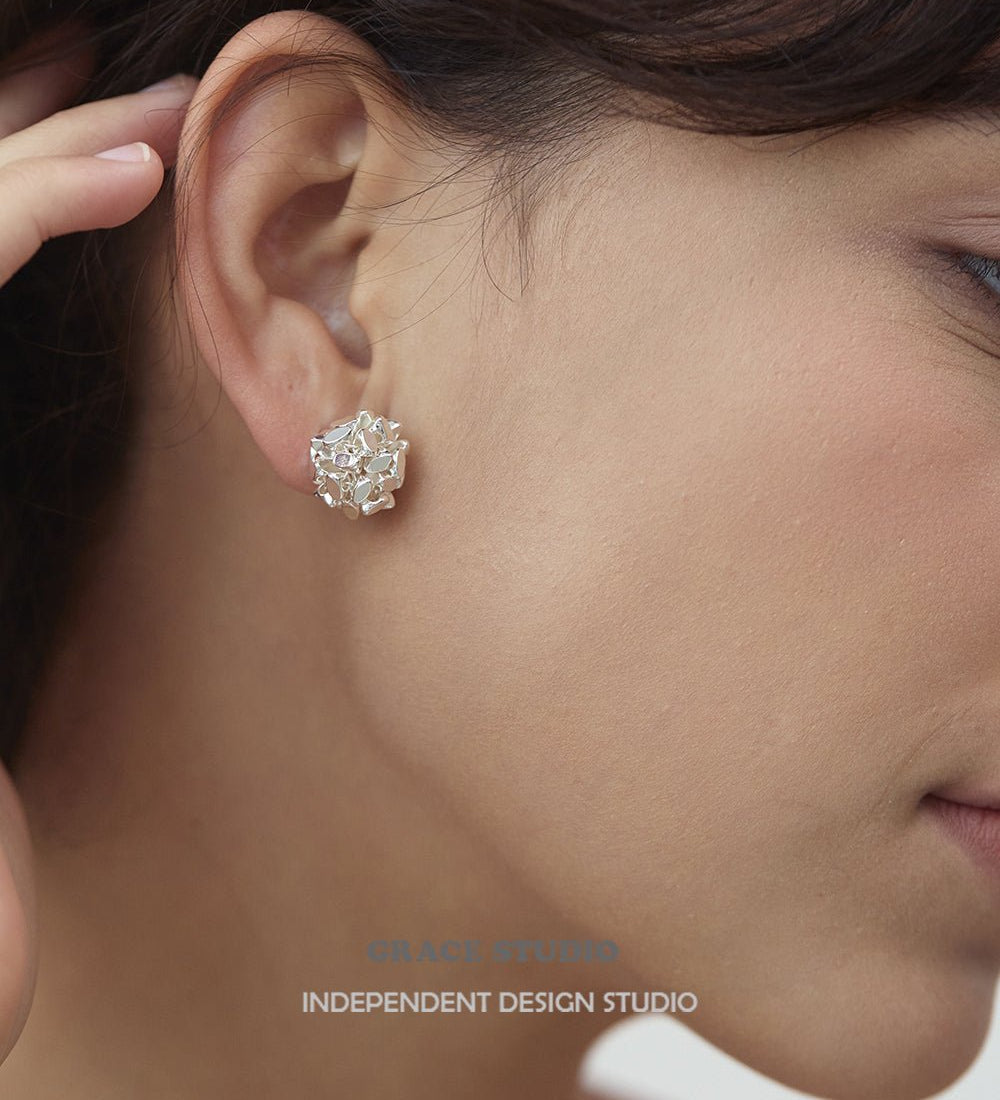
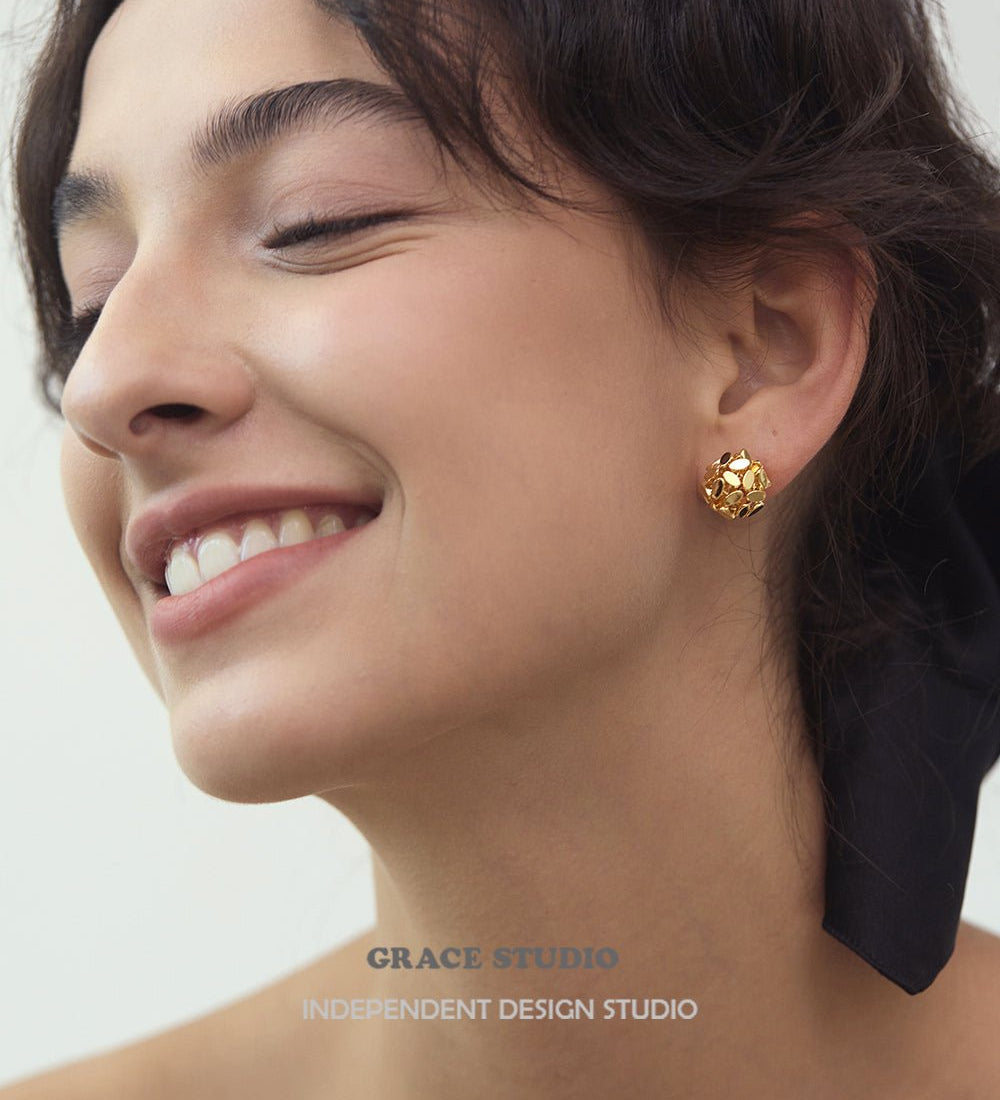
- Sculptural studs.
- Pearl earrings with some volume.
- Geometric gold or silver earrings.
- Shoulder-grazing earrings for evening.
I love statement earrings with simple outfits. A black sweater, jeans, and large gold hoops. A white button-down, trousers, and silver drops. A slip dress with pearl earrings. Easy. But it still looks like you made a choice.
Statement rings
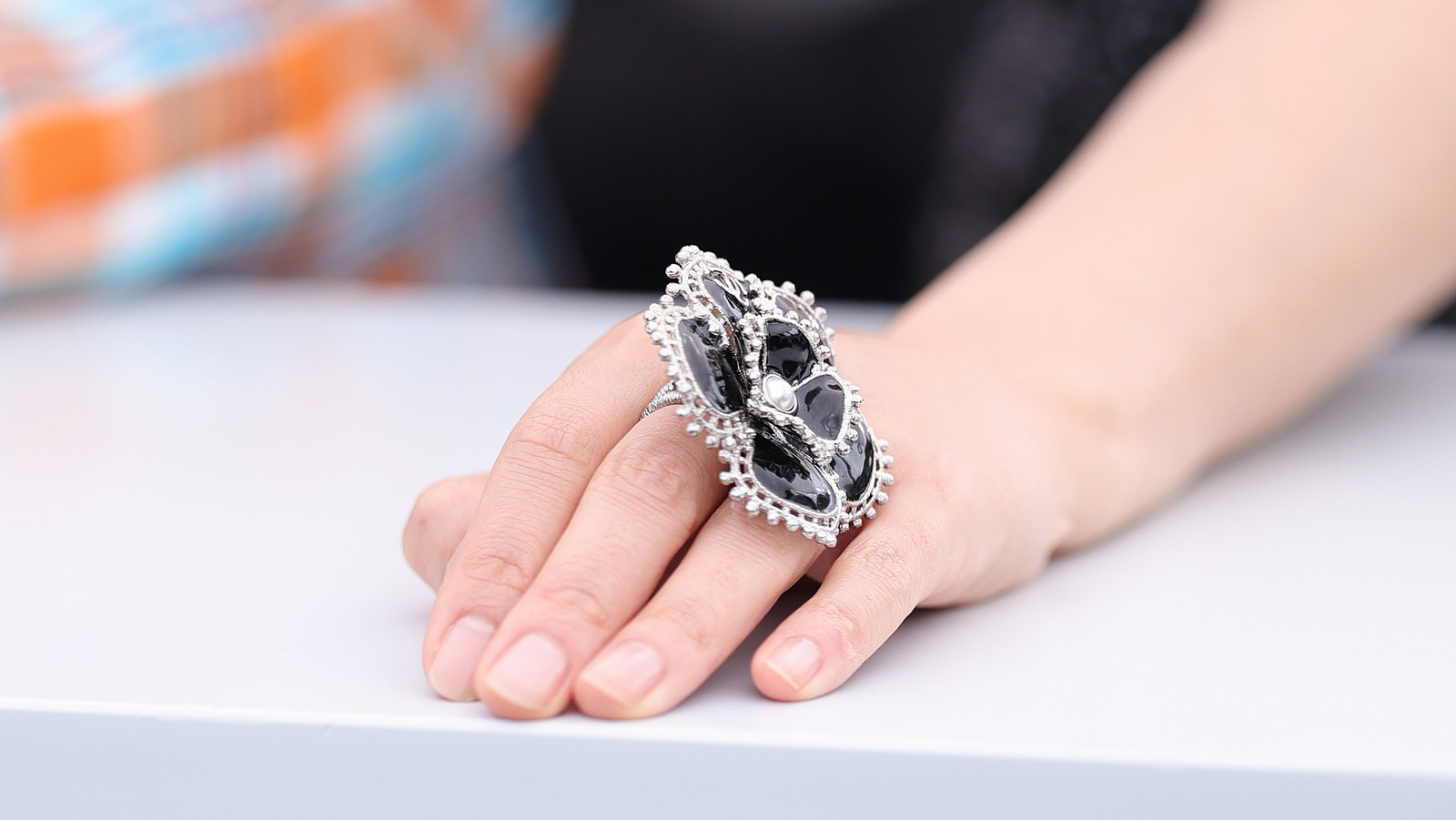 A statement ring is a good option if you don’t want attention near your face or neckline. It gives you that stronger detail in a smaller, more personal way. I also like that you get to see it throughout the day. There’s something nice about that. Look for:
- A large stone.
- A thick band.
- A dome ring.
- A signet ring.
- An unusual setting.
- A sculptural shape.
One statement ring is usually enough for me. I’ll wear it alone or with very simple bands.
If you like stacks, go for it. I’d just keep the metals or shapes somewhat connected so the whole hand doesn’t look too busy.
Statement bracelets and cuffs
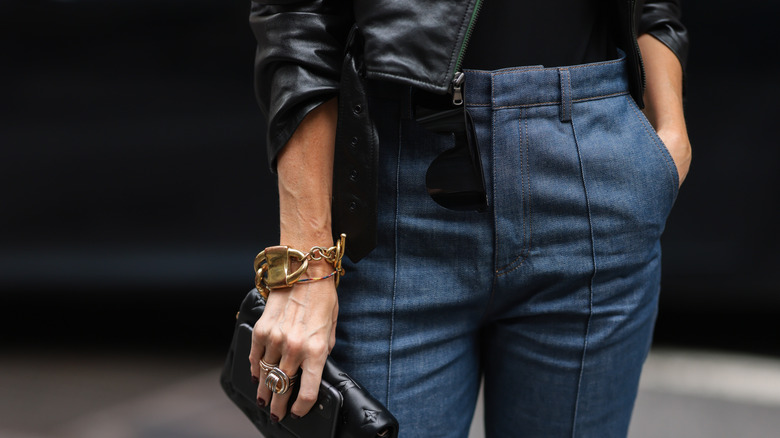 A cuff might be one of the easiest statement pieces to wear. It doesn’t compete with your neckline. It works with a lot of outfits. And it looks especially good when you show it on purpose. Try one with:
- Rolled shirt sleeves.
- A sleeveless top.
- A simple black dress.
- A blazer.
- A fine knit.
- A white tank and jeans.
A wide gold cuff with a black dress is beautiful. A chunky silver bracelet with denim feels more casual. A stack of bangles can work too, though I’d keep the rest of the jewelry quieter if the bracelets already add movement or sound.
Because clinking bracelets are fun for about ten minutes. Then maybe less fun.
Brooches
Brooches can feel a little intimidating at first. I get it. They can read classic, quirky, polished, vintage, or artsy depending on the piece and where you place it. That’s why I like them. You can pin one:
- On a blazer lapel.
- At the collar of a button-down.
- On a wool coat.
- On a crewneck sweater.
- On a scarf.
- On a fabric handbag.
I especially like vintage brooches because they feel less expected. They can make a basic coat or blazer look more personal, and you don’t have to match them to your neckline or hair.
(Related article: How to wear brooch with a scarf)
Body chains and anklets
These are more specific, but they can be really pretty in the right setting. A body chain can work with swimwear, a low-back dress, or a simple evening look. An anklet looks great with sandals, cropped trousers, linen pants, or a summer dress.
For most beginners, I’d start with earrings, a necklace, a ring, or a cuff first. Body chains and anklets feel more seasonal to me. Fun, yes. But maybe not the first thing I’d buy if I wanted something I could wear all the time.
The easiest statement pieces to try first
When you’re starting out, I’d look at one of these:
- Statement earrings.
- A chunky chain necklace.
- A cuff bracelet.
These are easy to repeat, and they work with clothes you probably already own. For example:
- Gold hoops with a white tee and jeans.
- A silver cuff with a black tank and trousers.
- A chunky chain over a crewneck sweater.
- Large pearl earrings with a slip dress.
- A dome ring with a button-down and jeans.
If you feel unsure, start with a metal you already wear. If you wear gold most days, try a gold statement piece. If silver feels more natural on you, go silver. If your everyday jewelry is mixed, you have more room to play.
Obvious advice, maybe. But it helps. The closer a statement piece is to what you already like, the more likely you are to wear it.
Why statement jewelry feels good to wear
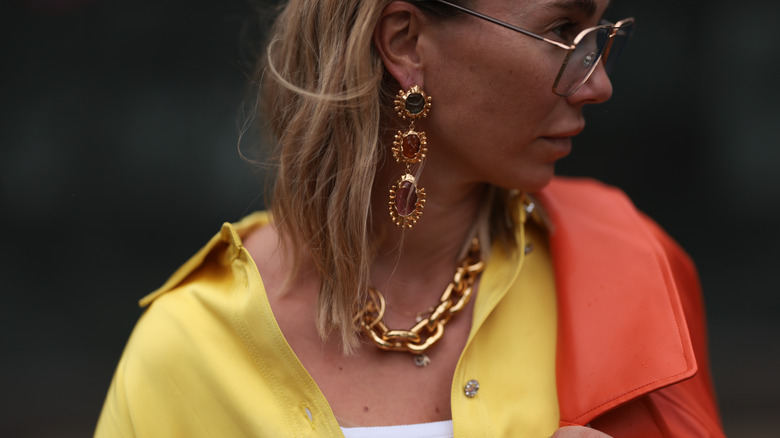 I don’t think jewelry needs to carry some huge meaning every time you put it on. Sometimes you wear the earrings because they look cute. That’s enough.
But I do think the right piece can change how an outfit feels on your body. A plain outfit can be great, but sometimes it needs one interesting detail. Jewelry can do that without adding another layer, changing your shoes, or buying a new dress.
Here are a few outfit formulas I’d actually wear.
White tee and jeans
Add a chunky chain necklace or large hoops. This is one of the easiest combinations. The outfit stays casual, but the jewelry makes it feel more finished.
I’d wear this with straight-leg jeans, sneakers or ballet flats, and a simple belt.
Black dress
Add shoulder-grazing earrings or a collar necklace. A black dress gives statement jewelry a clean background. If the earrings are large, I’d skip the necklace. If the necklace is strong, I’d wear small studs or no earrings.
I like this because it feels dressed up without needing much else.
Blazer and trousers
Add a cuff or brooch. This works well for work, dinner, or any day when you want to look polished without doing too much.
Roll the sleeves a little if you’re wearing a cuff. Pin a brooch near the lapel if the blazer feels too plain. Add simple shoes and you’re good.
Knit sweater and skirt
Add sculptural earrings. This is a good cold-weather option because necklaces can disappear into heavier knits. Earrings still show, especially if your hair is pulled back.
I’d try this with a soft sweater, a mini or midi skirt, tights, and boots.
Button-down shirt
Add a pendant or brooch. Leave a few buttons open for a pendant, or button the shirt all the way up and add a brooch near the collar.
Both options feel simple, but not boring.
How I’d wear statement jewelry without feeling overdone
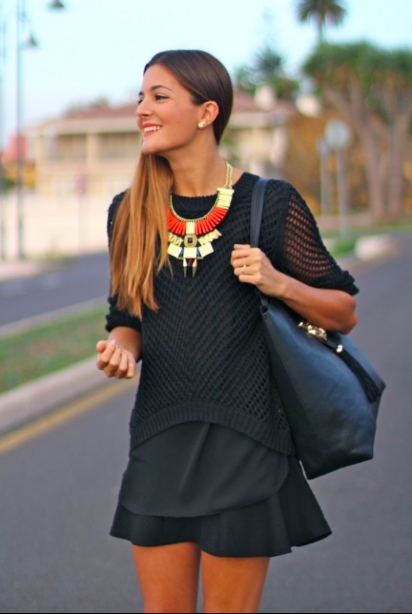
My easiest rule is to pick one main piece.
- One strong necklace.
- One strong pair of earrings.
- One big cuff. One cocktail ring.
Can you wear more than one? Of course. Some people do it beautifully. But when you’re starting out, one piece makes everything easier.
Keep the outfit simple
Statement jewelry usually works best when the outfit gives it some space. I like it with:
- Solid colors.
- Clean necklines.
- Simple knits.
- Plain tees.
- Classic denim.
- Tailored jackets.
- Slip dresses.
- Button-down shirts.
I’d be more careful with busy prints, heavy ruffles, sequins, or clothes with lots of hardware. Those details can compete with the jewelry, and suddenly the whole outfit feels crowded. Sometimes that’s the look. Most days, it’s not what I’m going for.
Match the piece to the neckline
This helps more than people think. Crewneck tops work well with chokers, short chains, and collar necklaces.
| Neckline | Best necklace | Alternative |
|---|---|---|
| Crewneck | Choker or short chain | Statement earrings |
| V-neck | Pendant | Long drop earrings |
| Strapless | Collar necklace | Shoulder-grazing earrings |
| Turtleneck | Long necklace | Cuff or earrings |
| Button-down | Pendant or chain | Brooch at collar |
If a necklace isn’t sitting right, I don’t fight it anymore. I switch to earrings or a cuff and move on with my day.
Pay attention to scale
Scale is about how the piece looks on you and with your clothes. If you’re petite, you might prefer medium-size statement pieces instead of very large ones. If you’re tall or broad-shouldered, you might feel great in bigger shapes.
But I wouldn’t treat any of that as a rule. Try things on. Step back from the mirror. See how it feels.
Here’s my little test. Put the piece on. Take one step back. Does your eye notice the jewelry and then the whole outfit? Great.
Does the jewelry feel like it’s taking over? Try a smaller piece or simpler clothes.
Think about your hair
Hair changes everything. Large earrings often show better with hair pulled back, tucked behind your ears, or worn in a low bun. A necklace may look cleaner with hair off your shoulders. A brooch is easier because it doesn’t care what your hair is doing.
This is one reason I like brooches and cuffs. They don’t require as much planning.
Keep makeup simple when you want the jewelry to lead
You can wear bold makeup with bold jewelry. Absolutely. For everyday, I’d usually keep makeup pretty simple: skin, brows, maybe a soft lip. For evening, a red lip with gold earrings can be beautiful.
I’d just keep the clothing clean so the whole thing feels balanced.
Can you wear statement jewelry every day?
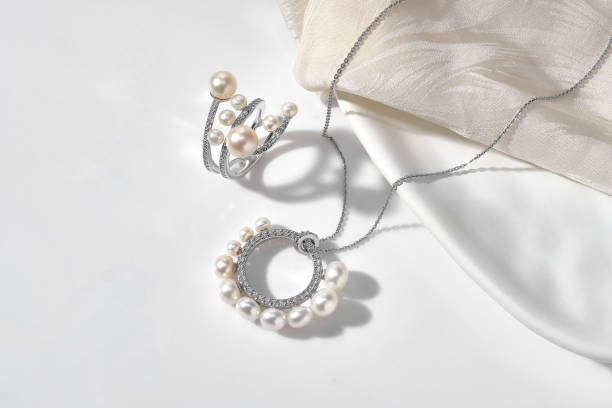 Yes, you can. I’d just choose pieces that fit your actual life.
If you work at a desk, heavy earrings might annoy you by lunch. If you have young kids, long necklaces might get pulled. If you type all day, a huge ring might get in the way. If you walk a lot, noisy bangles may start to bother you.
Everyday statement jewelry should feel good after three hours, not only in the mirror. Some good options:
- Medium hoops.
- A slim cuff.
- A smooth dome ring.
- A short chain necklace.
- A sculptural pendant.
- A small brooch on a jacket.
You can still get personality without wearing the biggest piece you own.
How to choose a statement piece you’ll actually wear
This is where I’d slow down before buying. Statement jewelry is easy to admire. It’s also easy to leave unworn.
The goal is to choose something that fits your real wardrobe, your real schedule, and your real tolerance for weight, shine, color, and attention.
Start with your clothes
Look at what you already wear most.
| If you wear... | Try... |
|---|---|
| A lot of crewneck sweaters | A short chain or statement earrings |
| Button-downs | Pendants, brooches, or cuffs |
| Black often | Gold, silver, pearls, or color |
| Prints often | Simpler metal pieces |
| A lot of white tees | Almost any statement piece |
Your wardrobe usually gives you clues. Mine does. If I can picture the piece with at least five outfits I already own, that’s a good sign.
Choose your metal first
Most of us have a metal we naturally reach for.
- Gold feels warmer.
- Silver feels cooler.
- Rose gold feels softer.
- Mixed metal feels relaxed when you already wear both.
There’s no right answer. Pick what you like against your skin and what works with your everyday jewelry.
I know that sounds basic, but it saves a lot of money. A beautiful silver necklace won’t get much wear if you always feel better in gold.
Decide how much color you want
Some statement jewelry gets attention through shape. Some gets attention through color.
If your closet is mostly neutral, colorful jewelry can be a nice way to add interest. Think turquoise earrings with a white shirt, a red resin bangle with denim, or green stones with a black dress.
If you already wear a lot of color, you might prefer metal pieces so the outfit doesn’t feel too busy.
I’d start with one color you already love wearing. Not the color you think you should wear. The one you actually reach for.
Check the weight
This matters more than people think. A pair of earrings can look amazing and still be a terrible buy if your ears hurt after 20 minutes. A cuff can look beautiful and still pinch. A necklace can be gorgeous and still sit wrong when you move.
Before buying, I’d check:
- Does it feel heavy?
- Does it pinch?
- Does it catch on fabric?
- Does it make noise?
- Can you sit, walk, and move normally?
- Would you wear it for a full dinner?
Comfort decides whether you’ll wear the piece or leave it in a drawer. I have learned this the annoying way.
Be honest about your budget
You don’t have to spend a lot to try statement jewelry. A lower-priced piece can help you test a shape, color, or size before spending more. This is especially useful if you’re unsure about big earrings, colored stones, or chunky chains.
I’d spend more when I know the piece fits my style and my life. Good signs:
- You’ve wanted the same style for a while.
- You can name at least five outfits you’d wear it with.
- The material feels durable.
- It feels comfortable.
- You’d wear it on normal days, not only special occasions.
- One piece you wear often is better than five pieces that sit untouched.
Where I’d shop for statement jewelry
You can find good statement jewelry in a lot of places. I’d shop based on what you’re looking for.
- Vintage shops are great for brooches, pearls, cocktail rings, and unusual shapes.
- Small designers are good for sculptural pieces and handmade details.
- Department stores can be helpful when you want to try different sizes and weights in person.
- Jewelry brands are better when you want clearer material details, repairs, or matching pieces.
- Resale sites can be great, but check measurements and return rules carefully.
Try pieces on when you can. Jewelry changes once it’s on your body. A necklace that looks huge online may look perfect in person. Earrings that look simple online may feel too heavy.
Related video
How to care for statement jewelry
Statement jewelry often has more surface area, more stones, or more moving parts than everyday jewelry. A few small habits can help it last longer.
Put it on last
I try to make jewelry the last thing I put on before leaving.
Perfume, lotion, sunscreen, hairspray, and makeup can dull metal or leave residue on stones. Get dressed first, do your hair and skincare, then add jewelry.
It’s a small habit, but it helps.
Take it off first
When you get home, take your jewelry off before changing clothes.
This helps prevent snags, bent posts, broken chains, and loose stones. It also keeps pieces away from sweat and skincare at the end of the day.
I like to put mine in the same spot every time. Otherwise, I will absolutely lose an earring back.
Wipe it after wearing
Use a soft cloth to wipe pieces after you wear them. This removes skin oils, dust, and product residue. It takes a few seconds and helps jewelry look better over time.
Nothing fancy. A soft cloth is enough for most pieces.
Store pieces separately
Statement jewelry needs a little space. Don’t toss a chunky chain, pearl earrings, and crystal necklace into the same dish. That’s how scratches and tangles happen. You can use:
- Soft pouches.
- A lined jewelry box.
- Small trays.
- Hooks for long necklaces.
- Separate compartments for rings.
Keep pieces dry and away from direct sunlight. For silver, anti-tarnish strips can help.
Clean gently
Most jewelry doesn’t need aggressive cleaning. For many metal pieces, warm water with a tiny bit of mild dish soap works well. Use a soft cloth or soft toothbrush, then dry the piece completely.
Be careful with porous stones like turquoise, opal, and pearls. These usually do better with a dry or barely damp cloth.
I’d skip toothpaste, bleach, and random cleaning tricks from the internet. They can scratch metal, damage stones, or strip finishes. When in doubt, clean less and ask a jeweler.
Get investment pieces checked
If you own fine jewelry with stones, take it to a jeweler about once a year.
They can check prongs, clasps, links, and settings. This is especially helpful for cocktail rings, bracelets, and pieces you wear often.
It’s not exciting, but it can save you from losing a stone.
A simple care checklist
- Wore it? Wipe it.
- Storing it? Keep it separate.
- Looks dull? Clean it gently.
- Feels loose or bent? Take it to a jeweler.
- Unsure about the material? Don’t soak it.
FAQ
Do people still wear statement necklaces?
Yes. Statement necklaces are still around, especially chunky chains, collar necklaces, large pendants, pearl styles, and beaded pieces.
The easiest way to wear one is with a simple top: a white tee, black dress, crewneck sweater, button-down shirt, or tank.
What is the opposite of statement jewelry?
The opposite is usually minimalist or delicate jewelry.
Think tiny studs, thin chains, slim rings, and small hoops. These pieces sit quietly with your outfit instead of taking most of the attention.
What is statement jewelry made of?
Statement jewelry can be made from gold, silver, brass, stainless steel, resin, beads, pearls, crystals, enamel, glass, gemstones, or mixed materials.
The material matters, but the design matters too. A silver cuff, pearl earrings, and resin bangle can all count as statement jewelry if they become the main jewelry piece in the outfit.
When should you wear statement jewelry?
You can wear it whenever you want your outfit to feel more intentional.
It can work for work, dinner, parties, weddings, weekends, casual errands, and normal weekdays. The setting usually changes the scale.
- For work, try a cuff or earrings.
- For weekends, try hoops or a chain.
- For evening, try a collar necklace or long earrings.
- For a special event, try a cocktail ring, brooch, or dramatic earrings.
Is statement jewelry coming back?
Statement jewelry never fully disappeared. Minimal pieces may get more attention some years, and bigger pieces may get more attention in others, but people always seem to return to jewelry with personality.
If you like it, wear it. I don’t think you need to wait for a trend to make it feel allowed.
What is the 4 diamond rule?
People usually mean the 4 Cs of diamonds: cut, color, clarity, and carat.
Cut affects how the diamond reflects light. Color grades how colorless it is. Clarity refers to natural marks inside or on the stone. Carat measures weight.
If you’re buying diamond statement jewelry, these four details can help you compare pieces more carefully.
Infographic






Leave a comment